

A recent comprehensive study from Niti Aayog, India’s premier policy think tank, has reignited the critical debate on urban mobility, strongly advocating for the implementation of congestion pricing to curb the escalating use of private vehicles. This recommendation arrives at a pivotal juncture, as India grapples with the twin challenges of rampant urbanization and ambitious net-zero emission targets. The report underscores congestion pricing as a strategic imperative, positioning it not merely as a traffic management tool but as a foundational element for achieving sustainable, livable, and economically vibrant Indian cities while significantly advancing the nation’s climate commitments.
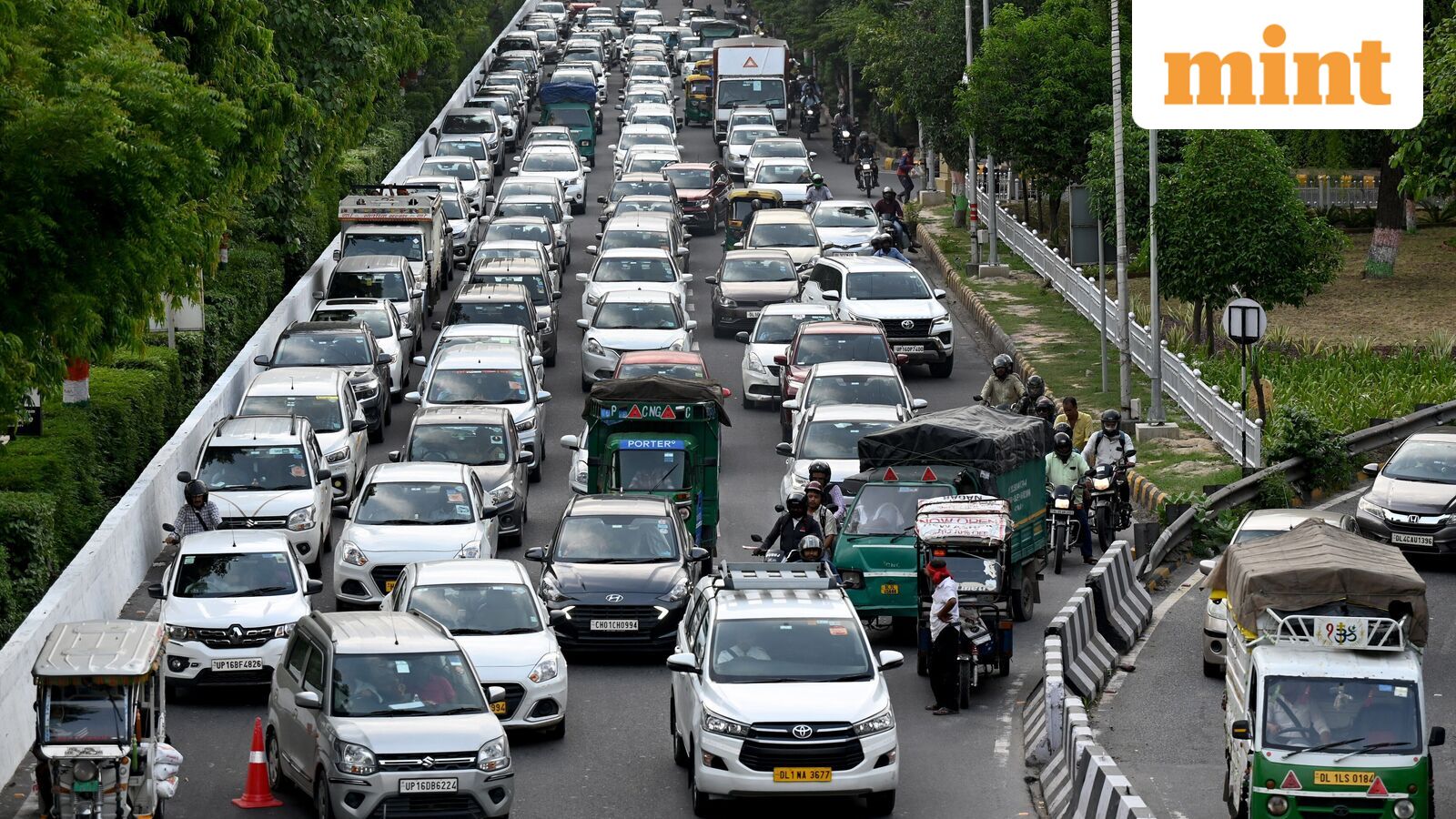
The relentless growth of urban centers across India has brought with it an unprecedented surge in private vehicle ownership, leading to chronic traffic congestion that exacts a heavy toll on the economy, environment, and public health. Major Indian metropolises consistently rank among the world’s most congested cities, with commuters spending countless hours stuck in gridlock. This translates into billions of dollars lost annually in productivity, wasted fuel, increased vehicle operating costs, and substantial healthcare expenditures due to air pollution. According to the Niti Aayog analysis, private vehicles constituted an alarming 53% of India’s road-based passenger movement in 2025, signaling a deeply entrenched reliance on personal transport modes that is unsustainable for future urban development and incompatible with decarbonization objectives.
Congestion pricing, at its core, is a demand-side management strategy designed to internalize the external costs of driving in heavily trafficked urban areas. It involves charging vehicle drivers a fee to enter designated zones during peak hours, effectively leveraging economic incentives to alter travel behavior. Unlike conventional tolls that fund infrastructure, congestion charges aim to reduce demand for road space when it is most scarce. This policy mechanism seeks to encourage a shift towards public transportation, ride-sharing, or off-peak travel, thereby alleviating traffic bottlenecks, improving journey times, and reducing the environmental footprint of urban transport.

Globally, several developed economies have successfully pioneered and refined congestion pricing schemes, offering valuable blueprints for India. Singapore introduced its Area Licensing Scheme in 1975, evolving it into the sophisticated Electronic Road Pricing (ERP) system by the late 1990s. This system dynamically charges vehicles based on location, time, and road conditions, resulting in a significant reduction in central business district traffic, improved average speeds, and a notable shift towards public transit. Similarly, London’s Congestion Charge, implemented in 2003, reduced traffic volumes by approximately 15% within its charging zone and contributed to a 12% decrease in carbon dioxide emissions. Stockholm’s congestion tax, initially a trial in 2006 and made permanent in 2007, also demonstrated marked improvements in traffic flow, air quality, and public transport ridership, proving that such measures can gain public acceptance when perceived benefits are clear and revenue is reinvested into transport infrastructure.
The Niti Aayog study meticulously modeled India’s transport sector under two distinct scenarios: a "business-as-usual" (BAU) path and a "net-zero" trajectory aligned with the nation’s 2070 climate commitment. Under the BAU scenario, the share of public transport in road-based movement is projected to rise modestly to 50% by 2050. However, to achieve the ambitious net-zero goals, the report projects that public transport’s share must dramatically increase to 60% or more. This necessitates aggressive policy interventions to disincentivize excessive private vehicle usage. Beyond congestion pricing, the study advocates for higher parking fees and increased ownership taxes in urban centers, all aimed at reshaping urban mobility patterns and accelerating the decarbonization of a sector that is a significant contributor to India’s greenhouse gas emissions.
Implementing congestion pricing in a diverse and rapidly developing nation like India presents unique challenges, acknowledged by domain experts and urban planners. A primary concern is the readiness and robustness of public transport infrastructure. S. Velmurugan, a leading researcher in traffic engineering, emphasizes that effective disincentivization of private vehicles must be accompanied by the availability of efficient, affordable, and comprehensive public transport alternatives. This includes expanding metro networks, developing Bus Rapid Transit (BRT) systems, enhancing last-mile connectivity, and integrating various modes of transport through smart ticketing and scheduling. Without a viable alternative, congestion pricing could disproportionately burden commuters and face significant public resistance.
Another critical consideration for India is the overwhelming dominance of two-wheelers in its vehicle fleet. With approximately 167 two-wheelers per 1,000 people in 2023, compared to just 30 cars, any congestion pricing scheme must effectively address this segment. Tracking and charging two-wheelers electronically poses technological and logistical complexities distinct from those associated with four-wheeled vehicles. While India’s FASTag system for highway tolling offers a foundational digital infrastructure, adapting it for intricate urban congestion zones and a vast two-wheeler population will require significant innovation and investment in advanced electronic tolling systems and enforcement mechanisms.

Beyond the technicalities, socio-economic equity and public acceptance are paramount. Critics often argue that congestion pricing can be regressive, disproportionately affecting lower-income individuals who may have fewer public transport options or rely on personal vehicles for work. To mitigate this, Indian cities would need to design schemes with careful consideration for exemptions (e.g., for certain essential services or low-emission vehicles), progressive pricing structures, and critically, a transparent commitment to reinvesting the generated revenue directly into improving public transport infrastructure and services. Clear communication campaigns demonstrating the tangible benefits – faster commutes, cleaner air, and better public facilities – would be essential to foster public understanding and political will.
Ultimately, congestion pricing is not a standalone panacea but a powerful lever within a broader, integrated urban mobility strategy. For Indian cities, this strategy must encompass Transit-Oriented Development (TOD) to create compact, mixed-use neighborhoods around public transport hubs; significant investments in non-motorized transport infrastructure like pedestrian walkways and cycling lanes; and the widespread adoption of intelligent transport systems for real-time traffic management. By embracing such a holistic approach, Indian cities can unlock immense economic and environmental dividends. Reduced congestion translates to higher economic efficiency, lower fuel consumption, improved logistics, and a healthier workforce. Environmentally, it signifies a substantial step towards achieving national air quality targets and contributing meaningfully to India’s net-zero 2070 pledge, paving the way for a more sustainable and prosperous urban future.