

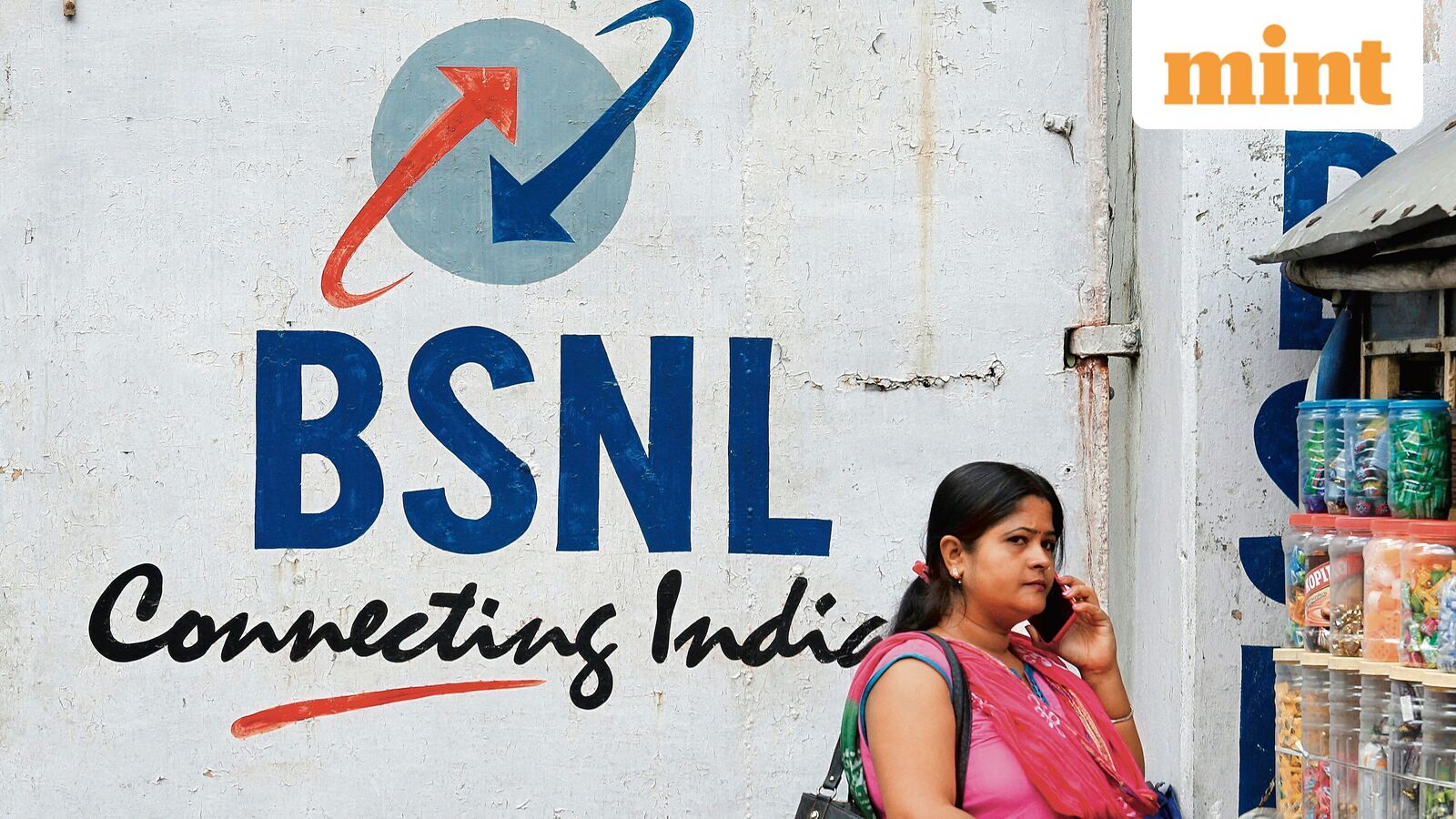
Bharat Sanchar Nigam Ltd (BSNL), India’s venerable state-owned telecommunications operator, is undertaking a significant recalibration of its operational strategy and performance metrics following a challenging fiscal quarter marked by substantial financial setbacks. The company reported a net loss of ₹1,302 crore for the October-December period, a stark reversal from the ₹264 crore net profit posted in the corresponding period of the previous fiscal year. This downturn underscores the persistent financial pressures confronting BSNL, prompting an urgent re-evaluation of its operational efficiency and a renewed focus on cash generation across its extensive regional footprint.
The brief period of profitability BSNL experienced in the preceding financial year, which included its first profit in 17 years, was largely attributed to specific accounting adjustments. These included a revised depreciation methodology and the reclassification of certain employee costs as capital work in progress, effectively lowering reported expenses. However, the transient benefits of these adjustments have since dissipated, ushering the company back into a cycle of losses. For the nine months ending December, BSNL’s cumulative loss escalated to ₹3,709 crore, an increase from ₹2,521 crore reported in the same period a year prior, highlighting a deepening fiscal challenge despite a marginal narrowing of losses from the July-September quarter’s ₹1,358 crore.
A critical internal review conducted in January brought to light a significant "profitability gap" across BSNL’s vast operational network. The analysis revealed that an alarming 67 of the public sector unit’s 174 operating regions—constituting over one-third of its total circles—were generating operational losses. This extensive drag on overall earnings has been a primary contributor to the company’s precarious financial health. These underperforming units collectively recorded a negative Earnings Before Interest, Taxes, Depreciation, and Amortization (EBITDA) of approximately ₹608 crore over the nine-month period ending December. In stark contrast, the remaining, more efficient units managed to generate an EBITDA of roughly ₹2,435 crore, leading to a consolidated net EBITDA of ₹1,827 crore. The internal report emphasized that BSNL’s EBITDA could have surpassed ₹2,435 crore had it not been for the substantial drag exerted by these financially distressed regions.

The geographic spread of these EBITDA-negative regions is notable, encompassing economically significant states such as West Bengal, Gujarat, Uttar Pradesh (both East and West), Telangana, Maharashtra, Madhya Pradesh, and Bihar. This widespread underperformance necessitates targeted interventions, and in response, BSNL has issued directives to its circle heads. The mandate is clear: identify specific root causes for financial underperformance within their respective regions and implement concrete measures to enhance revenue streams while simultaneously curbing operational expenditures. The ambitious goal is to transform all these EBITDA-negative units into positive contributors by the end of the current financial quarter, March.
In a pivotal strategic shift aimed at fostering genuine operational self-sufficiency, BSNL is transitioning its core performance evaluation metric from traditional EBITDA to "adjusted EBITDA." This redefinition is crucial because conventional EBITDA, while widely used, can often include non-cash accounting entries such as government capital grants, write-backs of excess provisions, and adjustments related to lease liabilities. While these entries might artificially inflate reported profitability on paper, they do not always translate into actual cash flow available to the company for its operations or investments. The new "adjusted EBITDA" metric specifically excludes these non-cash or accounting-led gains but crucially incorporates actual lease payments—representing the real cash outflow incurred for leased assets like towers, buildings, and equipment. This refined metric is expected to provide a more transparent and accurate reflection of which regions and circles are truly generating cash and contributing to BSNL’s long-term financial viability, aligning performance assessment with the imperative of independent operational funding. For the nine months ending December, BSNL’s adjusted EBITDA stood at approximately ₹500 crore, a figure that paints a clearer picture of its core cash-generating capabilities.
This shift in financial reporting aligns with broader governmental expectations for public sector enterprises to reduce their reliance on state subsidies. BSNL has historically been heavily dependent on government backing, benefitting from concessions such as not paying fees for spectrum usage or transferring a share of its revenue, unlike its private sector counterparts. Furthermore, it receives significant capital expenditure support directly from the Department of Telecommunications (DoT), its parent ministry. Union Communications Minister Jyotiraditya Scindia previously highlighted the impact of higher depreciation on BSNL’s bottom line, advising analysts to focus on operating profit and EBITDA rather than net profit, especially given the substantial capital expenditure of ₹25,000 crore planned for FY25. His call for strict cost discipline and the elimination of negative EBITDA at the circle level underscores the government’s resolve to instill greater financial accountability within the organization.
Despite its financial struggles, BSNL has demonstrated some traction in revenue growth and subscriber acquisition. In the December quarter, revenue from operations saw a respectable 7.1% year-on-year increase and a 3.1% quarter-on-quarter rise, reaching ₹5,325 crore. This growth was primarily fueled by the consumer mobility business, which contributes a significant 45% (or ₹2,411 crore) to BSNL’s top line, bolstered by its expanding 4G network. The operator successfully added 483,962 mobile subscribers during the period, bringing its total base to 92.7 million by the end of December. While this represents a positive trend, BSNL still lags considerably behind market leaders such as Reliance Jio (489 million subscribers), Bharti Airtel (369 million), and Vodafone Idea (193 million), according to data from the Telecom Regulatory Authority of India (TRAI). The challenge remains for BSNL to not only sustain this growth but accelerate it significantly to compete effectively in a market rapidly transitioning to 5G, where it has been a late mover in network upgrades.

Looking ahead, an expert suggestion from Satya N. Gupta, a former principal advisor at TRAI, advocates for the creation of an Infrastructure Investment Trust (InvIT) to house BSNL’s extensive network assets and physical infrastructure. An InvIT, a financial structure that allows infrastructure assets to be monetized by raising capital from investors, could unlock substantial value from BSNL’s towers, fiber optic networks, and land holdings. This model, successfully deployed in sectors like power and roads, would not only provide a pathway for BSNL to become financially self-sustaining but also enhance its accountability to both the public and potential investors. By separating asset ownership from service delivery, an InvIT could provide a much-needed capital injection and streamline BSNL’s balance sheet, allowing it to focus on core telecom services.
The Department of Telecommunications has set an ambitious revenue target for BSNL: ₹28,476 crore for the fiscal year 2025-26, representing a formidable 37% increase from the previous year’s figures. Achieving this target will require more than just incremental improvements; it demands a fundamental transformation in BSNL’s market strategy, network capabilities, and operational execution. The company’s nine-month revenue stood at ₹15,521 crore, reflecting a 9.2% growth, indicating the scale of the challenge ahead. To meet such a demanding objective, BSNL will need to rapidly accelerate its 4G and impending 5G deployments, enhance its service quality to attract and retain subscribers in a highly competitive market, diversify its revenue streams through enterprise solutions, fiber-to-the-home services, and potentially capitalize on emerging technologies like IoT.
BSNL stands at a critical juncture, navigating the complexities of a highly competitive and technologically evolving telecom landscape while simultaneously striving to shed its historical reliance on government support. The current performance reset, with its stringent focus on adjusted EBITDA and regional accountability, signals a determined effort to instill financial discipline and foster a culture of self-sustenance. The success of these initiatives, coupled with strategic asset monetization and aggressive market expansion, will determine BSNL’s ability to reclaim its position as a vital player in India’s digital future and alleviate the fiscal burden on the exchequer.