


India stands on the cusp of a profound digital transformation, propelled by an ambitious expansion of its data centre infrastructure, poised to become a global hub for digital services. This rapid proliferation, however, presents a significant challenge to the nation’s existing power grid, demanding strategic foresight and substantial investment to avert potential energy crises. By the close of this decade, India anticipates establishing an astounding 10 gigawatts (GW) of data centre capacity, a monumental leap from its current 1.2 GW. This trajectory, backed by government projections indicating investments exceeding $200 billion, underscores the country’s intent to solidify its position in the global digital economy, but simultaneously spotlights the urgent need for a robust and resilient energy backbone.
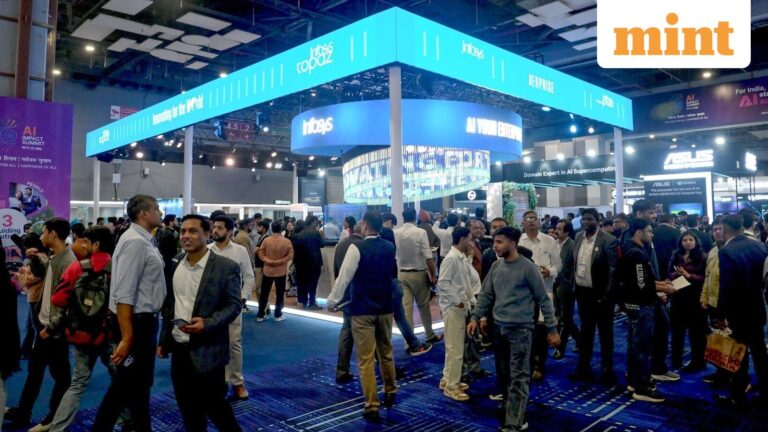
The growth trajectory of India’s data centre industry has been nothing short of meteoric, marking it as one of the fastest-growing in the Asia-Pacific region. From 2021 to 2025, the sector expanded at an impressive annual rate of 25.47% in terms of capacity. This acceleration is not merely a consequence of increased internet penetration or cloud adoption; it is fundamentally driven by the burgeoning demand for advanced computing, particularly from artificial intelligence (AI) workloads, hyperscale cloud providers, and domestic enterprises seeking to digitise operations. Major investments are funnelling into key states such as Andhra Pradesh, Uttar Pradesh, Maharashtra, Telangana, Karnataka, and Tamil Nadu, transforming these regions into epicentres of digital infrastructure. Samir Chandra Saxena, Chairman and Managing Director of Grid India, recently highlighted at the India AI Impact Summit that the cumulative data centre capacity could realistically reach 8-10 GW by 2030, a testament to both market demand and government policy support, such as infrastructure status for data centres and various state-level incentives.

This exponential growth in data centre capacity, while economically transformative, carries a substantial energy footprint. Data centres are inherently power-intensive facilities, operating 24/7 to cool servers, run networking equipment, and maintain uninterrupted service. A traditional data centre rack typically consumes between 5 and 10 kilowatts (kW) of power. However, the advent of AI and high-performance computing (HPC) has dramatically altered this landscape. AI-focused racks, designed to handle complex algorithms and massive datasets, can demand 10 to 15 times more power than their conventional counterparts. This shift implies that the projected 10 GW capacity will not only draw significantly more power but will also concentrate this demand in specific geographical clusters.
The implications for India’s power sector are profound. From an estimated 10-15 terawatt-hours (TWh) consumed by data centres in 2024, the demand is projected to skyrocket to an additional 40-45 TWh by 2030. This would elevate the share of data centre electricity consumption from a modest 0.8% of the national total to a substantial 2.5-3% within six years. Debasish Mishra, Chief Growth Officer at Deloitte South Asia, articulated the scale of this challenge, noting that these data centre clusters are likely to consume approximately 2 GW of power each around the clock. Such concentrated, continuous demand has the potential to fundamentally alter the demand profile of a specific area and even an entire state, thereby impacting the national grid. While India boasts a formidable power system with over 260 GW of renewable power capacity and an integrated grid connecting five regional networks, a sudden surge of 2-3 GW in a state like Maharashtra or Karnataka could be destabilising without adequate pre-emptive planning, risking grid instability and even localised blackouts.
The primary bottleneck in ensuring smooth operations for these power-hungry data centres lies in the existing transmission infrastructure. India’s power transmission capacity, currently exceeding 500,000 circuit kilometers (ckm), is undergoing expansion, with plans to add over 191,000 ckm between 2022-23 and 2031-32. However, the pace of execution has been a concern. For instance, only 5,077 ckm of transmission lines were added by December in a recent fiscal year, falling short of the 10,696 ckm target for the April-December period. This shortfall is not merely a statistical anomaly; it translates into tangible consequences, such as frequent instances of power generation curtailment in states like Rajasthan and Gujarat, where generated power cannot be efficiently transmitted to demand centres. Saxena of Grid India emphasized that the rapid expansion of data centres necessitates a significant overhaul in grid planning and operations, particularly in accelerating power evacuation and transmission capacity.

Addressing these infrastructure gaps requires a multi-pronged approach. Deloitte Asia Pacific, in its report "Powering Asia Pacific’s Data Centre Boom," outlined several critical interventions. Firstly, the acceleration of renewable energy integration, particularly through solar-wind hybrid models combined with robust energy storage solutions, is paramount to ensure the reliable, round-the-clock power required for high-density AI workloads. Secondly, expanding long-term green power purchase agreements (PPAs), promoting group captive structures, and facilitating captive renewable installations are crucial for providing tariff certainty and mitigating price volatility for data centre operators. Lastly, the report advocates for the standardization of state-level renewable banking policies, which would allow for the storage and retrieval of excess clean energy, enabling more predictable and consistent power portfolios. Beyond these, upgrading transmission networks and strategically establishing high-capacity substations near projected data centre growth clusters are non-negotiable steps.
The growing emphasis on sustainability also positions renewable energy as a cornerstone of India’s data centre strategy. Large corporations, particularly international hyperscalers, are increasingly committed to achieving ambitious climate targets, often demanding 100% renewable energy sourcing for their global operations. This imperative aligns perfectly with India’s vast renewable energy potential. Integrating renewable energy sources like solar and wind power not only helps data centres meet their environmental commitments but also contributes to reduced operational costs and improved Power Usage Effectiveness (PUE), a key metric for energy efficiency. India’s commitment to clean energy, therefore, can position it as a global leader in sustainable AI infrastructure, strengthening its long-term energy security while attracting green investments. A notable example of this trend is the AM Group, backed by Greenko founders, which announced plans for a 1 GW AI computing hub in Uttar Pradesh with a staggering capital expenditure of $25 billion, expressly stating its intent to source round-the-clock green power from its captive renewable plants.
The strategic importance of this digital infrastructure extends beyond mere economic growth. A robust, secure, and sustainable data centre ecosystem is vital for national security, data sovereignty, and maintaining a competitive edge in the global digital landscape. As India pushes for greater digital inclusion, e-governance, and a trillion-dollar digital economy, the reliability of its foundational data infrastructure becomes paramount. The government’s proactive stance, through initiatives and policy frameworks, indicates an understanding of this critical nexus. However, the scale of the power infrastructure challenge demands coordinated efforts across federal and state governments, public and private sector players, and innovative technological solutions. The ambition is clear: to establish India as a digital powerhouse. The path to achieving this, however, is inextricably linked to the nation’s ability to electrify this future sustainably and reliably, transforming a potential bottleneck into a powerful enabler of its digital destiny.