


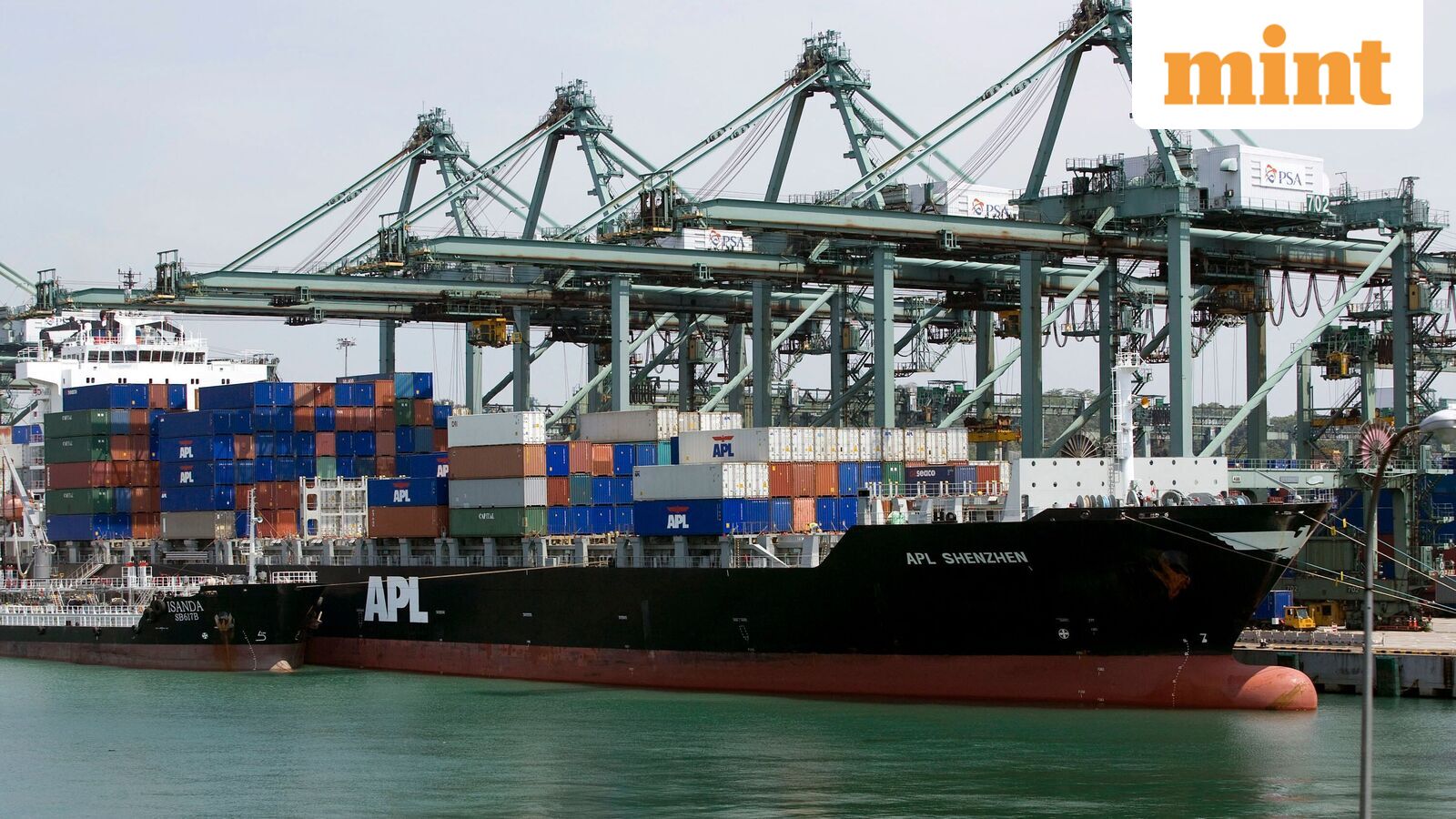
India is embarking on an ambitious journey to establish itself as a formidable global hub for container manufacturing, a strategic pivot designed to de-risk international supply chains, enhance domestic self-reliance, and significantly bolster its maritime economy. This comprehensive initiative, underpinned by substantial governmental backing, has already begun to draw keen interest from major international shipping conglomerates, including industry giants like A.P. Moller – Maersk, Mediterranean Shipping Company (MSC), and CMA CGM, alongside prominent domestic players such as JSW Group and Container Corporation of India (Concor). The concerted effort seeks to fundamentally transform India’s position in the global logistics landscape, moving it from a significant importer of crucial shipping infrastructure to a key exporter and a pillar of global supply chain resilience.
The impetus behind this monumental push stems from the severe dislocations experienced during the recent global health crisis, which exposed the acute vulnerabilities of a highly centralized global container production ecosystem. With China historically dominating over 90% of the world’s container manufacturing, the pandemic-induced port closures, manufacturing halts, and subsequent demand surges led to unprecedented container shortages, skyrocketing freight rates, and crippling delays across global trade routes. For India, a rapidly growing economy heavily reliant on international trade, this translated into significant logistical challenges, impacting its export competitiveness and domestic industrial output. Official estimates underscore this dependency, revealing that India annually imports approximately two million empty containers, while its current domestic manufacturing capacity stands at a mere 30,000 twenty-foot equivalent units (TEU) per year, a stark contrast to China’s annual output of six million units.

To address this strategic vulnerability, the Indian government has unveiled a multi-pronged strategy, anchored by a substantial ₹10,000 crore five-year container manufacturing programme announced in the Union Budget. This initial outlay is seen as a foundational commitment, with the government signaling its willingness to inject additional funds as needed to achieve its overarching objective: to meet at least 10% of the annual global container demand domestically. The broader vision targets attracting approximately ₹60,000 crore in total investments to build large-scale manufacturing capacity. The initial phase aims for an annual production of 750,000 units of 20-foot equivalent unit dry cargo containers, with an aggressive long-term goal of scaling this up to over seven million containers within the next decade. This represents a more than two-hundred-fold increase from current levels, signaling a profound industrial transformation.
The robust interest from global shipping behemoths like Maersk, MSC, and CMA CGM is a testament to the strategic foresight of India’s initiative. These companies, which collectively control a significant portion of global containerized trade, experienced first-hand the operational and financial strains of container scarcity. Establishing manufacturing bases in India offers them not only a diversified supply source but also potentially more stable and cost-effective access to new equipment, particularly as global trade patterns continue to evolve. For domestic giants like JSW Group, with its extensive steel manufacturing capabilities, and Concor, a leading multimodal logistics provider, the opportunity aligns perfectly with their existing business models and the broader ‘Make in India’ mandate. Such collaborations are envisioned to create a synergistic ecosystem where demand aggregation by major shipping lines provides long-term off-take commitments, thus de-risking investments for manufacturers.
To ensure the commercial viability and attractiveness of domestic container production, the government is rolling out a comprehensive incentive package. A key component is the provision of Viability Gap Funding (VGF) drawn from the ₹10,000 crore budgetary allocation. VGF is designed to bridge the cost differential between locally manufactured containers and those imported from established, low-cost production centers, primarily China, thereby making Indian-made containers price-competitive in both domestic and international markets. Furthermore, the scheme includes provisions for concessional land allotments strategically located near major ports and maritime clusters. This will significantly reduce logistical overheads for manufacturers, streamlining the supply chain from production to deployment. The policy framework also mandates a phased increase in domestic content, starting at 60% and escalating to 80% by the end of the scheme, fostering the growth of ancillary industries such as specialized steel production, corner casting, and industrial paints.

The economic ramifications of this initiative extend far beyond mere container production. Projections indicate that the program will generate a market value of ₹80,000 crore, creating approximately 3,000 direct and an impressive 50,000 indirect jobs across various sectors. The surge in demand for high-grade steel, specialized alloys, and industrial coatings will invigorate upstream manufacturing industries. Downstream, the guaranteed availability of containers at competitive prices is expected to significantly reduce logistics costs for Indian exporters and importers, thereby enhancing the country’s overall trade competitiveness. Moreover, reducing reliance on imported empty containers will result in substantial foreign exchange savings, contributing positively to India’s balance of payments. Experts in the logistics and infrastructure sectors view this as a pivotal move, not only for fortifying India’s supply chain resilience but also for positioning the nation as a reliable regional manufacturing and logistics hub.
Parallel to the push for container manufacturing, the Indian government is also strategically expanding its indigenous maritime capabilities through the establishment of the Bharat Container Shipping Line (BCSL). This joint venture, anchored by the Shipping Corporation of India (SCI) and Concor, with equity participation from major port authorities like Jawaharlal Nehru Port Authority (JNPA), V.O. Chidambaranar Port Authority, and Chennai Port Authority, aims to accelerate the acquisition and ownership of Indian-flagged container vessels. Supported by the Maritime Development Fund (MDF), BCSL is envisioned to develop a robust fleet of approximately 51 container vessels over the next two decades, targeting a capacity of about 0.6 million TEUs by 2045. This phased induction of fuel-efficient and dual-fuel ships will not only reduce India’s reliance on foreign shipping lines for its trade but also create a captive market for domestically manufactured containers, thereby establishing a synergistic ecosystem of maritime self-reliance.
While the vision is ambitious, its execution will require navigating several challenges, including ensuring consistent quality standards, attracting cutting-edge manufacturing technology, developing a skilled workforce, and managing global market fluctuations. However, the government’s comprehensive 13-year roadmap, encompassing capital expenditure support for new plants and operational expenditure assistance to offset cost gaps, demonstrates a long-term commitment. By leveraging its growing industrial base, strategic location, and a proactive policy environment, India is poised to emerge as a critical player in the global container logistics arena, enhancing its economic sovereignty and contributing significantly to the diversification and resilience of international trade infrastructure. This strategic pivot marks a defining moment in India’s journey towards becoming a self-reliant and globally integrated economic powerhouse.