

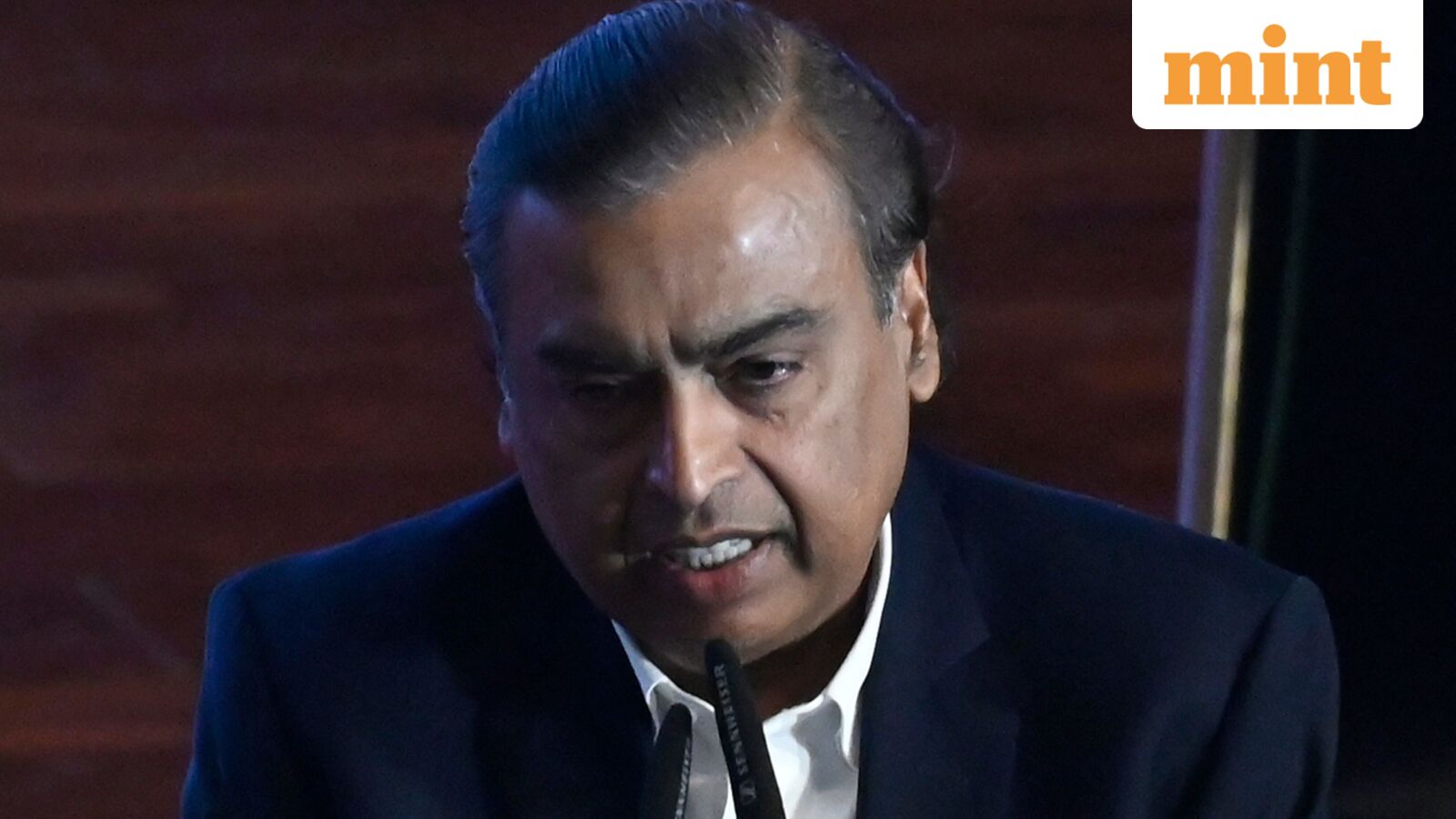
Amidst a palpable undercurrent of anxiety concerning the disruptive capabilities of advanced artificial intelligence, Mukesh Ambani, chairman of Reliance Industries Ltd, has issued a powerful clarion call, urging a proactive embrace of AI as a foundational, once-in-centuries opportunity for India to redefine its global economic standing over the next two to three decades. This optimistic vision, articulated during a high-profile forum with BlackRock chairman and CEO Larry Fink, comes at a critical juncture for the global technology landscape, where the swift evolution of AI tools has sparked both immense excitement and considerable trepidation among investors and industry leaders alike.
The apprehension within the technology sector is not unfounded. Recent market movements vividly illustrate this sentiment, with India’s bellwether Nifty IT index experiencing a significant slump, plummeting nearly 6% on the very day Ambani delivered his remarks. This sharp correction was largely triggered by the market’s reaction to the debut of advanced AI agents like Anthropic’s Claude CoWork plugins and Palantir’s Hivemind AI. These sophisticated platforms threaten to automate tasks traditionally handled by human-driven, billable-hour business models, which form the bedrock of India’s multi-billion-dollar IT services industry. Palantir’s announcement, in particular, highlighted Hivemind AI’s newfound capability to autonomously migrate data from legacy systems—a core revenue stream for many Indian IT firms, raising immediate concerns about job displacement and the obsolescence of established service offerings.
Ambani, however, views these developments not as existential threats but as catalysts for a profound economic transformation, drawing a compelling parallel to the Industrial Revolution. That historical epoch, he noted, propelled humanity forward from centuries of stagnant 0.3% annual growth to a sustained global average of 3%, fundamentally reshaping societies, economies, and human capabilities. Just as the idea of traversing 2,000 kilometers in a day seemed fantastical two centuries ago but is now commonplace with air travel, AI promises to unlock capabilities and efficiencies currently unimaginable. This perspective posits that the current anxieties, while understandable, mirror historical resistance to technological progress before its broader societal benefits became evident.
The global artificial intelligence market, valued at approximately $150 billion in 2023, is projected to surge past $1.8 trillion by 2030, reflecting a compound annual growth rate exceeding 37%. India, with its vast talent pool, burgeoning digital infrastructure, and entrepreneurial spirit, is uniquely positioned to capture a significant share of this growth. The country graduates millions of STEM professionals annually, boasts one of the world’s largest internet user bases, and has rapidly adopted digital public infrastructure like Aadhaar and UPI, which provide a robust foundation for AI integration and innovation at scale.
For India, embracing AI could translate into unprecedented productivity gains across various sectors. In manufacturing, AI-powered automation and predictive maintenance can optimize production lines, reduce waste, and enhance quality. In healthcare, AI can revolutionize diagnostics, drug discovery, and personalized treatment plans, making quality healthcare more accessible. The financial services industry stands to benefit from AI-driven fraud detection, risk management, and personalized investment advice. Even the agrarian sector, a cornerstone of the Indian economy, could see significant improvements through AI-powered precision farming, crop yield prediction, and supply chain optimization. The economic impact could be staggering, with some global consulting firms estimating that AI could add trillions of dollars to the global GDP over the next decade, with emerging economies like India being major beneficiaries if they adapt swiftly.

Larry Fink echoed Ambani’s sentiment on the long-term potential, albeit with a crucial caveat: the success of AI in society hinges on its ability to broaden economic opportunity rather than concentrate it. While the initial phase of any disruptive technology often creates uneven outcomes, the ultimate goal must be to ensure that AI expands economic growth equitably across countries and demographics. Fink emphasized AI’s power to help companies better understand clients, manage complex operations, and dramatically improve efficiency, making its impact potentially very powerful and pervasive. This perspective underscores the importance of inclusive development strategies and robust regulatory frameworks to prevent exacerbating existing inequalities.
The discourse around AI’s impact on employment is particularly contentious. While some routine, process-driven jobs are indeed vulnerable to automation, history suggests that technological advancements also create new industries and job categories. The transition from an agricultural to an industrial economy, and then to a service-based and information economy, saw the continuous evolution of work. AI is expected to accelerate this trend, necessitating a massive re-skilling and up-skilling effort. India’s demographic dividend, with a large youth population, presents both a challenge and an opportunity. Equipping this young workforce with AI literacy, data science skills, and critical thinking capabilities will be paramount to harnessing the benefits and mitigating job displacement. Government initiatives, private sector training programs, and academic reforms will be crucial in this endeavor.
Beyond productivity and efficiency, AI offers India a unique opportunity for global leadership in innovation. The country’s vibrant startup ecosystem, a particular source of excitement for Ambani, is seen as the breeding ground for a "hundred new Reliances." Indian startups are already leveraging AI in diverse fields, from ed-tech and fintech to healthcare and logistics, often developing solutions tailored to the unique challenges and opportunities of emerging markets. This indigenous innovation, fueled by aspirational founders and supported by a growing venture capital landscape, can position India not just as a consumer of global AI technologies but as a significant developer and exporter of AI solutions. The partnership between Reliance’s Jio Platforms and BlackRock, for instance, in developing digital public infrastructure and asset management solutions, exemplifies the kind of strategic alliances that can accelerate AI adoption and innovation.
To fully capitalize on this opportunity, India must navigate several challenges. These include ensuring equitable access to digital infrastructure, addressing the digital divide, fostering a robust data governance framework that balances innovation with privacy, and investing heavily in research and development to build indigenous AI capabilities. Furthermore, ethical considerations surrounding AI, such as bias in algorithms, data security, and accountability, will require careful attention and thoughtful policy formulation.
Ambani’s confident assertion that "the tree of the Indian economy is bearing fruits with great visibility, with sustainability and abundance" in this new era of AI encapsulates a national ambition. It is a call to move beyond the fear of disruption and embrace the potential for a paradigm shift that could propel India into a new era of prosperity and global influence. By strategically investing in talent, infrastructure, and innovation, and by fostering an environment conducive to technological adoption and ethical development, India has the potential to not just adapt to the AI revolution but to lead it, shaping a future where technology serves as a powerful engine for inclusive and sustainable economic growth on an unprecedented scale. The journey will be complex, but the long-term vision articulated by industry titans like Ambani and Fink suggests a future where AI unlocks human potential in ways we are only just beginning to comprehend.