

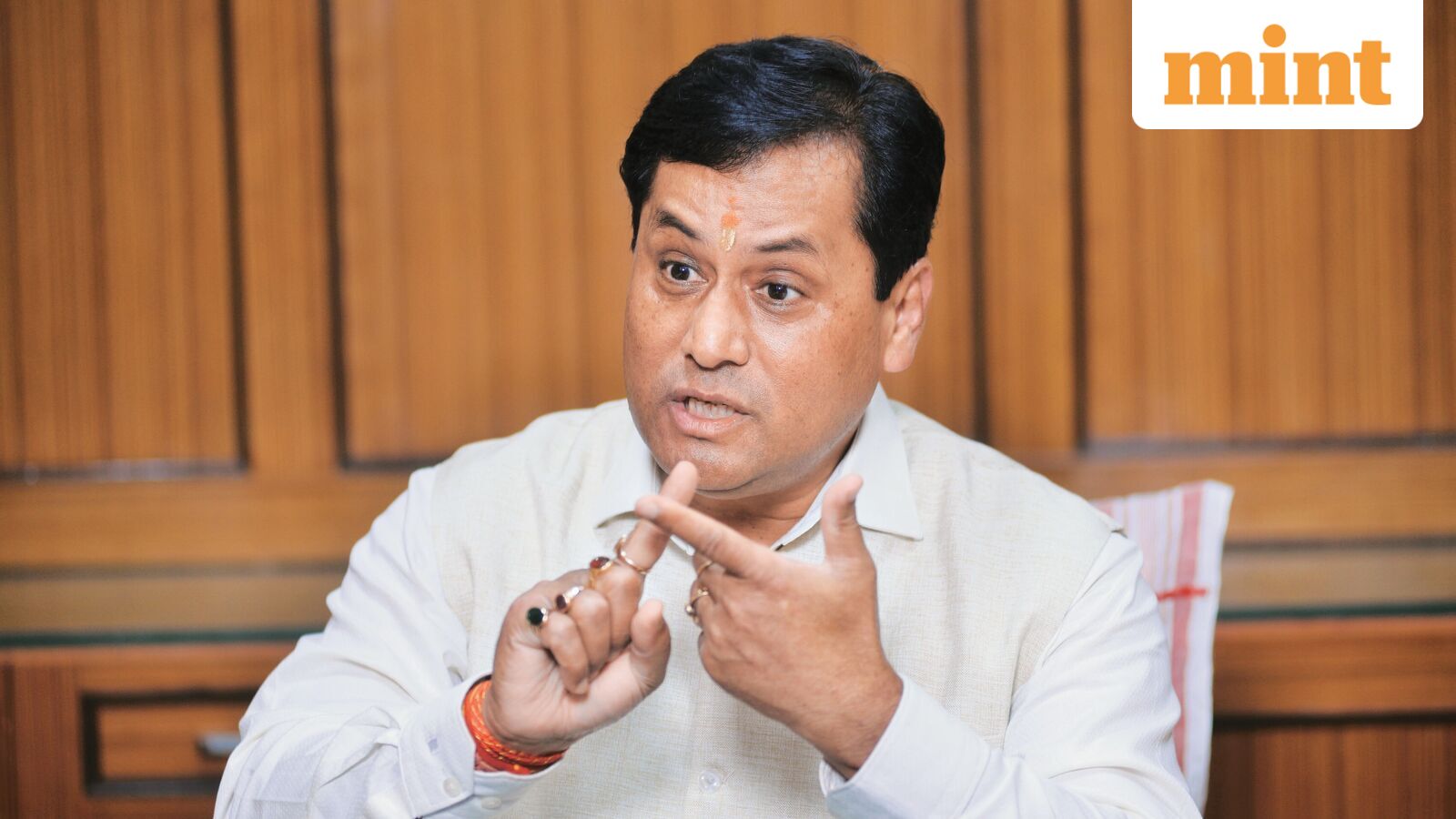
India is poised to significantly escalate its presence in the global maritime sector, embarking on an ambitious journey to meet burgeoning international demand for large vessels, including Very Large Crude Carriers (VLCCs), sophisticated container ships, and Panamax-class vessels. This strategic pivot, articulated by Union Minister for Ports, Shipping and Waterways Sarbananda Sonowal, signals a transformative era for the nation’s shipbuilding industry, traditionally a niche player on the world stage. The overarching vision is to transition from a largely domestic-focused industry to a globally competitive hub, underpinned by substantial government investment, strategic international collaborations, and a comprehensive reform agenda.
The blueprint for this maritime renaissance was formally unveiled in October 2025, with the approval of a monumental ₹70,000 crore shipbuilding and maritime development reform package. This multi-pronged initiative is structured around four critical pillars designed to invigorate every facet of the sector. The first pillar is the ₹24,736 crore Shipbuilding Financial Assistance Scheme, which encompasses direct financial aid, ship-breaking credit notes, and the establishment of a National Shipbuilding Mission. This scheme aims to lower the capital expenditure burden for shipyards, making them more competitive against established global players and encouraging the adoption of advanced manufacturing techniques.
Central to the financial architecture is the second pillar: a ₹25,000 crore Maritime Development Fund. This fund is bifurcated into a ₹20,000 crore Maritime Investment Fund dedicated to equity and long-term financing, and a ₹5,000 crore Interest Incentivization Fund offering a crucial 3% interest subsidy on shipbuilding-related loans. Such targeted financial instruments are vital for an industry characterized by long gestation periods and significant capital outlay, enabling domestic shipbuilders to access more affordable credit and undertake larger, more complex projects. Globally, countries like South Korea and China have leveraged similar state-backed financial support to build their shipbuilding behemoths, demonstrating the efficacy of such strategic funding.
The third pillar, a ₹19,989 crore Shipbuilding Development Fund, focuses on fostering shipping and shipbuilding clusters. This approach seeks to replicate the success of industrial clusters seen in other manufacturing sectors, where geographical proximity of ancillary industries, research institutions, and skilled labour creates a synergistic ecosystem. By concentrating resources and expertise, these clusters are expected to drive innovation, improve supply chain efficiencies, and reduce overall production costs, thereby enhancing the global competitiveness of Indian shipyards. Finally, the fourth pillar addresses critical legal, policy, and process reforms, aiming to establish a unified dispute-resolution and arbitration framework. This is a crucial step towards creating a transparent and predictable business environment, indispensable for attracting foreign direct investment and fostering long-term international partnerships.

A key enabler of India’s ascent in large vessel manufacturing will be strategic global tie-ups, including technology transfers and joint ventures. Minister Sonowal revealed that two of the world’s largest shipbuilding powerhouses, HD Hyundai Heavy Industries and Samsung Heavy Industries of South Korea, have expressed keen interest in collaborating with Indian shipbuilders. These collaborations are not merely transactional; they represent a strategic transfer of high-end manufacturing expertise, design capabilities, and project management acumen that have historically been the preserve of a few dominant nations. For India, such partnerships offer a fast track to acquiring the sophisticated technology required for constructing complex vessels like VLCCs and mega-container ships, segments where India currently has minimal presence. For the Korean giants, it provides access to a rapidly growing market, a vast pool of skilled labour, and potential diversification of their manufacturing footprint amid evolving geopolitical and supply chain dynamics. This move aligns with broader global trends where major maritime nations are exploring diversified manufacturing bases to enhance resilience.
Beyond shipbuilding, India is simultaneously undertaking a massive overhaul of its port infrastructure to meet the demands of an expanding economy and integrate seamlessly into global supply chains. The ministry’s objective is to significantly boost overall port capacity from the present 2,771 million tonnes per annum (mtpa) in 2024-25 to approximately 3,500 mtpa by 2029-30, marking a planned capacity addition of roughly 514 mtpa. This ambitious augmentation will be realized through a robust pipeline of major projects. Key developments include the Vadhvan Port, projected to add 200 mtpa by June 2029; the Tuna Tekra Container Terminal at Deendayal Port, adding 35 mtpa by February 2027; and a multipurpose cargo berth at Tuna Tekra, contributing 18 mtpa by April 2029. Other significant projects include the Tuticorin Outer Harbour at VOC Port (80 mtpa by April 2028) and the Paradip Western Dock (30 mtpa by October 2028), alongside capacity creation at non-major ports such as Vizhinjam, Keni, Machilipatnam, Ramayapatnam, and Mulapeta. These infrastructure upgrades are critical to improving logistics efficiency, reducing turnaround times, and lowering overall trade costs, directly supporting India’s vision of becoming a $5 trillion economy.
The Sagarmala 2.0 scheme is envisioned as the strategic framework supporting these port expansion initiatives, focusing on coastal economic development, port-led industrialization, and enhanced connectivity. Globally, efficient port infrastructure is a cornerstone of competitive trade, and India’s efforts aim to bring its ports on par with leading international maritime gateways.
Complementing the port expansion is a significant push for inland waterway development. The government has committed to operationalizing 20 new national waterways over the next five years, representing the most substantial expansion since the National Waterways Act of 2016. This includes the strategic development of NW-5 in Odisha, connecting mineral-rich areas like Talcher and Angul and industrial hubs like Kalinga Nagar to the major ports of Paradeep and Dhamra. NW-5 alone holds immense cargo potential, projected to handle 10 million tonnes by 2032 and 20 million tonnes by 2047. Inland waterways offer a cost-effective, fuel-efficient, and environmentally friendly mode of transport, critical for decongesting India’s road and rail networks. Since 2014, approximately ₹6,434 crore has already been invested in developing waterway infrastructure, resulting in a record 145.5 million tonnes of cargo movement in 2024-25, further increasing to 160 million tonnes in the current fiscal year to date. This integrated approach to multimodal logistics corridors is designed to unlock efficiencies across the entire supply chain, attracting significant private sector participation in fleet augmentation, terminal development, and associated infrastructure.
The Union Budget 2026-27 further solidified this maritime vision with targeted announcements aligned with the Maritime Amrit Kaal Vision 2047. A notable measure is the ₹10,000 crore Container Manufacturing Assistance Scheme (CMAS) over five years, aimed at creating an annual domestic capacity of 0.75 million TEUs (twenty-foot equivalent units). This scheme is designed to address India’s historic reliance on imported containers, a vulnerability highlighted by global supply chain disruptions. By fostering domestic container production, India aims to generate ₹80,000 crore in market value and create 3,000 direct and 50,000 indirect jobs, while bolstering the resilience of its containerized cargo ecosystem.

Furthermore, tax reforms announced in the budget extend International Financial Services Centre (IFSC)/Offshore Banking Units deductions to 20 years (then at a 15% rate), making India a more attractive destination for maritime financing. Customs duty exemptions on vessel imports have also been eased—for small vessels until 2028 and for large vessels indefinitely. These exemptions are critical for boosting India’s flagging fleet and encouraging fleet augmentation, reducing operational costs for Indian shipping lines, and improving their global competitiveness.
In a significant strategic move, the government is establishing the Bharat Container Shipping Line (BCSL), envisioned as a national priority. This entity is being structured as a joint venture, anchored by the Shipping Corporation of India (SCI), with key participation from CONCOR, Jawaharlal Nehru Port Authority (JNPA), V.O. Chidambaranar Port Authority, and Chennai Port Authority. The BCSL aims to develop a fleet of approximately 51 container vessels over the next two decades, targeting a capacity of about 0.6 million TEUs by 2045. This phased induction will prioritize fuel-efficient, dual-fuel ships, aligning with global environmental standards. The establishment of BCSL is a direct response to geopolitical uncertainties and the historic shortage of ships and containers, aiming to reduce India’s reliance on foreign shipping lines and secure its trade routes. The initial phase of vessel acquisition and operationalization is expected to commence soon, marking a pivotal step towards enhancing India’s maritime self-reliance and asserting its presence in global container shipping.
Collectively, these initiatives represent a robust and multi-faceted strategy to elevate India’s position in the global maritime domain. By investing heavily in shipbuilding, port infrastructure, inland waterways, and fostering a supportive policy environment, India is not merely responding to global demand but actively shaping its future as a formidable maritime power, with profound implications for its economic growth, trade competitiveness, and strategic influence on the international stage.