

The vibrant expanse encompassing Neopolis, Kokapet, and Narasingi, identifiable by the postal code 500075 within Hyderabad Urban, has ascended to become India’s preeminent residential real estate market by sales value in 2025. This remarkable surge positions the area as a critical economic driver, attracting significant capital flows and top-tier developers, and signaling a profound transformation in India’s urban development landscape. The region recorded an astounding ₹24,341 crore in residential transactions last year, marginally surpassing the combined sales of Gurugram’s top-performing postal codes, which registered approximately ₹24,112 crore. This financial prowess is not merely a localized boom but a testament to Hyderabad’s strategic growth, underpinned by robust infrastructure, proactive governance, and an escalating demand for premium living and commercial spaces.

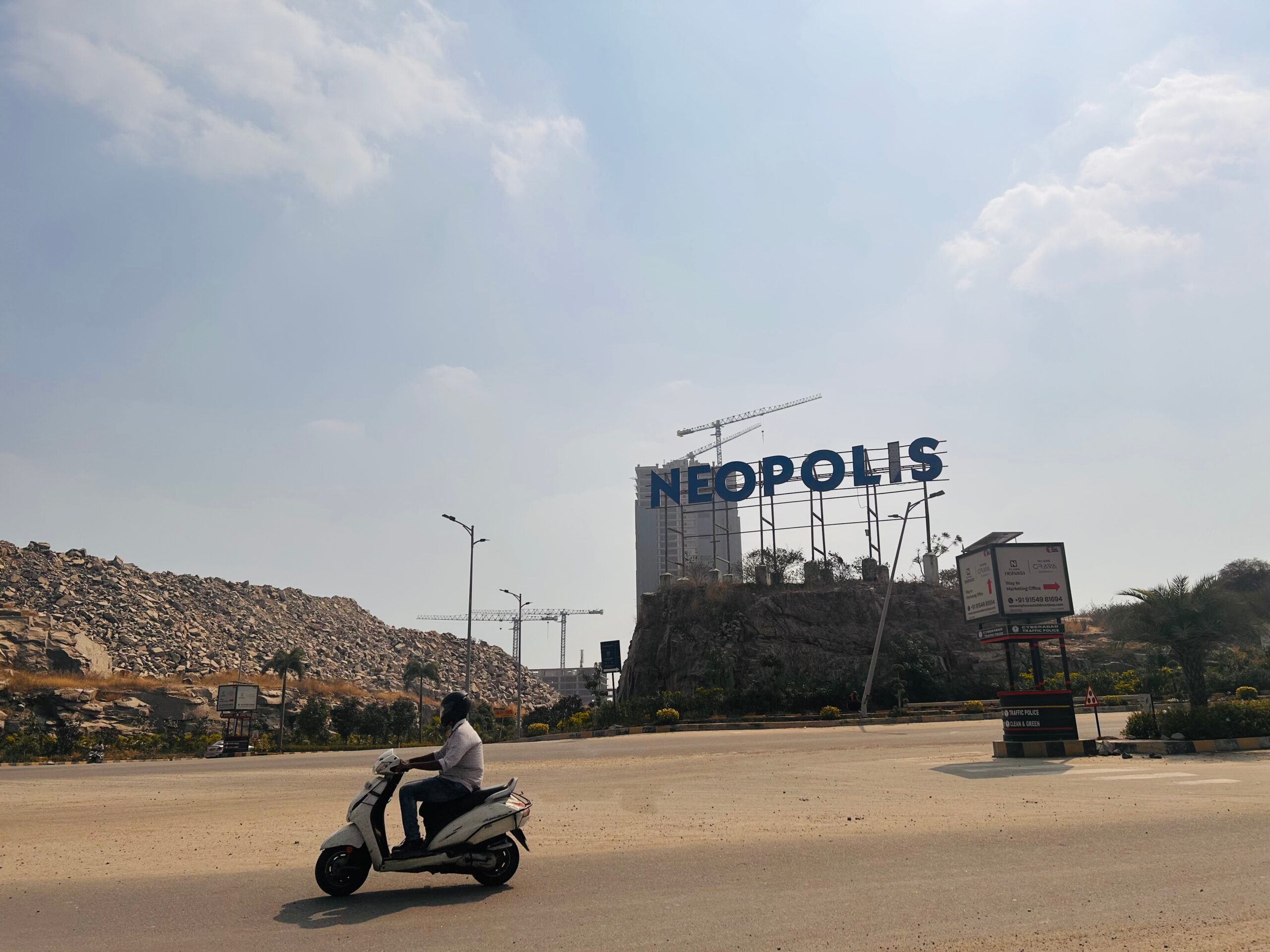
At the heart of this phenomenon lies Neopolis, a meticulously planned 530-acre mixed-use development in West Hyderabad. Once characterized by the rugged Deccan Plateau terrain and undeveloped land, Neopolis is rapidly evolving into a futuristic urban center, strategically positioned along the eight-lane Nehru Outer Ring Road and overlooking the scenic Osman Sagar lake. The vision articulated by the Telangana government for Neopolis is to create a dynamic mixed-use district, distinguished by an unlimited Floor Space Index (FSI), effectively removing vertical construction limits and encouraging high-rise development. This forward-thinking urban planning has fueled a construction frenzy, with towering structures and yellow cranes dominating the skyline, transforming the area into what local property agents enthusiastically market as "Hyderabad’s Manhattan." Jayesh Ranjan, special secretary for the Hyderabad Metropolitan Area, optimistically notes that Neopolis is poised to "outperform Bandra Kurla Complex" as a rapidly developing mixed-use hub, drawing parallels to Mumbai’s iconic business district.
The compelling allure of Neopolis and its surrounding areas stems from a confluence of favorable market dynamics. A strong Non-Resident Indian (NRI) buyer base, bolstered by a robust local purchasing power, drives demand for high-value residential units, often favoring larger homes. Concurrently, Hyderabad’s thriving office market, particularly the escalating presence of Global Capability Centers (GCCs), fuels both commercial and residential growth. Government initiatives aimed at marketing prime land parcels have further catalyzed investment. In 2025 alone, the Greater Hyderabad Municipal Corporation (GHMC) and Hyderabad Metropolitan Development Authority (HMDA) sanctioned an impressive 200 million square feet of saleable area, indicative of the scale of development underway, including a marked increase in high-rise projects. This expansion has drawn major national developers, including Godrej Properties Ltd., MyHome Group, and Brigade Enterprises Ltd., all keen to capitalize on Hyderabad’s burgeoning real estate potential.

Hyderabad’s journey to this pinnacle of real estate success has been punctuated by both booms and busts. Following the IT revolution of the 1990s, the city’s property market experienced a speculative peak between 2005 and 2007, attracting international players like Tishman Speyer Properties and Sunway City Bhd. However, the global financial crisis of 2008 and the subsequent political uncertainty surrounding the Telangana bifurcation significantly dampened market sentiment, causing Hyderabad to lag behind other recovering Indian cities. Bengaluru, in particular, benefited from this temporary downturn. The eventual formation of Telangana, however, proved to be a turning point, ushering in an era of renewed confidence and accelerated growth.
The city’s commercial real estate sector has been a primary engine of this resurgence. Bijay Agarwal, Managing Director of Bengaluru-based Sattva Group, highlights the paradigm shift: "The city’s office sector has seen a big change. GCCs, multinational firms, and not only IT companies—everyone wants to go to Hyderabad now." This sustained demand has propelled office rentals up by an estimated 25-30% in recent years. Sattva Group, having strategically acquired land in Raidurg back in 2007, patiently waited until 2013 to commence development, eventually establishing prominent projects like Knowledge City and Knowledge Park. These, along with Knowledge Capital, comprise approximately 15 million square feet of premium office space, cementing Raidurg’s status as a premier commercial hub. The intense competition for prime commercial land was underscored by Prestige Group’s acquisition of an 11-acre plot in Knowledge City for a staggering ₹1,556.5 crore, and MSN Realty’s record-breaking purchase of a 7.67-acre parcel at ₹177 crore per acre. Sandip Patnaik, Senior Managing Director—Hyderabad at JLL India, attributes this to a "proactive government, outreach efforts, and bureaucrats leading the IT department" that have fostered a robust ecosystem for global enterprises.

The land auctions in Neopolis, conducted by HMDA, vividly illustrate the skyrocketing valuations. In November 2025, plot number 15, a 4.03-acre parcel, was acquired by a consortium of individual investors for an unprecedented ₹151.25 crore per acre, setting a new benchmark for premium land in the region. This reflects a significant appreciation from 2023, when the average land value in Neopolis stood at approximately ₹75 crore per acre, as noted by Sarfaraz Ahmad, Metropolitan Commissioner, HMDA. Godrej Properties Ltd. (GPL), one of India’s highest-selling developers, further solidified its presence by acquiring a 5.03-acre plot (number 16) for ₹147.75 crore per acre. This acquisition is earmarked for a luxury residential project spanning 2.5 million square feet, with an estimated sales booking potential of ₹4,150 crore. GPL’s aggressive expansion in Hyderabad, commencing with Godrej Madison Avenue in January 2025, has already yielded impressive results, with over ₹1,000 crore in sales in its initial phase and total sales of ₹3,000 crore from two projects. Gaurav Pandey, Managing Director and CEO of Godrej Properties, emphasizes the scale of their commitment, stating their four Hyderabad projects represent a combined booking value potential of ₹12,750 crore.
Beyond residential developments, Neopolis is also transforming into a multifaceted destination. Brigade Enterprises Ltd., recognizing Hyderabad as a priority market, is developing Brigade Gateway, a landmark project that will integrate a World Trade Centre, an Intercontinental Hotel, an Orion Mall, and Brigade Residences – poised to be among the city’s tallest buildings. Amar Mysore, Executive Director, Brigade Enterprises, highlights their focus on "creating landmark destinations that not only meet the aspirations of end users and investors but also contribute to the city’s long-term growth." This shift signifies Hyderabad’s evolution from an affordable housing market to a premium residential hub, with apartments in Neopolis starting from ₹2-3 crore, catering to a sophisticated clientele and attracting substantial investor activity.

The influx of Global Capability Centers (GCCs) has been a pivotal force in Hyderabad’s economic ascendancy. While Bengaluru traditionally leads in GCC leasing, Hyderabad has emerged as the preferred destination for new GCC establishments over the past three years, according to staffing firm Xpheno. This trend is exemplified by L’Oréal’s announcement at the World Economic Forum in January 2026 to invest ₹3,500 crore in its first beauty technology hub in Hyderabad, aiming to create over 2,000 beauty-tech roles and positioning the city as a core component of its global technology strategy. Other multinational corporations like Netflix, Eli Lilly, Costco, and Stolt-Nielsen are also expanding or establishing operations in the city, further validating Hyderabad’s appeal as a global business hub. This success is a significant endorsement for Chief Minister Revanth Reddy’s administration and its ambitious "Telangana Rising: 2047 Vision," which aims to propel the state to a $3 trillion economy. The city’s office leasing market recorded 11.67 million square feet in 2025, a substantial leap from 4.62 million square feet in 2021, making it the third-largest office leasing market in India. JLL projects this absorption to reach 13-14 million square feet in 2026, underscoring the sustained commercial growth across its IT corridors and business hubs like Hitec City, Gachibowli, Financial District, and Genome Valley.
Hyderabad’s superior infrastructure and livability quotient are increasingly drawing comparisons, often favorably, with Bengaluru. Prestige Group Chairman Irfan Razack asserts, "In some ways, it is even better than Bengaluru today. Good infrastructure, work environment, buying capacity… Hyderabad enjoys all these." Unlike Bengaluru, which frequently grapples with infrastructure deficiencies like flooding and traffic congestion, Hyderabad has benefited from proactive government investment in infrastructure and a strategic approach to urban planning. Jayesh Ranjan emphasizes Hyderabad’s "inclusive city" status and the "strong diaspora that acts as our brand ambassadors." Furthermore, the stalled vision for Amaravati as Andhra Pradesh’s new capital has inadvertently redirected capital and investor interest back to Hyderabad, solidifying its position as a regional powerhouse.

Despite its remarkable growth, Hyderabad faces challenges. The intensive focus on West Hyderabad, particularly Neopolis and its environs, has led to concerns about uneven development, potentially marginalizing the older parts of the city and other industrial zones. The Telangana government is addressing this through policies like the Hyderabad Industrial Lands Transformation Policy, approved last year, which will allow the conversion of over 9,000 acres of legacy industrial land into multi-use zones, fostering more balanced growth. While the vertical realty boom promises to redefine Hyderabad’s skyline, the city must strategically navigate potential market softening, infrastructure strain, and the need for inclusive development across all its regions to sustain its impressive trajectory and cement its status as a truly global urban center.