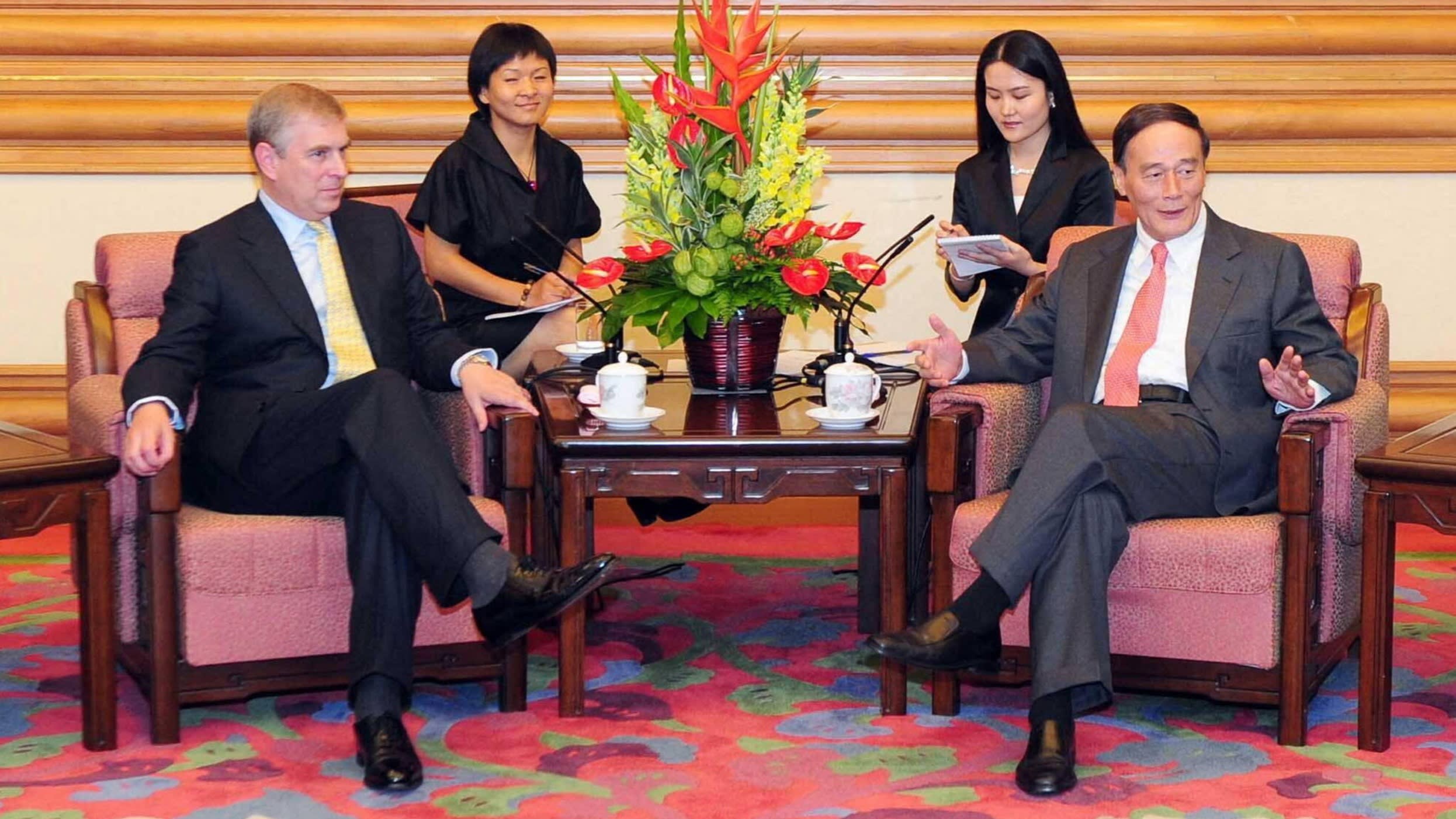
The intersection of global energy security, sovereign wealth, and the quiet corridors of royal diplomacy has been cast into sharp relief following revelations regarding a massive $8 billion "cash-for-oil" agreement involving the United Arab Emirates and China. At the center of this geopolitical maneuver was Prince Andrew, the Duke of York, whose role as a high-level intermediary has raised significant questions about the transparency of international trade and the influence of non-state actors in securing the world’s most vital resources. This multi-billion-dollar arrangement underscores a broader shift in the global economic order, as Middle Eastern energy giants increasingly pivot toward Beijing, often utilizing the unique "soft power" of European royalty to grease the wheels of complex cross-border transactions.
The deal in question, structured as a massive liquidity-for-supply arrangement, represents one of the most significant energy maneuvers in recent years. Under the terms of the agreement, Chinese state-backed entities were to provide substantial upfront capital—totaling roughly $8 billion—in exchange for a guaranteed, long-term supply of crude oil from the United Arab Emirates. For the UAE, such a deal provides immediate fiscal flexibility and solidifies a strategic partnership with its largest trading partner. For China, the world’s largest importer of crude oil, the arrangement serves as a critical hedge against energy price volatility and a cornerstone of its "Belt and Road" energy security strategy.
The involvement of the Duke of York in facilitating such a transaction highlights the idiosyncratic nature of British trade diplomacy during his decade-long tenure as the UK’s Special Representative for International Trade and Investment. Although the role was officially designed to promote British businesses abroad, the lines between national interest, personal networking, and the facilitation of third-party sovereign deals frequently blurred. Prince Andrew’s extensive "black book" of contacts, particularly within the ruling families of the Gulf states, made him an invaluable, albeit controversial, conduit for high-level economic dialogue. In the context of the UAE-China deal, his role was reportedly that of a high-level "interlocutor," a figure capable of bypassing traditional bureaucratic channels to bring decision-makers from Abu Dhabi and Beijing to the same table.
From a macroeconomic perspective, the $8 billion deal reflects a fundamental realignment of the global energy landscape. For decades, the flow of Middle Eastern hydrocarbons was predominantly directed toward Western markets, underpinned by security-for-oil arrangements with the United States and Europe. However, as the U.S. moved toward energy independence via the shale revolution and Europe accelerated its transition toward renewables, the Gulf states have been forced to look East. China currently consumes approximately 11 million barrels of oil per day, a figure that continues to grow despite the country’s investments in green technology. By securing long-term contracts with the UAE—a country that produces nearly 4 million barrels per day and holds some of the world’s most accessible reserves—Beijing is insulating its manufacturing-heavy economy from the geopolitical instability that often plagues the global oil market.
The "cash-for-oil" mechanism itself is a sophisticated financial tool that goes beyond a simple commodity purchase. These arrangements often function as a form of quasi-sovereign debt, where the "loan" is repaid not in currency, but in physical barrels of oil valued at market rates or pre-negotiated discounts. This allows the producer nation to monetize its underground assets immediately without technically increasing its formal debt-to-GDP ratio, a tempting proposition for nations looking to fund massive infrastructure projects or diversify their economies through sovereign wealth funds like Abu Dhabi’s Mubadala or the Abu Dhabi National Oil Company (ADNOC).
However, the use of a member of the British Royal Family to facilitate a deal between two foreign powers—neither of which is the United Kingdom—presents a complex ethical and diplomatic dilemma. Critics argue that such activities lack the oversight and accountability inherent in formal diplomatic missions. While a career diplomat is subject to the scrutiny of the Foreign, Commonwealth and Development Office (FCDO) and parliamentary committees, royal trade envoys have historically operated with a degree of autonomy that can lead to perceived or actual conflicts of interest. The revelation that the Duke of York was instrumental in a deal of this magnitude suggests that "shadow diplomacy" remains a potent force in international business, where personal relationships often carry more weight than institutional frameworks.
The broader implications for the United Kingdom are equally significant. While these high-level introductions were ostensibly intended to raise the UK’s profile as a global "broker," they often left the British government in a precarious position. When a royal figure facilitates a deal between a strategic rival like China and a key regional ally like the UAE, it can complicate the UK’s own foreign policy objectives. The tension between the UK’s commitment to transparency and the opaque world of multi-billion-dollar energy deals has never been more apparent. Furthermore, the focus on such massive extractive industry deals often stands in stark contrast to the UK’s public-facing commitment to the global energy transition and the reduction of fossil fuel reliance.
In the context of the UAE’s economic strategy, the deal is a masterclass in diversification. By deepening its ties with China, the UAE is not merely selling oil; it is integrating itself into the financial and technological ecosystem of the world’s second-largest economy. Recent years have seen increased cooperation between the two nations in areas ranging from 5G telecommunications and artificial intelligence to vaccine manufacturing and space exploration. The $8 billion oil deal serves as the "anchor" for this relationship, providing the reliable cash flow and energy security necessary to support broader bilateral ambitions.
Expert analysis suggests that the role of traditional Western intermediaries in these deals is waning. While Prince Andrew may have been a key player in this specific instance, the UAE and China are increasingly developing their own direct institutional channels that bypass the need for European "gatekeepers." The establishment of the "Petroyuan"—the settlement of oil trades in Chinese currency rather than the U.S. dollar—is a looming possibility that could further erode the influence of Western financial and diplomatic structures. If the UAE and other OPEC+ members begin to shift away from the petrodollar, the very foundations of the global financial system could be shaken.
The scrutiny surrounding this deal also brings to light the systemic issues of transparency in the global oil trade. According to data from the Extractive Industries Transparency Initiative (EITI), billions of dollars in oil-for-cash deals often go unreported or are obscured through complex layers of shell companies and offshore accounts. While there is no suggestion of illegality in the Duke of York’s facilitation of the UAE-China deal, the sheer scale of the transaction and the involvement of a public figure necessitate a higher degree of disclosure. The lack of clarity regarding whether any commissions or finders’ fees were paid—and to whom—remains a point of intense public interest.
Ultimately, the $8 billion UAE-China oil deal is a microcosm of the 21st-century global economy: a world where energy security is paramount, where the East is the primary engine of demand, and where the remnants of old-world aristocracy still find utility as facilitators of new-world commerce. As the Duke of York’s public role continues to be re-evaluated in the wake of various controversies, the legacy of his "trade diplomacy" will likely be defined by these high-stakes, behind-the-scenes maneuvers. For the global markets, the deal serves as a reminder that despite the rise of renewables, the pursuit of "black gold" still drives the most significant and secretive alliances on the planet. The integration of Chinese capital and Middle Eastern reserves, brokered in the drawing rooms of European royalty, marks a definitive chapter in the ongoing realignment of global power.