


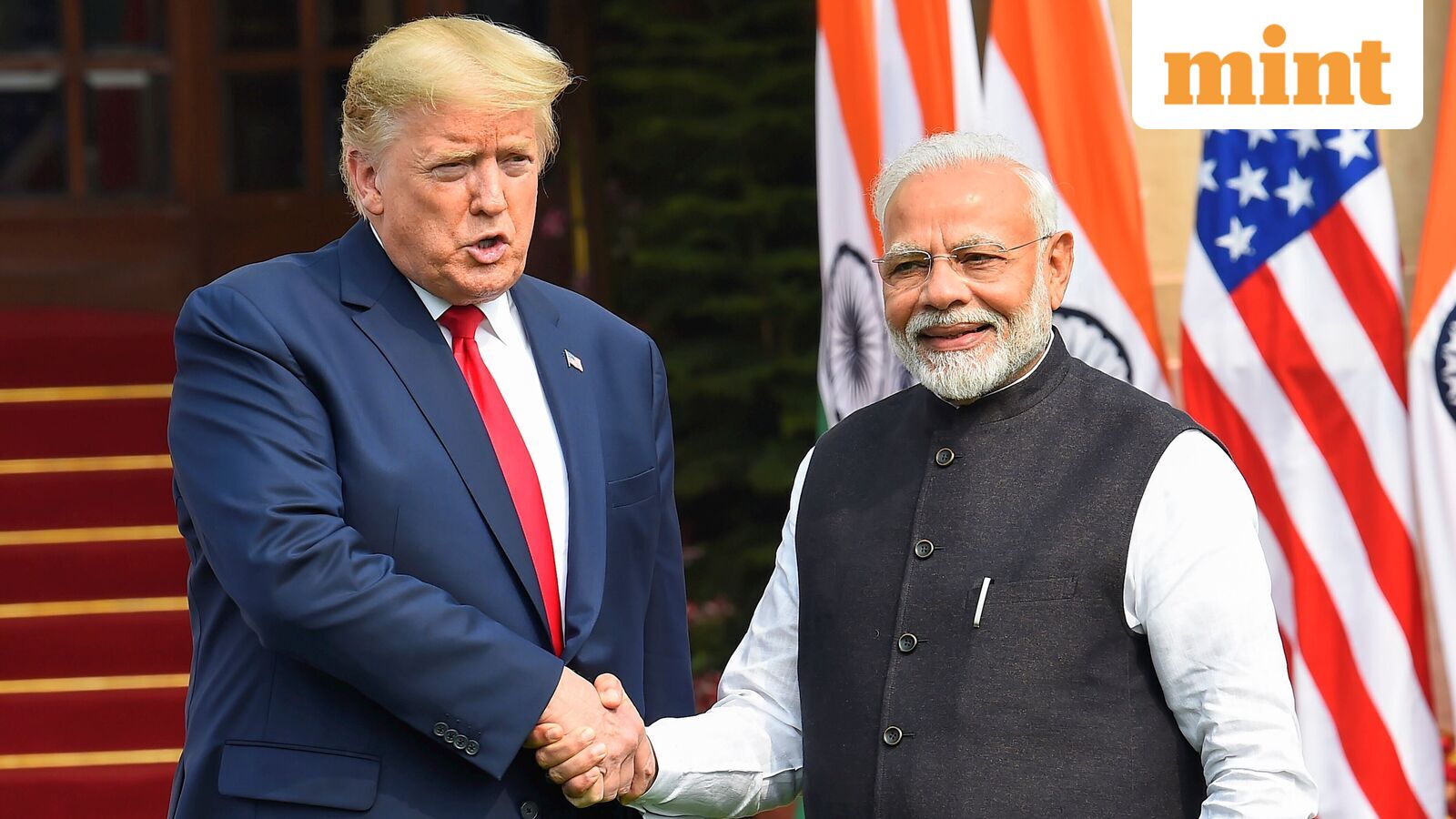
A significant interim trade agreement between India and the United States has set the stage for a substantial expansion in agricultural commerce, signaling a recalibration of bilateral economic ties despite a history of complex market access and tariff disputes. This recent accord, formalized through a joint statement, represents a pivotal step towards deepening the strategic partnership between the world’s largest and fifth-largest economies, particularly in a sector that underpins livelihoods for millions and holds immense geopolitical significance.
Under the terms of the new arrangement, Indian exports to the US will now benefit from an 18% tariff, a considerable reduction from the previously prohibitive 50%. This earlier rate was a composite of a 25% reciprocal tariff, initially imposed in response to US duties on steel and aluminum, and an additional 25% punitive duty that had been linked to broader geopolitical considerations, including India’s procurement of Russian crude oil and other trade irritants. This substantial tariff cut is anticipated to dramatically enhance the price competitiveness of Indian agricultural products in the lucrative American market, fostering greater export volumes and improved price realization for Indian farmers and producers.
In a reciprocal move designed to balance the trade concessions, India has committed to either reducing or completely eliminating import duties on a range of US industrial goods and, critically, on several US food and agricultural products. Key items slated for duty adjustments include dried distillers’ grains (DDGs), red sorghum used predominantly as animal feed, various tree nuts, fresh and processed fruits, soybean oil, as well as select wines and spirits. The inclusion of DDGs, a nutrient-rich co-product of ethanol production, is particularly noteworthy. The US stands as one of the world’s leading producers of DDGS, and reduced Indian tariffs will make this vital animal feed ingredient more affordable for India’s rapidly growing livestock and poultry sectors. While this offers cost benefits to Indian producers, it also introduces heightened competition for domestic feed ingredients such as maize and oilseed meals, necessitating strategic adjustments within India’s agricultural supply chain.
The agricultural sector’s strategic importance in India cannot be overstated. It is projected to contribute 15.6% of India’s national income at current prices in the fiscal year 2026 and provides employment to a staggering 46.1% of the country’s vast workforce. Given its profound impact on rural livelihoods and food security, agriculture remains intrinsically linked to India’s broader economic growth trajectory and socio-political stability. The government’s careful navigation of trade agreements in this sector reflects a delicate balance between market liberalization and the imperative to protect vulnerable domestic producers.
Total agricultural trade between India and the US reached over $6.2 billion in calendar year 2024, according to data from the US Department of Agriculture (USDA), with the balance largely favoring India. India’s agricultural exports to the US are diverse, with seafood, particularly frozen shrimp, forming the cornerstone. The US is the largest market for Indian seafood, absorbing approximately 36% of India’s total marine product exports. In the fiscal year 2024-25, India’s seafood exports were valued at $2.78 billion. However, recent trends have highlighted the vulnerability of this trade to tariff fluctuations. Exporters reported a significant decline in export volumes by approximately 6.3% in value terms and nearly 15% in quantity terms during April-November compared to the previous year, a direct consequence of the punitive 50% tariff that was in effect. Specifically, seafood exports fell to 201,501 metric tonnes, valued at $1,720 million, from 236,061 metric tonnes and $1,835.46 million respectively in the corresponding period of the previous year. Prior to the February 2 tariff reduction announcement, Indian seafood exports to the US faced a cumulative tariff burden of 59.7%, which included countervailing and anti-dumping duties of 9.7%. This placed Indian exporters at a significant disadvantage against competitors like Ecuador, which faced a considerably lower duty of only 19%, illustrating the critical impact of tariff structures on market share and competitiveness.
Beyond seafood, rice—encompassing both the aromatic basmati and non-basmati varieties—remains a staple Indian export to the US. Basmati rice, celebrated for its unique aroma and elongated grain, constitutes the major share of this trade. During April-November of the previous fiscal year, India exported approximately 200,000 metric tonnes of basmati rice, an increase from 180,000 metric tonnes in the same period a year prior. In the full fiscal year 2025, basmati rice exports to the US amounted to 274,000 metric tonnes, valued at $337 million. Other significant Indian agricultural exports to the US include a rich array of spices, dairy products, honey, and a growing portfolio of processed foods, all poised for greater market penetration with the reduced tariff regime.
From the US perspective, total agricultural exports to India stood at $2.25 billion in 2024. While smaller than India’s agricultural exports to the US, this figure represents a market with considerable growth potential. Major US agricultural exports include tree nuts, valued at $1.12 billion, followed by ethanol ($420.89 million), cotton ($209 million), pulses ($73.4 million), essential oils ($67.2 million), and dairy products ($52.65 million). The reduction of Indian tariffs on these items is expected to unlock new opportunities for American farmers and agri-businesses, particularly for products like tree nuts, where India’s burgeoning middle class represents a significant and expanding consumer base.
However, tariffs are but one facet of the complex landscape of international agricultural trade. Non-tariff measures (NTMs), particularly stringent sanitary and phytosanitary (SPS) standards, have historically posed significant barriers to market access, especially for sensitive products such as dairy and certain seafood categories. These regulatory asymmetries, often rooted in differing scientific approaches or domestic protectionist tendencies, have frequently emerged as sticking points in bilateral trade negotiations. For instance, specific requirements related to pesticide residues, processing facility certifications, or animal health protocols can effectively limit imports even in the absence of high tariffs. Addressing these NTMs will require sustained dialogue, technical cooperation, and a mutual commitment to harmonizing standards where possible, or at least recognizing equivalence, without compromising public health or environmental safeguards.
The current trade deal reflects a concerted effort by both nations to identify mutually beneficial solutions that can further liberalize market access while simultaneously safeguarding vulnerable domestic producers. This equilibrium demands not only sustained diplomatic engagement but also careful calibration of trade policies to prevent unintended disruptions to local economies. As India continues its trajectory towards broader global market integration and the US seeks expanded export opportunities for its commodity producers, agriculture is likely to remain both a potential flashpoint and a powerful driver of bilateral growth.
In the face of domestic scrutiny, particularly from opposition allegations, India’s Union Agriculture Minister, Shivraj Singh Chouhan, emphatically affirmed that the agreement comprehensively protects India’s domestic agricultural interests. He countered claims that increased market access for US products would threaten local farmers, reiterating the government’s unwavering commitment to the millions dependent on farming. Chouhan specifically highlighted that India’s staple grains, key fruits, major crops, millets, and dairy products remain fully shielded from any adverse impact under the terms of the deal, underscoring the government’s strategic approach to selective liberalization in agriculture. This reassurance is crucial for maintaining public confidence and ensuring the deal’s smooth implementation within India’s politically sensitive agricultural sector.
Looking ahead, this interim agreement could serve as a foundational step towards a more comprehensive free trade agreement (FTA) between India and the US. Such an ambitious undertaking would necessitate deeper concessions and broader reforms across various sectors, but the progress made in agricultural trade signals a willingness from both sides to overcome historical impediments. The strategic imperative for both nations to deepen their economic partnership, particularly in the context of evolving global supply chains and geopolitical alignments, lends significant impetus to these efforts. Ultimately, the success of this agricultural trade liberalization will be measured not only by increased trade volumes but also by its ability to foster sustainable growth, enhance farmer incomes, and ensure food security in both nations, paving the way for a more robust and resilient bilateral relationship.