

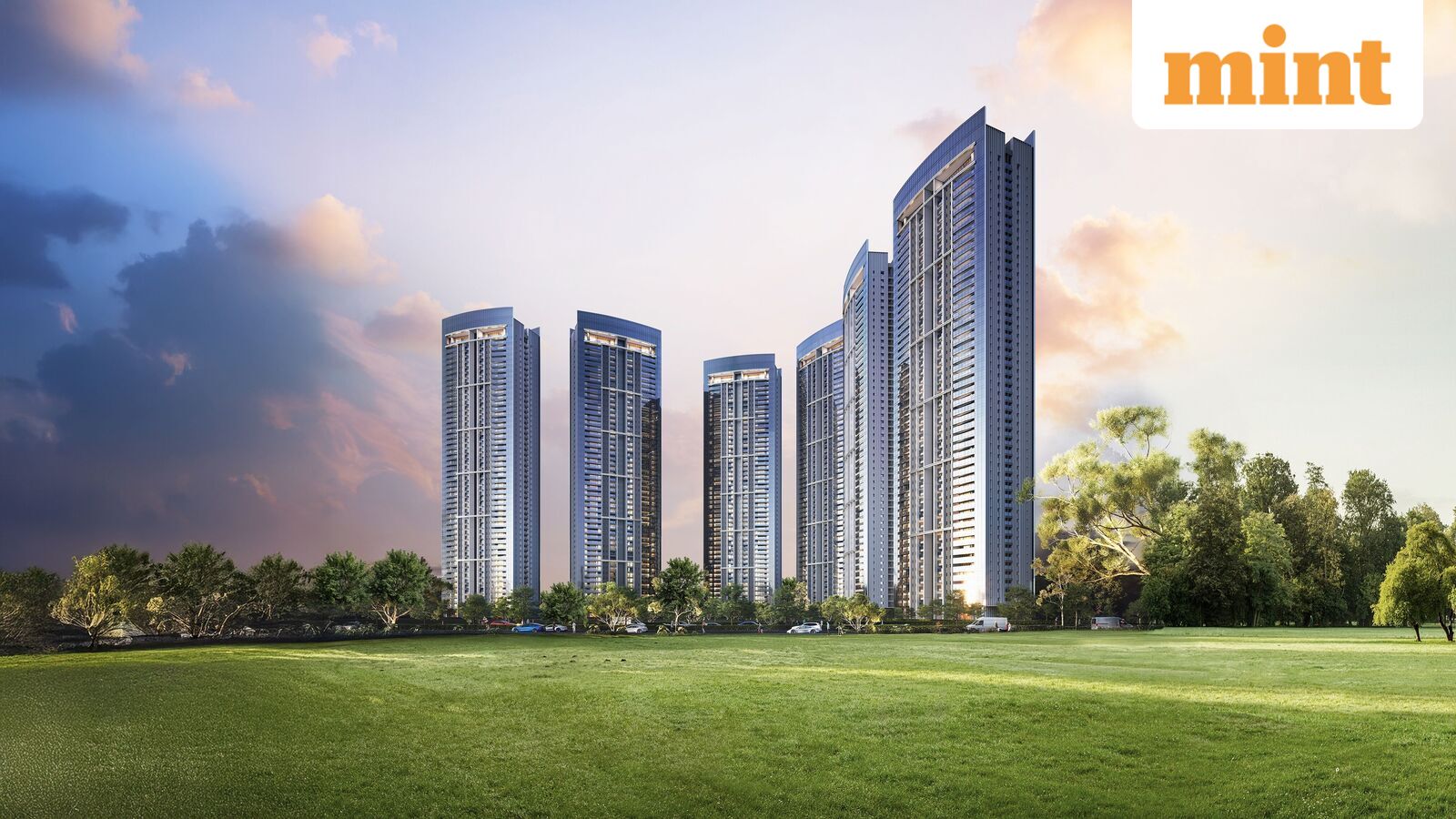
Gurugram, a prominent satellite city in the National Capital Region (NCR), has dramatically redefined India’s luxury residential landscape, recording an astounding 80% surge in high-end home sales in 2025. Transactions for properties valued at ₹10 crore and above soared to ₹24,120 crore, a figure that decisively surpassed Mumbai’s traditionally dominant market in this ultra-premium segment. This meteoric rise, underpinned by both increased sales volume and appreciating asset values, signals a significant structural shift in buyer preferences and investment patterns, particularly across burgeoning corridors like Dwarka Expressway and Golf Course Extension Road.
The sheer scale of this transformation is noteworthy. From a transactional value of ₹13,384 crore in 2024, Gurugram’s luxury market nearly doubled its footprint in a single year. The number of ultra-luxury units sold also witnessed a staggering increase, almost tripling from 519 units in 2024 to an impressive 1,494 units in 2025. This rapid expansion positions Gurugram not merely as a regional leader but as a national bellwether for the future trajectory of India’s affluent housing sector. The city, often hailed as India’s Millennium City, is rapidly evolving from a corporate hub into a vibrant residential magnet for the country’s growing cohort of high-net-worth individuals (HNIs) and ultra-HNIs (UHNIs), alongside attracting discerning global investors.
A granular analysis reveals that this unprecedented growth is not uniform across all micro-markets but is heavily concentrated in specific, strategically developed corridors. The Dwarka Expressway, for instance, emerged as a formidable growth engine, experiencing a phenomenal 2,079% increase in transaction value. From a modest ₹383 crore in 2024, sales on this vital artery escalated to ₹8,347 crore in 2025. This exponential growth is primarily attributed to a confluence of factors: the launch of large-scale luxury projects by reputable developers, significant infrastructure upgrades including its impending full operationalisation as a major connectivity link between Delhi and Gurugram, and its strategic proximity to the Indira Gandhi International Airport. The promise of reduced commuting times and enhanced accessibility has transformed the Dwarka Expressway into a hotbed for premium residential development, attracting substantial capital inflows and buyer interest.
Concurrently, the Golf Course Extension Road (GCRE) also demonstrated robust performance, registering a 379% surge in sales value. This corridor, known for its meticulously planned urban infrastructure and integrated townships, saw weighted-average property prices climb from ₹24,855 per square foot to ₹37,899 per square foot, reflecting strong demand-side pressures and the increasing premiumisation of its offerings. The GCRE’s appeal lies in its blend of residential tranquility with commercial vibrancy, offering a lifestyle choice that combines green spaces with modern amenities. In contrast, traditional luxury enclaves like Golf Course Road, while retaining their elite status, experienced comparatively slower sales growth, largely due to a constrained supply of new inventory. This highlights a shift in developer focus and buyer interest towards areas offering newer, larger, and more technologically advanced living spaces.

The fundamental drivers underpinning Gurugram’s luxury market boom are multifaceted. Firstly, India’s robust economic growth, with a projected GDP expansion of over 7% in recent years, has fueled significant domestic wealth creation. This has resulted in a rapidly expanding base of HNIs and UHNIs who are seeking to diversify their investment portfolios and upgrade their lifestyles. Real estate, especially in high-growth urban centers, remains a preferred asset class for wealth preservation and appreciation. Secondly, substantial government and private sector investment in infrastructure development has been pivotal. Improved road networks, planned metro extensions, and ambitious urban planning projects, such as the upcoming Global City, have not only enhanced connectivity but also uplifted the overall liveability quotient of Gurugram. These infrastructure enhancements reduce travel times, improve access to business districts, and contribute to a higher quality of urban life, making luxury properties more attractive.
Furthermore, the evolving product offerings by developers have played a crucial role. Modern luxury homes in Gurugram are no longer just about spacious interiors; they integrate advanced smart home technology, sustainable building practices, wellness facilities, concierge services, and bespoke interiors. This focus on "experiential living" caters to the sophisticated demands of contemporary affluent buyers who prioritize convenience, security, and a holistic lifestyle. The city’s status as a corporate and IT powerhouse, hosting numerous multinational corporations and startups, also continuously attracts a highly skilled and well-compensated workforce, many of whom aspire to reside in premium properties. This constant influx of high-earning professionals sustains the demand for luxury housing.
The fact that Gurugram has outpaced Mumbai in luxury home sales in this segment marks a symbolic shift in India’s real estate narrative. Mumbai, with its inherent land scarcity, exceptionally high existing property values, and dense urban fabric, presents unique challenges for large-scale, integrated luxury developments. While Mumbai continues to command some of the highest per-square-foot prices globally and remains a bastion of ultra-luxury, Gurugram offers the advantage of relatively newer developments, better-planned infrastructure, and the potential for larger plot sizes or expansive apartment complexes that appeal to buyers seeking greater space and modern amenities. This doesn’t diminish Mumbai’s long-term appeal but highlights Gurugram’s emergence as a viable, and in some respects, more dynamic alternative for premium property investment.
From an economic impact perspective, Gurugram’s luxury real estate boom has far-reaching implications. It stimulates job creation across the construction sector, including skilled labor, architects, designers, and project managers. The growth also fuels ancillary industries such as interior design, furniture manufacturing, luxury retail, and hospitality services, creating a positive multiplier effect on the local economy. Increased property transactions also translate into higher stamp duty and registration fee revenues for the state exchequer, which can be reinvested into further urban development. Moreover, sustained capital inflows, both domestic and international, reflect growing investor confidence in Gurugram’s economic stability and future growth prospects, further solidifying its position as a preferred investment destination.
Looking ahead, while geopolitical uncertainties persist on the global stage, buyer sentiment in Gurugram remains robust, albeit with a heightened sense of caution. Discerning buyers are placing a premium on factors such as location quality, the reputation of the developer, construction standards, and the availability of branded, amenity-rich developments. This emphasis on quality and trust suggests a maturing market where speculative buying is tempered by a focus on long-term value and livability. Real estate advisory firms and market analysts predict a continued upward trajectory for Gurugram’s luxury segment, driven by ongoing infrastructure projects, the expansion of the corporate sector, and India’s sustained economic growth. The strategic foresight in urban planning, coupled with a responsive development ecosystem, positions Gurugram to consolidate its standing as a formidable player in the global luxury real estate arena, setting new benchmarks for urban development and premium living in India.