

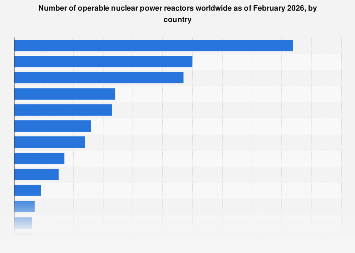
As of February 2026, the global landscape of nuclear energy comprises 437 operational reactors spread across more than 30 nations, underscoring a persistent and significant role for atomic power in the world’s energy mix. The United States continues to lead this international cohort, boasting the highest number of active nuclear power reactors with 94 units connected to national electricity grids. These operational figures represent facilities that are actively contributing electricity to their respective power systems, a critical benchmark in assessing the current capacity and output of the global nuclear sector. The sustained presence of such a substantial fleet highlights the ongoing investment and commitment to nuclear power generation, despite varying national energy policies and public perceptions.
The strategic importance of nuclear power is often linked to its capacity for providing baseload electricity, a consistent and reliable source of power that is crucial for grid stability and industrial operations. Unlike renewable sources such as solar and wind, which are intermittent and dependent on weather conditions, nuclear power plants can operate continuously for extended periods, often producing power 24/7. This inherent reliability makes them a cornerstone for many national energy strategies, particularly in countries seeking to decarbonize their economies while maintaining energy security and affordability. The recent figures suggest that, globally, this attribute remains highly valued.
Examining the geographical distribution of these operational reactors reveals a concentration in developed economies, but also a growing presence in emerging markets looking to meet escalating energy demands. While the United States leads in terms of sheer reactor numbers, countries like France, China, Russia, and South Korea also maintain substantial nuclear programs, each contributing significantly to their national energy portfolios. China, in particular, has been a notable player in the expansion of nuclear capacity in recent decades, with a pipeline of new reactors under construction that promises to reshape the global balance of nuclear power. This expansion is often driven by a dual imperative: to satisfy rapidly growing energy needs and to transition away from coal-fired power, a major source of air pollution and greenhouse gas emissions.
The operational status of these reactors is a dynamic indicator, influenced by a complex interplay of economic factors, regulatory frameworks, technological advancements, and public acceptance. Decisions to build new plants, extend the operational life of existing ones, or decommission older facilities are strategic choices with long-term economic and environmental ramifications. The continued operation of 437 reactors suggests a robust lifecycle management approach by many nuclear operators, alongside ongoing investments in upgrades and safety enhancements to ensure compliance with stringent international standards.
The fundamental fuel for these reactors, uranium, is a critical commodity whose supply chain is as vital as the operational status of the power plants themselves. Uranium, a naturally occurring radioactive metal, is primarily extracted from mines located in key regions around the world. Kazakhstan currently stands as the undisputed leader in global uranium mining, accounting for a substantial portion of the world’s output. Other significant producers include Australia, with its vast and high-grade ore deposits, and Namibia, which plays a crucial role in supplying the international market. These three nations collectively form the backbone of the global uranium supply, and their production levels, regulatory environments, and geopolitical stability have a direct impact on the availability and price of nuclear fuel worldwide.
The extraction and processing of uranium involve complex geological and industrial processes. Once mined, the uranium ore undergoes milling and refining to produce uranium concentrate, commonly known as "yellowcake." This concentrate is then converted into uranium hexafluoride and enriched to increase the concentration of the fissile isotope U-235, which is essential for sustaining a nuclear chain reaction. The enrichment process is a highly specialized and technologically intensive undertaking, with only a handful of countries possessing the capability to perform it.
The nuclear fission process, while generating immense amounts of energy, also produces radioactive waste. Used fuel elements, after their operational life within a reactor core, remain highly radioactive and require careful management and long-term storage. This spent nuclear fuel presents one of the most significant challenges associated with nuclear power. International protocols and national regulations mandate stringent measures for the safe handling, storage, and eventual disposal of this material.
Currently, spent fuel is typically stored in either specialized on-site facilities at nuclear power plants, often in spent fuel pools where the fuel rods are cooled and shielded by water, or in dry storage casks. These casks are robust containers designed to safely store and isolate the fuel for extended periods, often decades, allowing for a significant reduction in its radioactivity and heat output. The ultimate goal for many countries is the development and implementation of permanent geological repositories, deep underground facilities designed to isolate radioactive waste from the biosphere for millennia. However, the establishment of such repositories is a complex undertaking, involving extensive geological surveys, advanced engineering, and protracted public consultation processes. The long-term management of radioactive waste remains a critical area of research, development, and international cooperation within the nuclear industry.
The economic implications of maintaining and expanding a global nuclear fleet are profound. The upfront capital costs for constructing new nuclear power plants are substantial, often running into billions of dollars per facility. This requires significant long-term financial commitment from governments and private investors, along with robust financing mechanisms and risk mitigation strategies. However, once operational, nuclear power plants can offer competitive electricity prices over their lifespan, especially when considering the avoidance of carbon emissions, which are increasingly subject to carbon pricing mechanisms in many jurisdictions. The stable and predictable operating costs, coupled with the long operational lives of nuclear facilities, contribute to their economic viability as part of a diversified energy portfolio.
Furthermore, the nuclear industry supports a significant number of high-skilled jobs, from research and development to plant construction, operation, and decommissioning. This economic contribution extends to the supply chain, which involves specialized manufacturing, engineering services, and regulatory oversight. The pursuit of new nuclear technologies, such as small modular reactors (SMRs), also holds the promise of potentially lower capital costs, faster construction times, and enhanced safety features, which could further influence the future economic landscape of nuclear energy.
Globally, the trend in nuclear power is not uniform. While some nations are actively expanding their nuclear capacity, others are phasing out their nuclear programs, driven by concerns over safety, waste disposal, and the falling costs of renewable energy alternatives. The Fukushima Daiichi nuclear disaster in Japan in 2011, for instance, led to a reassessment of nuclear safety protocols and, in some countries, a reduction in reliance on nuclear power. However, the escalating climate crisis and the urgent need to decarbonize global energy systems are increasingly pushing nuclear power back into the conversation as a vital low-carbon energy source. The ongoing operational status of hundreds of reactors worldwide indicates that, for many, the benefits of reliable, low-carbon electricity generation continue to outweigh the challenges. The future trajectory of the global nuclear fleet will likely be shaped by technological innovation, evolving regulatory environments, and the persistent demand for secure and sustainable energy solutions.