

The digital entertainment landscape in Germany is undergoing a significant transformation, with video-on-demand (VoD) services rapidly becoming the preferred mode of content consumption. This shift is not merely a change in habit but a fundamental reordering of the media ecosystem, driven by technological advancements, evolving consumer preferences, and a burgeoning supply of diverse content. At the heart of this evolution lies the increasing penetration and utilization of Smart TVs, which have emerged as the primary gateway for Germans to access their favorite streaming platforms, from global giants to niche local offerings. Understanding the nuances of viewer engagement on these devices is crucial for content providers, advertisers, and technology manufacturers alike, as it directly impacts market share, revenue generation, and future investment strategies.
The German VoD market is characterized by a dynamic interplay of established international players and a growing number of domestic providers vying for audience attention. While global behemoths like Netflix, Amazon Prime Video, and Disney+ command a substantial portion of the market, local services such as Joyn (a joint venture between ProSiebenSat.1 and Discovery) and RTL+ are carving out their own spaces by offering curated local content, live television integration, and exclusive productions tailored to German tastes. This competitive environment necessitates a constant focus on user experience, content acquisition, and innovative delivery mechanisms, all of which are intrinsically linked to the devices through which viewers engage with the services.
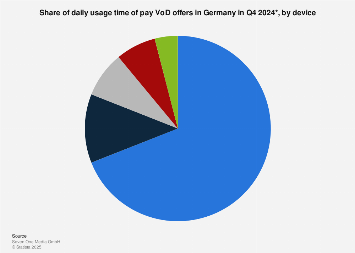
Smart TVs, in particular, have transcended their initial role as mere display devices to become sophisticated entertainment hubs. Their integration with high-speed internet connectivity and intuitive user interfaces has made them the most convenient and immersive platform for streaming. This is reflected in consumption patterns, where a significant majority of VoD viewing time is now attributed to Smart TV usage. The large screen size, superior picture and sound quality, and the ability to easily navigate through extensive content libraries without the need for separate streaming sticks or boxes make Smart TVs the natural choice for families and individuals seeking a premium viewing experience.
This dominance of Smart TVs in the German VoD market is further underscored by their increasing adoption rates across households. As the cost of these devices has become more accessible and their functionalities have expanded, they have rapidly replaced traditional television sets. Market research indicates a consistent upward trend in Smart TV ownership, with projections suggesting that a substantial majority of German households will be equipped with at least one Smart TV in the coming years. This widespread adoption creates a vast and accessible audience for VoD services, presenting both opportunities and challenges for market participants.
The implications of this Smart TV-centric viewing behavior extend beyond simple viewership numbers. For content creators and distributors, understanding the specific viewing habits on these platforms is paramount. This includes analyzing peak viewing times, popular genres, the duration of viewing sessions, and the types of content that resonate most effectively on a larger screen. Data-driven insights into these patterns can inform content commissioning, marketing strategies, and the optimization of user interfaces to enhance discoverability and engagement. For instance, understanding which types of content are most frequently paused or rewound on Smart TVs can offer clues about user interaction and potential areas for improvement in content presentation or interactive features.
Advertising within the VoD ecosystem on Smart TVs is also undergoing a significant evolution. As traditional linear TV advertising faces fragmentation and declining viewership, advertisers are increasingly shifting their budgets towards digital platforms, including VoD services delivered via Smart TVs. The ability to target specific demographics, measure campaign effectiveness with greater precision, and offer more engaging ad formats makes Smart TV advertising a compelling proposition. However, the challenge lies in delivering these ads in a way that enhances, rather than detracts from, the user experience. Striking a balance between monetization and viewer satisfaction is critical for the long-term sustainability of the ad-supported VoD model.
Globally, Germany’s experience with Smart TV dominance in VoD consumption is not an isolated phenomenon. Many developed markets are witnessing similar trends, driven by the universal appeal of convenient, on-demand entertainment and the technological advancements in home entertainment systems. However, the pace of adoption and the specific market dynamics can vary significantly. Factors such as internet infrastructure quality, the availability of compelling local content, and regulatory environments all play a role in shaping the trajectory of VoD consumption. For instance, countries with a strong tradition of local content production may see a more robust presence of domestic VoD players alongside international ones, potentially influencing the overall market structure and viewer preferences.
Economically, the growth of the German VoD market, heavily influenced by Smart TV usage, has far-reaching consequences. It stimulates investment in content creation, both domestically and internationally, creating jobs in the creative industries, technology sectors, and marketing. Furthermore, it drives innovation in digital infrastructure, encouraging investments in faster broadband speeds and more robust streaming technologies. The increasing reliance on digital platforms also presents new challenges and opportunities for regulatory bodies, particularly concerning data privacy, content moderation, and competition law.
The data surrounding viewer engagement on Smart TVs is not static; it is a constantly evolving metric. As new Smart TV models with enhanced features enter the market and as VoD providers continually refine their offerings, user behavior will undoubtedly adapt. Emerging trends such as the integration of gaming, social media features, and personalized content recommendations directly within Smart TV interfaces are likely to further deepen viewer engagement and reshape the media consumption landscape. The ability of market participants to stay abreast of these changes, leverage data analytics effectively, and adapt their strategies accordingly will be key to their success in this dynamic and increasingly important sector of the German economy. The continued investment in and understanding of the Smart TV as the primary interface for VoD consumption will remain a cornerstone of any successful digital media strategy in Germany for the foreseeable future.