


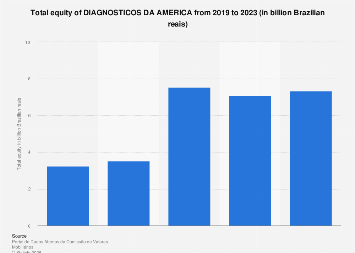
Diagnósticos da América (DASA), a prominent player in the Brazilian healthcare diagnostics sector, navigated a complex economic landscape in 2023, with its total equity serving as a key indicator of its financial health and strategic positioning. While precise, granular data for total equity often requires specialized access, understanding the factors influencing this metric provides crucial insights into the company’s performance and its trajectory within the competitive healthcare market. Total equity, representing the residual interest in the assets of an entity after deducting all its liabilities, is a fundamental measure of a company’s net worth. For DASA, this figure is shaped by a confluence of operational revenues, capital investments, debt management, and overall market sentiment within Latin America’s burgeoning healthcare industry.
The Brazilian healthcare market, characterized by its large population and increasing demand for advanced medical services, presents both significant opportunities and inherent challenges for companies like DASA. In 2023, the sector continued to grapple with inflationary pressures, fluctuating interest rates, and evolving regulatory frameworks. These macroeconomic forces directly impact a company’s ability to generate profits, manage its debt obligations, and consequently, its total equity. DASA’s strategic decisions, such as acquisitions, divestitures, and investments in technological innovation, also play a pivotal role in shaping its equity base. A robust equity position not only signals financial stability but also provides the capacity for future growth, be it through organic expansion, further market consolidation, or research and development initiatives.
Examining DASA’s total equity in 2023 necessitates an understanding of its operational performance. The company’s revenue streams are primarily derived from its extensive network of laboratories and hospitals, offering a wide array of diagnostic tests and medical procedures. Factors influencing these revenues include patient volumes, pricing strategies, the mix of services offered, and the reimbursement landscape from both private insurers and public healthcare providers. In an environment where healthcare costs are under scrutiny, DASA’s ability to maintain competitive pricing while delivering high-quality services is paramount. Any improvements in operational efficiency, such as streamlined laboratory processes or optimized patient flow in its medical facilities, can translate into higher profit margins, which in turn bolster retained earnings, a significant component of total equity.
Capital structure is another critical determinant of total equity. DASA, like many large healthcare conglomerates, likely employs a mix of debt and equity financing to fund its operations and expansion. The ratio of debt to equity, often analyzed through leverage ratios, offers insight into the company’s financial risk. While debt can amplify returns during periods of strong performance, it also increases financial obligations and can weigh down equity during economic downturns. In 2023, with global interest rates remaining elevated, the cost of debt servicing would have been a significant consideration for DASA. Prudent debt management, including refinancing strategies and a focus on deleveraging, would have been crucial for preserving and enhancing shareholder equity.
Furthermore, DASA’s strategic investments and potential acquisitions or divestitures in 2023 would have had a direct impact on its balance sheet and, consequently, its total equity. The healthcare diagnostics market is dynamic, with a trend towards consolidation. Companies often seek to expand their geographic reach, diversify their service offerings, or enhance their technological capabilities through mergers and acquisitions. Such transactions, depending on their structure and financing, can either increase or decrease total equity. For instance, if DASA engaged in significant acquisitions financed through equity issuance, its total equity might have increased. Conversely, if it undertook substantial share buybacks or divested non-core assets, the impact on equity would be different.
The broader economic context in Brazil and across Latin America in 2023 also provides essential background. Brazil’s economy, while showing signs of resilience, faced challenges related to global economic slowdowns and domestic policy shifts. For a company like DASA, operating within this environment, the purchasing power of consumers, the stability of the currency, and the overall business confidence index are all relevant factors. A stronger economic outlook generally translates into higher demand for healthcare services, positively influencing revenue and profitability, and by extension, equity. Conversely, economic headwinds can dampen demand and put pressure on margins, potentially impacting equity negatively.
Global comparisons offer a valuable perspective on DASA’s performance. The healthcare diagnostics sector is a global industry, and trends observed in developed markets often provide leading indicators for emerging economies. Companies in North America and Europe, for example, have been investing heavily in areas like genomics, personalized medicine, and digital health solutions. DASA’s ability to keep pace with these technological advancements and integrate them into its service portfolio is crucial for its long-term competitiveness and its capacity to attract investment, which can influence its equity valuation. The adoption of artificial intelligence in diagnostics, for instance, promises to enhance accuracy and efficiency, and companies that embrace these innovations are likely to see improved operational performance.
Moreover, the regulatory environment in Brazil, encompassing aspects like laboratory accreditation, pricing controls for medical procedures, and data privacy laws, significantly influences the operational landscape for DASA. Compliance with these regulations requires investment and adherence to stringent standards. Changes in government policies related to healthcare provision, public-private partnerships, or pharmaceutical pricing can create opportunities or introduce risks that ripple through a company’s financial statements, ultimately affecting its equity. The ongoing discussions around healthcare reform in Brazil, for example, could have long-term implications for DASA’s market share and profitability.
The year 2023 also saw a continued focus on Environmental, Social, and Governance (ESG) factors within the corporate world. For DASA, demonstrating strong ESG performance can enhance its reputation, attract ethically-minded investors, and potentially improve its access to capital. Aspects such as sustainable laboratory practices, employee well-being, and community engagement can contribute to a company’s overall value and its long-term equity growth. Investors are increasingly scrutinizing companies’ ESG credentials, and robust performance in these areas can lead to a more favorable valuation and a stronger equity base.
While specific figures for Diagnósticos da América’s total equity in 2023 are proprietary, the analysis of these various contributing factors—operational performance, capital structure, strategic initiatives, macroeconomic conditions, global trends, and ESG considerations—provides a comprehensive framework for understanding the forces that would have shaped this critical financial metric. The healthcare diagnostics industry remains a vital and evolving sector, and DASA’s ability to adapt to changing market dynamics, technological advancements, and economic cycles will be key to its sustained financial success and the growth of its shareholder equity in the years to come. The ongoing drive for efficiency, innovation, and strategic expansion within the Latin American healthcare market positions companies like DASA at the forefront of delivering essential medical services, with their equity performance serving as a vital barometer of their standing and future prospects.