
The United States economy underwent a notable deceleration in the final three months of the year, with Gross Domestic Product (GDP) expanding at an annualized rate of 1.4 percent. This figure, released by the Department of Commerce, marks a significant cooling from the robust growth seen earlier in the year and signals a transition into a more temperate phase of the business cycle. While the reading confirms that the American economy remains on a growth trajectory, the pace of that expansion has narrowed considerably, reflecting the cumulative impact of the Federal Reserve’s aggressive interest rate hikes and a gradual exhaustion of pandemic-era financial cushions.
This 1.4 percent growth rate represents a sharp departure from the previous quarter’s vigorous performance, where the economy defied recessionary predictions with a surge in output. The slowdown was widely anticipated by Wall Street analysts, yet the specifics of the report highlight a complex interplay of resilient service spending, a contraction in residential investment, and a volatile trade landscape. For policymakers in Washington and at the Federal Reserve’s headquarters, the data provides a double-edged sword: it suggests that the "higher-for-longer" interest rate environment is successfully curbing excess demand to fight inflation, but it also raises questions about how close the economy is drifting toward a potential stagnation or a "hard landing."
At the heart of the American economic engine is consumer spending, which accounts for approximately two-thirds of total economic activity. In the fourth quarter, personal consumption expenditures showed signs of fatigue. While Americans continued to spend on essential services—such as healthcare and insurance—spending on durable goods, including automobiles and household appliances, faced headwinds. The shift in consumer behavior is largely attributed to the erosion of real purchasing power caused by the tail end of the inflationary cycle and the increased cost of borrowing. With credit card interest rates hovering at multi-decade highs and personal savings rates dipping below historical averages, the "revenge spending" that characterized the immediate post-pandemic years appears to have finally run its course.
Business investment also presented a mixed picture in the latest quarterly data. Non-residential fixed investment, which includes spending on equipment, software, and structures, saw only modest gains. Many corporations have adopted a "wait-and-see" approach to capital expenditure, wary of the cost of financing new projects in an environment where the federal funds rate remains at a 22-year peak. Conversely, intellectual property products remained a bright spot, driven by the ongoing arms race in artificial intelligence and digital transformation across the tech and financial sectors. However, these gains were partially offset by a decline in inventory investment. Businesses, perhaps sensing a slowdown in demand, have become more cautious about overstocking, a move that mathematically subtracts from the headline GDP growth figure.
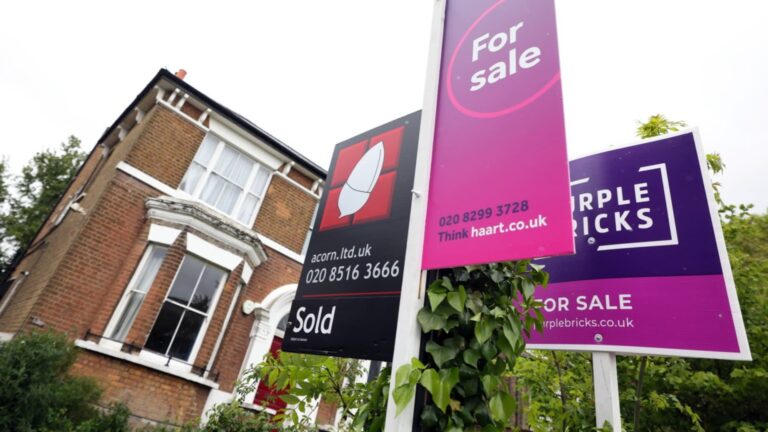
The housing market continues to be one of the most sensitive sectors to the Federal Reserve’s monetary tightening. Residential investment acted as a drag on growth for another consecutive period, as mortgage rates—though slightly off their recent peaks—remained high enough to sideline both prospective buyers and current homeowners who are "locked in" to lower historical rates. This stagnation in the housing sector has broader implications for the economy, affecting everything from construction employment to the "wealth effect" that typically spurs consumer confidence when property values are rising rapidly.
From a global perspective, the 1.4 percent growth rate keeps the United States in a position of relative outperformance compared to its G7 peers, though the gap is narrowing. The Eurozone has been flirting with a technical recession, hampered by high energy costs and a sluggish manufacturing sector in Germany. Japan, similarly, has struggled with tepid domestic demand. In this context, the U.S. economy’s ability to maintain even a modest growth rate of 1.4 percent is a testament to its structural resilience and the lingering effects of significant fiscal stimulus. However, international trade dynamics weighed on the fourth-quarter results. A stronger U.S. dollar made American exports more expensive for foreign buyers, while imports remained relatively steady, resulting in a net trade deficit that shaved points off the total GDP calculation.
Labor market dynamics remain the primary buffer preventing a more severe downturn. Despite the cooling GDP, the unemployment rate has remained remarkably low by historical standards. However, the fourth-quarter data suggests that the labor market is finally losing some of its "tightness." Wage growth has begun to moderate, aligning more closely with the Federal Reserve’s 2 percent inflation target. While this is positive for long-term price stability, in the short term, it means that the rapid income gains that fueled the consumption boom of 2022 and 2023 are dissipating. Economists note that if growth continues to hover near the 1 percent mark, the risk of a "jobless slowdown" increases, where companies may begin to freeze hiring or implement more widespread layoffs to protect profit margins.
The Federal Reserve’s reaction to these figures will be the defining factor for the economic outlook of the coming year. Chair Jerome Powell and the Federal Open Market Committee (FOMC) have repeatedly stated that their decisions will be "data-dependent." The 1.4 percent growth rate, coupled with cooling inflation metrics, suggests that the central bank’s mission to cool the economy without triggering a collapse is largely on track. Market participants are now closely watching for signals of a "pivot"—a shift from holding rates steady to implementing the first cuts. The challenge for the Fed is one of timing: cutting too early could reignite inflation, while waiting too long could turn a controlled slowdown into a deep recession.
Fiscal policy also looms large in the background of the GDP report. With the federal deficit continuing to expand, government spending has remained a contributor to GDP growth. However, with a divided Congress and mounting political pressure to rein in spending, the fiscal tailwinds that supported growth over the last two years are expected to diminish. The upcoming election cycle further complicates the economic landscape, as political uncertainty often leads to a temporary pullback in both corporate investment and consumer discretionary spending.
Looking ahead, the "soft landing" narrative remains the base case for many economists, but the margin for error has tightened. A 1.4 percent growth rate leaves the economy vulnerable to external shocks, whether from geopolitical tensions in the Middle East affecting oil prices or further disruptions in global supply chains. Furthermore, the "long and variable lags" of monetary policy mean that the full impact of previous interest rate hikes may not yet be fully reflected in the data.
In summary, the decline in US growth to a 1.4 percent rate in the fourth quarter marks a pivotal moment in the post-pandemic era. It is an economy in transition—moving away from the volatile, high-growth, high-inflation environment of the past three years toward a more sluggish and predictable pace. While the "Great American Consumer" has not yet retreated, the fortifications of high savings and low interest rates have crumbled. The resilience of the labor market and the strategic agility of the Federal Reserve will now determine whether this 1.4 percent figure is a temporary plateau or the beginning of a more protracted downward trend. For investors and businesses, the message is clear: the era of easy growth is over, and the premium on efficiency, cautious capital management, and strategic positioning has never been higher.