

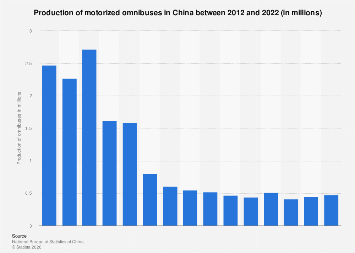
China’s dominance in global manufacturing extends to its robust and dynamic bus production sector, a critical component of urban mobility, public transportation infrastructure, and the broader automotive industry. While specific, granular data on omnibus production volumes can be proprietary and subject to commercial access, the overarching trends indicate a significant and evolving role for Chinese manufacturers on the world stage. This sector is not merely about sheer output; it encompasses technological advancement, adherence to international standards, and adaptation to shifting market demands, from electric propulsion to autonomous driving capabilities.
The Chinese bus manufacturing industry has undergone a remarkable transformation over the past few decades. Initially focused on meeting vast domestic demand, it has progressively scaled up its operations, invested heavily in research and development, and increasingly targeted export markets. This expansion has been fueled by a combination of government support, a large and skilled labor pool, and a strategic push to become a global leader in automotive technology. Companies ranging from state-owned giants to agile private enterprises are now producing a wide array of buses, including city buses, coaches, school buses, and specialized transit vehicles, for diverse international clients.
Understanding the scale of China’s omnibus production requires looking beyond simple unit counts, which are often embedded within broader commercial data. However, industry analyses and trade figures consistently point to China as one of, if not the largest, producer of buses globally. This production capacity is crucial for supporting the rapid urbanization and public transit development witnessed across many developing nations, where affordable and reliable bus fleets are a necessity. The sheer volume of vehicles produced also has significant implications for global supply chains, raw material sourcing, and the competitive landscape for bus manufacturers in Europe, North America, and other parts of Asia.
A key driver of growth and a significant indicator of China’s future direction in bus manufacturing is the rapid adoption and development of new energy vehicles (NEVs), particularly electric buses. China has been at the forefront of this revolution, driven by ambitious environmental targets, government subsidies, and a concerted effort to reduce reliance on fossil fuels. Cities across China boast some of the world’s largest electric bus fleets, and Chinese manufacturers are major suppliers of these eco-friendly vehicles to numerous international markets. This transition to electric propulsion has not only reshaped domestic production lines but has also positioned Chinese companies as key players in the global green transportation market, competing with established players in developed economies.
The technological sophistication of Chinese-made buses has also seen a marked improvement. Beyond electrification, manufacturers are increasingly integrating advanced features such as intelligent traffic management systems, real-time passenger information, enhanced safety features, and even preliminary autonomous driving capabilities. This push towards innovation is essential for retaining competitiveness in a global market where technological advancement is a primary differentiator. The ability to offer integrated mobility solutions, rather than just vehicles, is becoming increasingly important.
Economically, China’s omnibus production contributes significantly to its manufacturing output, employment, and export revenues. The sector supports a vast ecosystem of component suppliers, from engine manufacturers and battery producers to electronics and interior fitting specialists. The growth of the bus manufacturing sector directly impacts job creation, both in direct manufacturing roles and in related industries. Furthermore, as Chinese bus manufacturers expand their international footprint, they become significant contributors to the country’s trade balance.
However, the sector also faces its share of challenges. Global economic uncertainties, geopolitical tensions, and evolving trade policies can impact export demand and supply chain stability. Competition remains fierce, not only among Chinese manufacturers themselves but also from international players who are also investing in new technologies and expanding their production capabilities. Moreover, ensuring consistent quality and adherence to diverse international safety and environmental regulations across all export markets requires continuous effort and adaptation.
The global comparison of bus production reveals distinct regional strengths. While China leads in volume, particularly in electric buses, European manufacturers have historically been strong in high-end, specialized coaches and premium city buses, often emphasizing sophisticated engineering and passenger comfort. North America has its own set of manufacturers catering to specific market needs, with a growing interest in electric and alternative fuel options. China’s strategy has been to leverage its scale and cost efficiencies, combined with rapid technological adoption, to capture significant market share across various segments.
The impact of China’s omnibus production extends beyond the automotive sector. It plays a vital role in enabling sustainable urban development worldwide. As cities grapple with congestion, pollution, and the need for efficient public transit, Chinese-manufactured buses, particularly electric ones, offer a viable and increasingly cost-effective solution. This contributes to global efforts to combat climate change and improve the quality of urban life.
Looking ahead, the trajectory of China’s bus manufacturing sector will likely be shaped by several key factors. Continued investment in NEV technology, particularly in battery efficiency, charging infrastructure, and hydrogen fuel cell development, will be crucial. The integration of digital technologies, including IoT and AI for fleet management and passenger experience, will further differentiate offerings. Moreover, navigating the complexities of international trade agreements and building strong after-sales service networks will be essential for sustained global growth. The sector’s ability to remain agile, innovative, and responsive to the evolving needs of global transportation systems will determine its continued success on the world stage.