


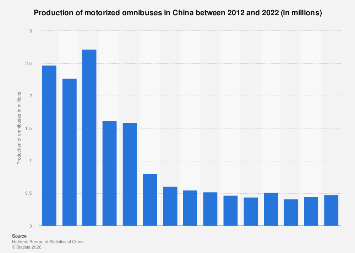
China has cemented its position as the undisputed global leader in the production of omnibuses, commonly referred to as buses. This dominance is not a recent phenomenon but rather a culmination of strategic industrial policy, robust technological advancement, and an insatiable domestic demand, all contributing to a manufacturing ecosystem that outpaces international competitors in scale and efficiency. The sheer volume of omnibuses rolling off Chinese assembly lines has profound implications for global transportation infrastructure, urban planning, and the burgeoning electric vehicle (EV) market.
The scale of China’s bus manufacturing is staggering. While specific, up-to-the-minute production figures are proprietary and often part of premium market intelligence, industry analyses consistently place China’s output at a significant majority of the world’s total. This volume is driven by a multifaceted approach that includes mass production of traditional internal combustion engine (ICE) buses and, increasingly, a vigorous pivot towards New Energy Vehicles (NEVs), particularly electric buses. This strategic shift aligns with China’s ambitious national goals for emissions reduction and sustainable urban development.
Several key factors underpin China’s manufacturing supremacy. Firstly, a well-developed and integrated supply chain allows for efficient sourcing of components, from chassis and engines to advanced battery systems and sophisticated electronics. The presence of major automotive conglomerates, such as BYD, Yutong, and King Long, alongside a vast network of specialized component suppliers, creates a self-reinforcing industrial cluster. This vertical integration minimizes lead times, reduces logistical costs, and fosters innovation through intense competition and collaboration.
Secondly, government support has been instrumental. Beijing has actively promoted the automotive sector, including bus manufacturing, through a combination of subsidies, tax incentives, and preferential procurement policies. For electric buses, these incentives have been particularly generous, accelerating the adoption of NEVs and spurring significant investment in research and development. The "Made in China 2025" initiative, though officially de-emphasized, has had a lasting impact on fostering advanced manufacturing capabilities, and the bus sector has been a prime beneficiary.
Thirdly, the sheer size of China’s domestic market provides a constant and substantial demand for omnibuses. As China urbanizes at an unprecedented pace, the need for efficient, high-capacity public transportation systems is paramount. Millions of people rely on buses for their daily commutes, and municipalities are continually investing in fleet modernization and expansion. This robust domestic demand serves as a crucial testing ground and incubator for new technologies and designs before they are exported.
The global impact of China’s bus production is far-reaching. Chinese-manufactured buses are not only ubiquitous within China but are also exported to over 100 countries and regions worldwide. Emerging economies in Southeast Asia, Africa, and Latin America often find Chinese buses to be a cost-effective and technologically viable solution for upgrading their public transport networks. European and North American markets, while more discerning and often subject to stringent regulatory requirements, are also seeing an increasing presence of Chinese-made buses, particularly in the electric segment.
The transition to electric mobility represents a significant frontier in the global omnibus market, and China is at the vanguard of this revolution. The nation has become the world’s largest market for electric buses, driven by supportive government policies and substantial investment from domestic manufacturers. Companies like BYD have become global powerhouses in EV technology, including battery production, which gives them a distinct advantage in the electric bus sector. This focus on electrification is not merely an environmental imperative but also a strategic economic play, aiming to capture a larger share of the future global transportation market.
Market data indicates a sustained growth trajectory for the global bus market, with the electric bus segment experiencing particularly explosive growth. According to various industry reports, the global electric bus market is projected to grow at a compound annual growth rate (CAGR) exceeding 20% in the coming years. China’s dominance in this segment means that its production capacity and technological advancements will heavily influence global pricing, innovation, and the pace of electrification worldwide.
However, China’s dominance is not without its challenges and complexities. International trade relations, geopolitical tensions, and varying regulatory standards across different export markets can pose hurdles. Concerns regarding intellectual property, product quality, and fair competition are sometimes raised by international counterparts. Furthermore, the rapid growth of the EV sector has led to intense competition, with companies vying for market share and seeking to secure critical raw materials for battery production, such as lithium and cobalt.
From an economic perspective, China’s leadership in omnibus production contributes significantly to its manufacturing output and export revenues. It also plays a vital role in supporting its domestic economic development, creating jobs, and fostering technological innovation. The spillover effects extend to related industries, including battery manufacturing, charging infrastructure, and software development for smart transportation systems.
Global comparisons reveal the extent of China’s lead. While established manufacturers in Europe and North America are also investing heavily in electric mobility, their production volumes and market penetration, particularly in the large-scale public transport segment, often lag behind Chinese giants. For instance, the scale of electrification seen in Chinese cities, with hundreds of thousands of electric buses in operation, is unparalleled globally. This practical, large-scale implementation provides invaluable data and operational experience that informs future product development.
The future of global omnibus production is likely to remain heavily influenced by China’s manufacturing capabilities and its strategic direction, especially concerning electrification and autonomous driving technologies. As more countries prioritize sustainable transportation solutions and seek cost-effective fleet upgrades, Chinese manufacturers are well-positioned to meet this demand. The ongoing evolution of battery technology, charging solutions, and smart city integration will continue to shape this dynamic and highly competitive global market, with China very much in the driver’s seat.