

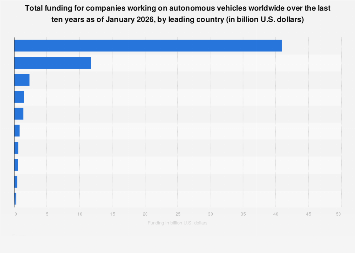
The global pursuit of autonomous vehicle (AV) technology is fueling a dynamic and increasingly international investment landscape, with significant capital flowing into companies developing this transformative mobility solution. While the United States has historically been a dominant force in attracting venture capital for AV innovation, recent trends indicate a broadening of the geographical distribution of funding, with a notable surge in investment activity from China and, to a lesser extent, European nations. This international competition for talent and technological advancement is reshaping the industry’s economic geography.
The AV market, encompassing everything from advanced driver-assistance systems (ADAS) to fully self-driving passenger cars and commercial fleets, represents one of the most significant technological frontiers of the 21st century. It promises to revolutionize transportation, logistics, urban planning, and personal mobility. Consequently, investors are pouring billions of dollars into research and development, testing, infrastructure, and the commercialization of these technologies. Analyzing the country-by-country breakdown of this funding provides crucial insights into where the innovation engine is currently firing strongest and where future breakthroughs are likely to emerge.
The United States continues to command a substantial share of global AV funding. This can be attributed to a confluence of factors: a mature venture capital ecosystem, a concentration of leading technology companies and automotive giants investing heavily in AV R&D, a supportive regulatory environment in many states, and a deep pool of engineering and AI talent. Major tech players like Google’s Waymo, Cruise (backed by General Motors), and numerous startups have consistently attracted significant investment rounds. These companies are not only developing the core software and hardware for autonomous driving but also pioneering sophisticated testing methodologies and pilot programs in various cities across the country. The sheer scale of investment from both established corporations and venture capital firms underscores the US’s commitment to leading the AV revolution.
However, China has rapidly emerged as a formidable contender, demonstrating an impressive trajectory in attracting AV investment. The Chinese government has identified autonomous driving as a strategic priority, with ambitious national plans aimed at fostering domestic innovation and establishing China as a global leader in intelligent vehicles. This top-down support, coupled with a burgeoning domestic automotive industry and a vast market eager for new mobility solutions, has created a fertile ground for AV startups and established players alike. Companies like Baidu (with its Apollo platform), Pony.ai, and WeRide have secured substantial funding, often from a mix of Chinese venture capital, corporate investors, and strategic partnerships. The rapid pace of development and the sheer volume of testing occurring on Chinese roads highlight the nation’s aggressive push into the AV space.
Beyond these two powerhouses, several European countries are also making significant strides in attracting AV investment. Germany, with its strong automotive heritage and established automakers like Volkswagen, BMW, and Mercedes-Benz, is investing heavily in the technology. The country’s focus is often on integrating AV capabilities into existing vehicle platforms and developing robust safety and regulatory frameworks. France and the United Kingdom are also seeing increased investment, driven by government initiatives, research institutions, and a growing number of specialized AV startups focusing on areas such as urban mobility, logistics, and specialized autonomous systems. While the overall quantum of investment might be smaller compared to the US and China, the strategic focus and technological depth in specific niches are noteworthy.
The economic implications of this global funding race are profound. The country that successfully commercializes and deploys autonomous vehicles at scale stands to gain significant economic advantages. These include enhanced road safety, reduced traffic congestion, increased fuel efficiency, and the creation of new industries and job opportunities in areas like AI development, sensor manufacturing, data management, and mobility services. Furthermore, leadership in AV technology can bolster a nation’s competitiveness in the global automotive market, which is undergoing a fundamental transformation towards electrification and automation.
Market data indicates that the total global investment in AV technology has been on an upward trend, with significant year-over-year increases in funding rounds and valuations of AV companies. While specific figures fluctuate based on reporting methodologies and market dynamics, recent analyses consistently place the US and China at the forefront of capital deployment. This concentration of investment reflects the perceived market potential and the belief among investors that AV technology will be a dominant force in future transportation ecosystems.
The interplay between government policy, private sector innovation, and venture capital is crucial in determining a country’s success in the AV race. Countries with clear regulatory roadmaps, supportive R&D incentives, and robust infrastructure development plans are better positioned to attract and retain talent and capital. For instance, initiatives aimed at creating dedicated testing grounds for autonomous vehicles or providing tax credits for AV-related research can significantly influence investment decisions.
Expert insights often point to the ongoing consolidation within the AV industry. As the technology matures, the capital requirements for development and deployment become increasingly substantial. This is leading to a greater number of strategic partnerships, mergers, and acquisitions, as larger companies seek to acquire cutting-edge technologies or gain a competitive edge. The funding landscape is therefore not just about raw capital inflow but also about how that capital is being deployed to build integrated and scalable AV solutions.
Looking ahead, the geographical distribution of AV funding is likely to continue evolving. Emerging markets and other technologically advanced nations may also begin to carve out significant roles, particularly in niche applications or specialized components. The race to achieve Level 4 and Level 5 autonomy – where vehicles can operate without human intervention in most or all conditions – is an expensive and complex endeavor. The countries and companies that can effectively leverage their financial resources, technological expertise, and regulatory frameworks will ultimately shape the future of mobility. The current trends suggest a highly competitive and geographically diverse landscape, with significant implications for global economic development and technological leadership.