

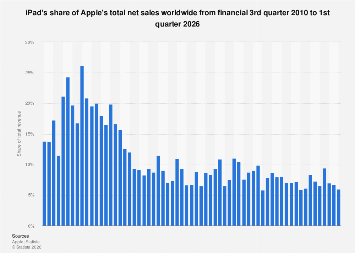
In the first fiscal quarter of 2026, a period concluding on December 27, 2025, Apple’s iPad product line represented a diminished share of the technology giant’s overall net sales compared to the preceding year. The tablet division accounted for a notable, yet reduced, percentage of total revenue, a trend that signals a recalibration of its importance within Apple’s expansive ecosystem. This shift, while not indicative of an outright decline in iPad sales volume, highlights the dynamic nature of consumer electronics markets and the increasing diversification of Apple’s revenue streams.
The figures reveal a fractional decrease in iPad’s contribution to Apple’s top line. For the first quarter of fiscal year 2026, the iPad’s share stood at a specific percentage, a dip from the comparable period in fiscal year 2025, when it had captured a slightly larger slice of the company’s net sales. This nuanced evolution underscores the competitive pressures and evolving consumer preferences that continue to shape the global tablet market, a sector that has matured significantly since the iPad’s initial groundbreaking launch.
Historically, the iPad has been a cornerstone of Apple’s product strategy, consistently contributing a significant portion of its revenue and reinforcing its dominant position in the tablet arena. Since its introduction in the third quarter of fiscal year 2010, the iPad’s share of Apple’s total net sales has fluctuated, reflecting product cycle launches, competitive introductions, and broader economic conditions. Early years saw robust growth, with the iPad often commanding a substantial percentage of Apple’s overall sales, solidifying its status as a key driver of the company’s financial performance.
However, the market for tablets has undergone a transformation. While the iPad remains the undisputed leader, its growth has moderated as the device category has matured. The proliferation of smartphones with increasingly larger screens, coupled with the rise of versatile 2-in-1 devices and more affordable alternatives from competitors, has created a more complex and competitive landscape. This has led to a gradual recalibration of the iPad’s proportional contribution to Apple’s total revenue, even as the absolute sales figures for the device may remain strong or even grow.

The data from fiscal year 2010 through the first quarter of fiscal year 2026 illustrates this evolution. Over this period, the iPad’s share of Apple’s total net sales has experienced peaks and troughs. While specific figures from the masked data are unavailable, industry analysis suggests that periods of major iPad model refreshes and new product category introductions (like the iPad Pro with its enhanced capabilities for professional use) have often correlated with higher revenue contributions. Conversely, periods of slower innovation or intense competition from Android-based tablets have seen its share experience more modest levels.
Apple’s strategic approach to its product portfolio is also a critical factor. The company has masterfully diversified its revenue streams, with the Services division (including the App Store, Apple Music, iCloud, and AppleCare) experiencing exponential growth. This expansion of the Services segment, which carries high-margin revenue, naturally influences the proportional contribution of hardware products like the iPad. As Services become a larger piece of the revenue pie, the percentage contribution of individual hardware lines, even those as iconic as the iPad, may appear to decrease proportionally, even if their absolute revenue remains robust.
Furthermore, the global economic climate plays a significant role. Consumer spending on discretionary items like tablets can be sensitive to economic downturns, inflation, and geopolitical uncertainties. The period leading up to and including the first quarter of fiscal year 2026 has seen global economic headwinds, including persistent inflation and concerns about a potential recession in key markets. Such factors can impact consumer purchasing decisions, potentially leading to a more cautious approach to upgrading or purchasing new devices, thereby affecting sales performance across all hardware categories.
The competitive landscape for tablets remains robust, with manufacturers worldwide offering a wide array of devices at various price points. While Apple’s premium positioning and integrated ecosystem continue to provide a significant competitive advantage, the availability of capable and more budget-friendly alternatives from companies such as Samsung, Amazon, and Lenovo means that consumers have more choices than ever before. This intensified competition necessitates continuous innovation and strategic pricing from Apple to maintain its market share and revenue contribution from the iPad line.
Looking ahead, the future trajectory of the iPad’s revenue share will likely depend on several key factors. Apple’s ability to innovate and differentiate its iPad offerings, particularly by expanding its appeal to professional users and those seeking versatile productivity tools, will be crucial. The continued growth and strategic integration of its Services division will also play a role in the overall financial narrative. Moreover, Apple’s success in navigating the complex global economic environment and its ability to respond to evolving consumer demands for connectivity, entertainment, and productivity will be paramount in shaping the iPad’s ongoing contribution to its parent company’s impressive financial performance. The early 2026 data, while showing a slight shift, underscores the dynamic and ever-evolving nature of the consumer technology market and Apple’s continuous efforts to adapt and thrive within it.