

As the global economy increasingly grapples with the existential threat of climate change, the environmental impact of major technology manufacturers is coming under intense scrutiny. Among the titans of the industry, Apple has positioned itself as a leader in sustainability initiatives. However, a closer examination of its flagship product lines in 2025 reveals a complex picture of carbon emissions, with significant variations across its diverse portfolio. While the company has made strides in reducing its environmental footprint, the sheer scale of its production and the inherent energy demands of advanced technology mean that carbon intensity remains a critical metric for evaluation.
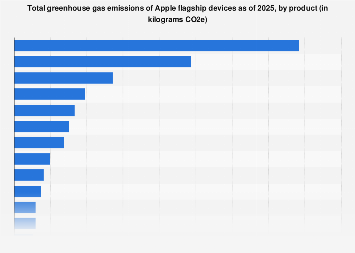
The Mac Pro, a high-performance workstation designed for demanding professional tasks, stands out in 2025 as having the most substantial carbon footprint among Apple’s flagship devices. This substantial environmental cost is directly attributable to its complex manufacturing processes, the energy-intensive materials required for its powerful components, and its potentially longer operational lifespan and upgrade cycles. While specific figures are proprietary and subject to ongoing reporting, industry analysis and environmental impact assessments suggest that the production and lifecycle of such a device can contribute significantly to greenhouse gas emissions, measured in kilograms of carbon dioxide equivalent (CO2e). This contrasts sharply with the company’s most compact and consumer-focused devices.
At the opposite end of the spectrum, the Apple Watch SE 3 demonstrates a remarkably lower carbon footprint. This disparity underscores the inherent differences in product design, material usage, and manufacturing complexity between a high-end desktop computer and a wearable device. The smaller form factor, less power-hungry components, and potentially shorter upgrade cycles for smartwatches contribute to a significantly reduced environmental impact per unit. This highlights a key challenge for sustainability reporting in the tech sector: the need to contextualize emissions data within the specific function, size, and market segment of each product.
The broader context of Apple’s environmental strategy involves a multi-pronged approach. The company has committed to becoming carbon neutral across its entire value chain by 2030, a goal that necessitates substantial investments in renewable energy, supply chain decarbonization, and the development of more sustainable product designs. This includes efforts to increase the use of recycled materials, improve energy efficiency in manufacturing facilities, and design products for longevity and easier repairability. However, the data on specific product emissions in 2025 indicates that while progress is being made, the journey to full carbon neutrality is a marathon, not a sprint, with certain product categories presenting more formidable challenges than others.
The manufacturing of electronic devices is inherently carbon-intensive. The extraction of raw materials, often including rare earth minerals, the energy consumed during fabrication processes, and the global logistics involved in transporting components and finished products all contribute to a significant carbon footprint. For products like the Mac Pro, the inclusion of advanced processors, high-capacity storage, and specialized graphics cards, while essential for performance, also means a greater demand for energy and resources during their creation. Furthermore, the energy consumed by these devices during their operational life, particularly when used for intensive computing, adds to their overall lifecycle emissions.

Conversely, the design philosophy behind devices like the Apple Watch prioritizes miniaturization and energy efficiency. The components are smaller, require less raw material, and consume significantly less power during operation. This difference in scale and functionality naturally leads to a lower carbon output. The Apple Watch SE 3, being a more accessible model within the Apple Watch lineup, likely employs slightly less complex or power-hungry components compared to its higher-end counterparts, further contributing to its minimized environmental impact.
Understanding these variations is crucial for both consumers and investors. For consumers, it provides a more nuanced perspective on the environmental impact of their purchasing decisions. While the allure of cutting-edge technology is strong, being aware of the varying carbon footprints associated with different devices can inform choices and encourage a more considered approach to technology consumption. For investors, these metrics are increasingly vital indicators of a company’s commitment to Environmental, Social, and Governance (ESG) principles. Companies that can demonstrably reduce the carbon footprint of their flagship products are often seen as more resilient, innovative, and better positioned for long-term success in a world increasingly prioritizing sustainability.
The global market for consumer electronics is vast and continues to grow, with billions of devices produced annually. This scale amplifies the importance of each company’s environmental performance. Apple, as one of the largest and most influential players in this market, has a significant responsibility to lead by example. Its publicly stated sustainability goals and its ongoing efforts to report on its environmental performance are commendable. However, the detailed breakdown of emissions by product category, as suggested by the 2025 data, reveals the intricate challenges involved.
The data also points to the ongoing debate within the tech industry about how to best measure and report product-level carbon emissions. Factors such as the energy mix used in manufacturing facilities (whether powered by renewables or fossil fuels), the efficiency of global supply chains, and the lifespan and recyclability of products all play a role. Apple’s supplementary notes, indicating that values can vary by configuration and are compiled from product environmental reports, suggest a complex and data-driven approach. This transparency, while valuable, also underscores the technical complexities of assigning a precise carbon figure to a product that can be customized and used in diverse environments.
Looking ahead, the trend in the consumer electronics industry is clearly towards greater sustainability. Companies are facing increasing regulatory pressure, consumer demand for eco-friendly products, and investor expectations for robust ESG performance. Apple’s focus on renewable energy for its operations and its ambitious carbon neutrality targets are significant steps. However, the continued development of high-performance computing, the demand for increasingly sophisticated features, and the rapid pace of technological innovation present an ongoing tension with environmental goals. The Mac Pro’s higher emissions profile in 2025 serves as a potent reminder that even the most environmentally conscious companies face significant hurdles in decarbonizing their most advanced and resource-intensive products. The challenge for Apple, and indeed the entire tech sector, is to continue innovating in ways that not only push the boundaries of technology but also minimize their impact on the planet. This will require ongoing investment in research and development, a commitment to circular economy principles, and a willingness to confront the environmental costs associated with every product that leaves their factories.