

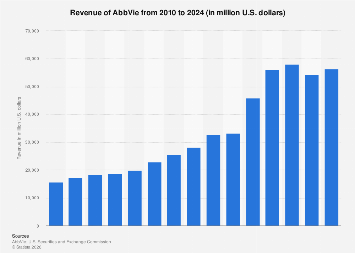
AbbVie, a global biopharmaceutical powerhouse, is poised to achieve an estimated revenue of approximately $56.3 billion in 2024, a significant figure underscoring its sustained presence and influence within the highly competitive pharmaceutical sector. This projection reflects a dynamic period for the company, marked by strategic acquisitions, robust product portfolios, and the ongoing evolution of healthcare markets worldwide. To fully appreciate this financial milestone, it is essential to contextualize AbbVie’s journey, tracing its origins and understanding the key drivers behind its impressive revenue growth over the past decade.
The genesis of AbbVie can be traced back to January 2013, when Abbott Laboratories, a diversified healthcare company, underwent a strategic separation. This pivotal decision resulted in the establishment of two independent entities: Abbott Laboratories, focusing on medical devices, diagnostics, and nutritional products, and AbbVie, dedicated to the research, development, and commercialization of innovative pharmaceuticals. This strategic realignment allowed AbbVie to concentrate its resources and expertise on its core strength: pioneering life-changing therapies for complex diseases.
Since its inception, AbbVie has demonstrated a consistent upward trajectory in its revenue. From an initial revenue of approximately $18.79 billion in 2013, the company has seen its top line expand substantially. By 2019, revenue had climbed to $33.27 billion, indicating a robust growth rate in the years leading up to the significant acquisition of Allergan plc in May 2020. This acquisition marked a transformative moment for AbbVie, broadening its therapeutic areas, strengthening its product pipeline, and significantly boosting its revenue. In the immediate aftermath of the Allergan integration, AbbVie’s revenue surged to $45.80 billion in 2020, a testament to the synergistic benefits of the merger.
The years that followed have seen AbbVie navigate the complexities of the global pharmaceutical market, including patent expirations, the rise of biosimilars, and evolving reimbursement landscapes. Despite these challenges, the company has managed to maintain and grow its revenue base. After a dip to $58.05 billion in 2022, the company is projected to reach $56.3 billion in 2024, with a reported $54.3 billion in 2023. This sustained performance highlights the resilience of its business model and the enduring demand for its therapeutic solutions.
A significant contributor to AbbVie’s financial success has been its flagship immunology drug, Humira. For years, Humira has been a cornerstone of AbbVie’s revenue, generating billions of dollars annually. However, as Humira faces increasing competition from biosimilars in key markets, AbbVie has strategically diversified its portfolio to mitigate the impact of patent cliffs. The acquisition of Allergan was a crucial step in this diversification, bringing in established brands and a broader range of therapeutic indications. Furthermore, AbbVie has heavily invested in its pipeline, focusing on next-generation immunology treatments, oncology, neuroscience, and aesthetics.
The company’s strategic focus on innovation is evident in its substantial investments in research and development (R&D). These investments are critical for replenishing its product portfolio and identifying new blockbuster drugs. AbbVie’s commitment to R&D aims to address unmet medical needs across a spectrum of diseases, from rheumatoid arthritis and psoriasis to cancer and neurological disorders. The success of these R&D efforts will be paramount in shaping AbbVie’s future revenue streams and maintaining its competitive edge in the long term.
Examining AbbVie’s revenue in the context of the global pharmaceutical industry reveals its significant standing. The global pharmaceutical market is valued in the trillions of dollars, with major players constantly vying for market share. AbbVie consistently ranks among the top pharmaceutical companies worldwide by revenue. Its projected 2024 revenue places it firmly within the top tier, competing with other industry giants like Pfizer, Johnson & Johnson, and Roche. The company’s ability to generate over $50 billion in annual revenue is a testament to its successful commercialization strategies, global reach, and the therapeutic value of its products.
The economic impact of a company like AbbVie extends far beyond its financial statements. It is a significant employer, providing high-skilled jobs in research, manufacturing, sales, and administration. Its operations contribute to local and national economies through taxes, investments, and the procurement of goods and services. Moreover, the innovative medicines developed by AbbVie have a profound societal impact, improving patient outcomes, reducing healthcare burdens, and enhancing quality of life for millions globally.
Looking ahead, AbbVie’s financial future will be shaped by several key factors. The ongoing performance of its established products, the successful launch and market penetration of new therapies, and its ability to adapt to evolving regulatory and market dynamics will all play a crucial role. The company’s strategic acquisitions and partnerships will also continue to be a vital component of its growth strategy, allowing it to access new technologies, expand its therapeutic reach, and diversify its revenue sources.
The pharmaceutical industry is characterized by rapid innovation and intense competition. AbbVie’s projected $56.3 billion revenue for 2024 signifies its robust position, but the company must remain agile and forward-thinking to sustain its growth. Its historical performance, strategic acquisitions, and ongoing commitment to research and development provide a strong foundation, but the true test of its long-term success will lie in its ability to continue delivering transformative therapies to patients and adapting to the ever-changing landscape of global healthcare. The company’s ability to manage the lifecycle of its products, particularly as key drugs face biosimilar competition, while simultaneously bringing novel treatments to market, will be a critical determinant of its financial trajectory in the years to come.