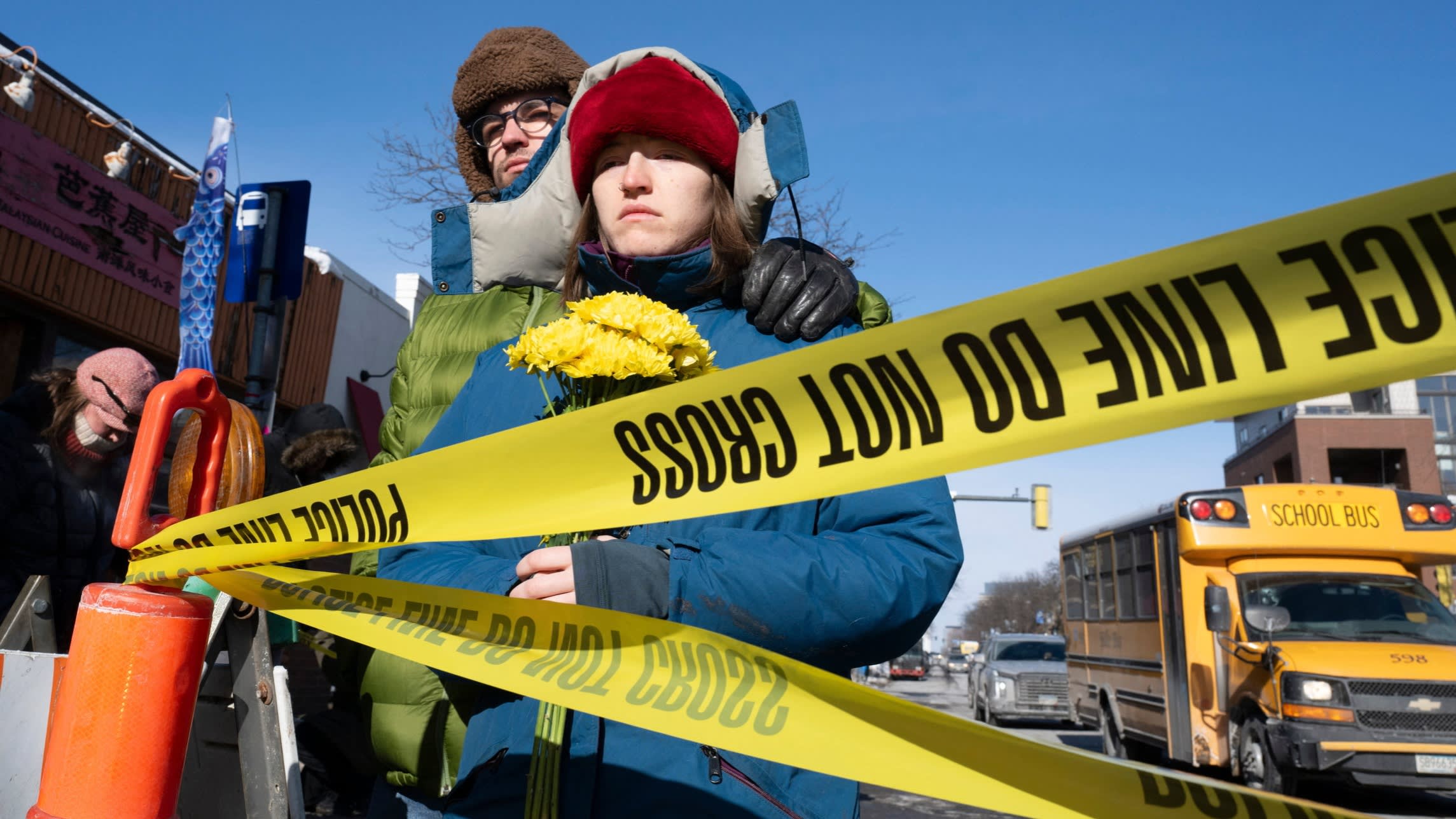
The vibrant stretch of Nicollet Avenue in Minneapolis, affectionately known to locals and tourists as "Eat Street," has long served as a testament to the city’s cultural pluralism and entrepreneurial spirit. Lined with a dense concentration of family-owned restaurants, high-end bistros, and eclectic boutiques, it represented the pinnacle of Midwestern urban revitalization. However, the atmosphere of this culinary corridor shifted dramatically following a series of violent incidents that culminated in a high-profile tragedy, sending shockwaves far beyond the borders of Hennepin County. This specific eruption of violence did more than rattle local residents; it served as a pivotal inflection point for the political strategy of Donald Trump, forcing a recalibration of his campaign’s messaging from a primary focus on trade and protectionism to a visceral, high-stakes narrative centered on "law and order" and the perceived collapse of the American city.
For decades, the economic health of American metropolitan areas has been inextricably linked to the perception of public safety. In the wake of the 2020 social unrest and the subsequent complexities of the post-pandemic era, cities like Minneapolis became laboratories for a new kind of urban anxiety. When a fatal shooting occurred amidst the bustling nightlife of Eat Street, it provided a tragic, tangible data point for a broader political argument. For the Trump campaign, this was not merely a local crime story; it was a microcosm of a national crisis. The incident acted as a catalyst, prompting a shift in rhetoric that sought to paint urban centers—traditionally Democratic strongholds—as "war zones" where the rule of law had surrendered to chaos.
The economic implications of this shift are profound and multi-faceted. When a commercial hub like Eat Street experiences a spike in violent crime, the "crime tax" begins to take a heavy toll. Small business owners, already operating on razor-thin margins, face skyrocketing insurance premiums, the necessity of investing in private security, and a precipitous drop in foot traffic. In Minneapolis, the economic fallout was measurable. Data from local business associations indicated that while suburban retail centers saw a robust recovery following the pandemic, urban corridors struggled with a "fear-of-crime" deficit. This economic stagnation provides fertile ground for political messaging that promises a return to stability through federal intervention and more aggressive policing.
Donald Trump’s pivot toward a hardline law-and-order stance was a strategic response to these shifting urban dynamics. By highlighting specific tragedies on streets like Nicollet Avenue, the campaign aimed to bridge the gap between rural grievances and suburban fears. The "security mom" and "safety-conscious suburbanite" became the new targets of a narrative that suggested urban violence was a contagion that, if left unchecked by local "liberal" administrations, would eventually breach the gates of the suburbs. This strategy marked a significant departure from the 2016 focus on manufacturing jobs in the Rust Belt, moving instead toward a focus on the fundamental role of the state in ensuring personal safety and the protection of property.
The statistical landscape of this debate is often contested, creating a rift between data-driven policy and perception-driven politics. While FBI Uniform Crime Reporting (UCR) data in recent years has shown a fluctuating trend—with some categories of violent crime decreasing nationally even as specific "hot spots" see surges—the political narrative often prioritizes the anecdotal over the aggregate. A single killing on a popular street carries more weight in the public consciousness than a five percent decrease in citywide property crime. This "availability heuristic" allows political figures to leverage specific tragedies to advocate for sweeping policy changes, such as the deployment of federal agents to cities or the conditioning of federal funding on local policing practices.
Global comparisons further illuminate the unique nature of the American urban crisis. In major European capitals like London or Paris, while crime remains a significant political issue, the discourse rarely reaches the existential intensity seen in the United States. This is partly due to differences in gun prevalence and the structural nature of social safety nets. However, the American experience of "urban flight" and the subsequent "doughnut effect"—where the city center hollows out as wealth moves to the periphery—is an economic phenomenon that Trump’s rhetoric sought to exploit. By framing the "Eat Street" tragedy as a failure of local governance, the campaign tapped into a long-standing American anxiety regarding the viability of the "Great American City."
The impact on the real estate market and municipal finance cannot be overlooked. When a city’s reputation is marred by high-profile violence, its bond ratings and ability to attract corporate headquarters can suffer. In the years following the 2020 unrest and the subsequent rise in violent incidents, several high-profile companies relocated from downtown Minneapolis to suburban campuses or out-of-state hubs. This migration of capital exacerbates the very problems that fuel crime: a shrinking tax base leads to reduced funding for public schools, social services, and police departments, creating a self-perpetuating cycle of decline. Trump’s campaign utilized this "death spiral" narrative to argue that only a radical shift in federal oversight could restore the economic and social vitality of these regions.
Expert insights into the psychology of the "law and order" campaign suggest that it is designed to evoke a sense of nostalgia for a perceived era of stability. By focusing on a location like Eat Street—a place associated with leisure, community, and the middle class—the narrative hits a particularly sensitive nerve. It suggests that the most basic elements of American life, such as going out for a meal, are now under threat. This messaging proved particularly effective in swing states like Minnesota, Michigan, and Pennsylvania, where the divide between the urban core and the surrounding counties is often the primary fault line in statewide elections.
However, the "Eat Street" pivot also faced significant criticism from urban planners and sociologists who argue that such rhetoric can become a self-fulfilling prophecy. Labeling a city as a "hellscape" can deter the very investment and tourism needed to revitalize the area and reduce crime through economic opportunity. Critics point out that the Trump administration’s focus on punitive measures often ignored the underlying socio-economic drivers of crime, such as housing instability, mental health crises, and the lack of upward mobility. Despite these criticisms, the political efficacy of the law-and-order narrative remained high, as it offered a clear, if simplified, solution to a complex and frightening reality.
As the political landscape continues to evolve, the legacy of the "Eat Street" killing remains a stark reminder of how local tragedies can be nationalized in the modern era of 24-hour news cycles and social media. The event forced a former president to redefine his platform, moving from the "forgotten man" of the factory floor to the "frightened citizen" of the urban sidewalk. This shift has lasting implications for how both parties approach urban policy, policing, and the economic management of America’s metropolitan hubs.
In the final analysis, the story of Nicollet Avenue is not just one of crime and politics, but of the fragile nature of urban prosperity. The economic health of a city is built on a foundation of trust—trust that the streets are safe, trust that the laws will be enforced, and trust that the community is moving toward a shared future. When that trust is shattered by a single act of violence, the reverberations are felt in the halls of power in Washington, reshaping the strategies of those who seek to lead the nation. The transformation of a local tragedy into a national campaign pillar underscores the deep-seated anxieties that continue to define the American political and economic consciousness in the 21st century.