


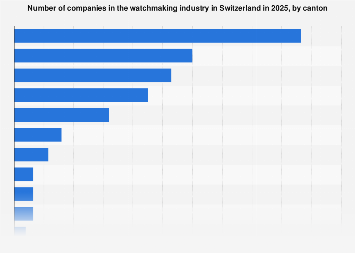
Switzerland’s enduring legacy in haute horlogerie is intrinsically linked to its cantonal structure, with specific regions serving as epicenters for the design, manufacturing, and innovation that define the global watchmaking industry. As of September 30, 2025, a detailed analysis of the sector reveals a distinct geographic concentration of watchmaking companies across the Swiss Confederation, highlighting the historical and economic significance of these territories. While the precise figures for each canton are subject to subscription-based data, the overarching trend underscores a deep-rooted specialization that fuels the nation’s reputation for precision, craftsmanship, and luxury timepieces.
The canton of Neuchâtel stands out as a primary hub, historically recognized for its pivotal role in watchmaking. This region, nestled in the Jura mountains, has long been a breeding ground for horological talent and a center for technological advancement. Its landscape is dotted with both established luxury maisons and a vibrant ecosystem of smaller, specialized manufacturers and component suppliers. The concentration of expertise in Neuchâtel, spanning generations, has cultivated an unparalleled depth of knowledge in everything from intricate mechanical movements to sophisticated complications. This has not only cemented its position as a leader but also attracted significant investment and talent, further solidifying its dominance.
Beyond Neuchâtel, other cantons play crucial, albeit sometimes more specialized, roles in the intricate tapestry of Swiss watchmaking. Geneva, with its long tradition of watchmaking dating back centuries, remains a prestigious address for many of the world’s most revered watch brands. The canton is synonymous with high-end luxury, fine finishing, and a commitment to traditional craftsmanship. Its influence extends beyond manufacturing, encompassing retail, distribution, and a significant presence of watchmaking schools and training centers that perpetuate the art form. The historical significance of Geneva as a cradle of innovation and horological artistry continues to resonate, attracting a discerning global clientele.
The canton of Bern, while perhaps less overtly associated with watchmaking than Neuchâtel or Geneva, also contributes to the sector’s overall strength. Its industrial landscape supports various manufacturing activities, and within this, specialized companies contribute essential components, services, or niche production capabilities to the broader watchmaking supply chain. The economic diversification within Bern allows it to support segments of the industry that might not be as prominent in the more singularly focused cantons.
Zurich, Switzerland’s largest city and a global financial center, plays a multifaceted role. While not traditionally a manufacturing heartland for watchmaking in the same vein as the Jura arc, its economic dynamism and international connectivity make it a vital node for the industry. Zurich hosts corporate headquarters for major watch groups, significant retail operations, marketing and sales divisions, and financial services that support the global export of Swiss watches. Furthermore, its status as a hub for research and development, coupled with its strong educational institutions, may increasingly attract companies involved in the technological evolution of watchmaking, such as smartwatches or innovative materials. The presence of a significant number of watchmaking companies in Zurich, as indicated by available data, likely reflects this blend of corporate presence, retail strength, and potentially emerging technological ventures.
The distribution of watchmaking companies across cantons is not merely a matter of historical happenstance; it reflects a strategic geographical clustering that fosters innovation and efficiency. Proximity allows for close collaboration between manufacturers, suppliers, and research institutions, streamlining the supply chain and facilitating the rapid adoption of new technologies and techniques. This ecosystem effect is a significant competitive advantage for the Swiss watch industry, enabling it to maintain its position at the forefront of the global market.
The economic impact of this cantonal distribution is profound. Each canton hosting significant watchmaking activity benefits from job creation, tax revenues, and the development of specialized skills within its workforce. The industry’s contribution to Switzerland’s gross domestic product (GDP) is substantial, with watch exports consistently ranking among the nation’s leading export categories. This economic engine is powered by the collective output and expertise concentrated across these distinct regions.
Globally, the Swiss watch industry’s success is often contrasted with the manufacturing capabilities of other nations. While countries like Japan have achieved remarkable success in quartz technology and mass-produced timepieces, and other regions are developing their own luxury watch sectors, Switzerland maintains a dominant position in the high-end mechanical watch segment. This is a testament to the sustained investment in craftsmanship, innovation, and the unique brand equity built over centuries, with the cantonal specialization serving as a cornerstone of this enduring strength.
The data for 2025, therefore, offers a snapshot of an industry that, while evolving with technological advancements and changing consumer demands, remains deeply rooted in its traditional geographical strongholds. The concentration of companies in cantons like Neuchâtel and Geneva, alongside the broader contributions from regions like Zurich and Bern, paints a picture of a highly specialized and geographically optimized industry. Understanding this cantonal distribution is key to appreciating the intricate mechanics of Switzerland’s most iconic export and its continued dominance in the global luxury market. The ongoing interplay between tradition and innovation, fostered by this unique regional structure, ensures that Switzerland will likely remain at the zenith of fine watchmaking for the foreseeable future.