

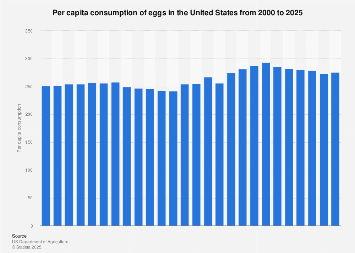
The United States is witnessing a sustained increase in egg consumption, a trend driven by evolving consumer preferences and a robust domestic agricultural sector. Projections indicate that the average American will consume approximately 275.9 eggs by 2025, a slight uptick from an estimated 272.9 eggs per person in 2024. This per capita consumption metric, calculated by subtracting exports from total egg production and then dividing by the nation’s population, serves as a key indicator of the domestic demand landscape for this staple food item. The consistent upward trajectory suggests a deeply embedded role for eggs in the American diet, a pattern that has held firm over recent years.
This growing demand is unfolding against a backdrop of significant shifts within the U.S. egg industry, particularly concerning production methods and animal welfare standards. While conventional caged systems still represent the majority of laying hen housing, there has been a discernible and accelerating movement towards cage-free and organic production models. This transition is not merely a stylistic shift but a response to heightened consumer awareness and a growing ethical imperative. In cage-free environments, hens are granted more freedom of movement, a stark contrast to the confinement of traditional battery cages. However, the nuances of "cage-free" can vary, with some facilities offering limited movement and potentially crowded conditions. Organic production, on the other hand, typically entails a more comprehensive approach, including mandated free-range access to outdoor areas, often accompanied by specific feed and husbandry requirements. The expansion of these alternative production systems, though still representing a smaller fraction of the total, signifies a maturing market that is increasingly responsive to a broader spectrum of consumer values. This diversification in production methods is likely to shape the future landscape of egg sourcing and marketing within the United States.
The foundational strength of the U.S. egg industry is underscored by its consistent output and a historically expanding flock. For years, the total number of eggs produced annually within the United States has demonstrated steady growth, reflecting an industry capable of meeting and even exceeding domestic demand. Similarly, the population of laying hens, the engine of this production, had experienced a sustained multi-decade increase until a slight plateau in 2019. This long-term expansion in hen numbers and subsequent egg output highlights the industry’s resilience and its capacity for adaptation. Geographically, the industry is heavily concentrated, with Iowa consistently leading the nation in laying hen population. As of 2022, the state housed an impressive approximately 43 million laying hens, solidifying its position as the undisputed heartland of American egg production. This concentration offers logistical advantages but also presents potential vulnerabilities to localized disruptions, such as avian influenza outbreaks, which can have significant ripple effects across the national supply chain.
The economic implications of this sustained demand and production are substantial. The U.S. egg industry is a significant contributor to the agricultural economy, supporting jobs in farming, processing, distribution, and retail. The projected increase in per capita consumption suggests continued revenue streams for producers and related businesses. Furthermore, the growing market share for cage-free and organic eggs is creating new economic opportunities and driving innovation in farm management and infrastructure. These niche markets often command premium prices, reflecting the higher production costs associated with these methods, thereby enhancing profitability for farms that can successfully transition. Globally, the U.S. egg market is a major player. While the U.S. is a significant producer, its per capita consumption, while growing, still lags behind some other developed nations. For instance, countries like Mexico and Malaysia often report higher per capita egg consumption figures, suggesting different dietary habits and economic factors at play. The U.S. industry’s ability to meet domestic demand while also engaging in international trade, though primarily a net importer of egg products rather than whole eggs, further illustrates its economic importance on a global scale.
The dynamics influencing U.S. egg consumption are multifaceted. Dietary trends play a crucial role, with eggs consistently lauded for their nutritional value, offering a cost-effective source of protein, vitamins, and minerals. Their versatility in culinary applications, from breakfast staples to ingredients in baked goods and complex dishes, ensures their enduring appeal. Moreover, the perception of eggs as a relatively affordable protein source, especially in times of broader inflationary pressures on food items, can bolster demand. The industry’s ongoing efforts in marketing and public relations, often emphasizing the health benefits and the positive attributes of domestically produced eggs, also contribute to sustaining and growing consumption. The increasing adoption of cage-free and organic options caters to a segment of consumers who are more health-conscious and ethically minded, demonstrating the industry’s capacity to adapt to evolving consumer values. This adaptation is not without its challenges; the transition to alternative housing systems requires significant capital investment, and ensuring consistent supply and quality across diverse production methods necessitates sophisticated management and regulatory oversight.
Looking ahead, the trajectory of U.S. egg consumption appears to be one of continued, albeit modest, expansion. The interplay between evolving consumer preferences for ethical and sustainable production, the intrinsic nutritional value of eggs, and the economic realities of food affordability will continue to shape market dynamics. The industry’s ability to navigate these complexities, from investing in innovative production technologies to effectively communicating its value proposition to consumers, will be critical in sustaining its growth and its vital role within the American food system. The projected increase in per capita consumption is more than just a statistic; it represents the enduring appeal of a fundamental foodstuff and the dynamic evolution of a major agricultural sector.