

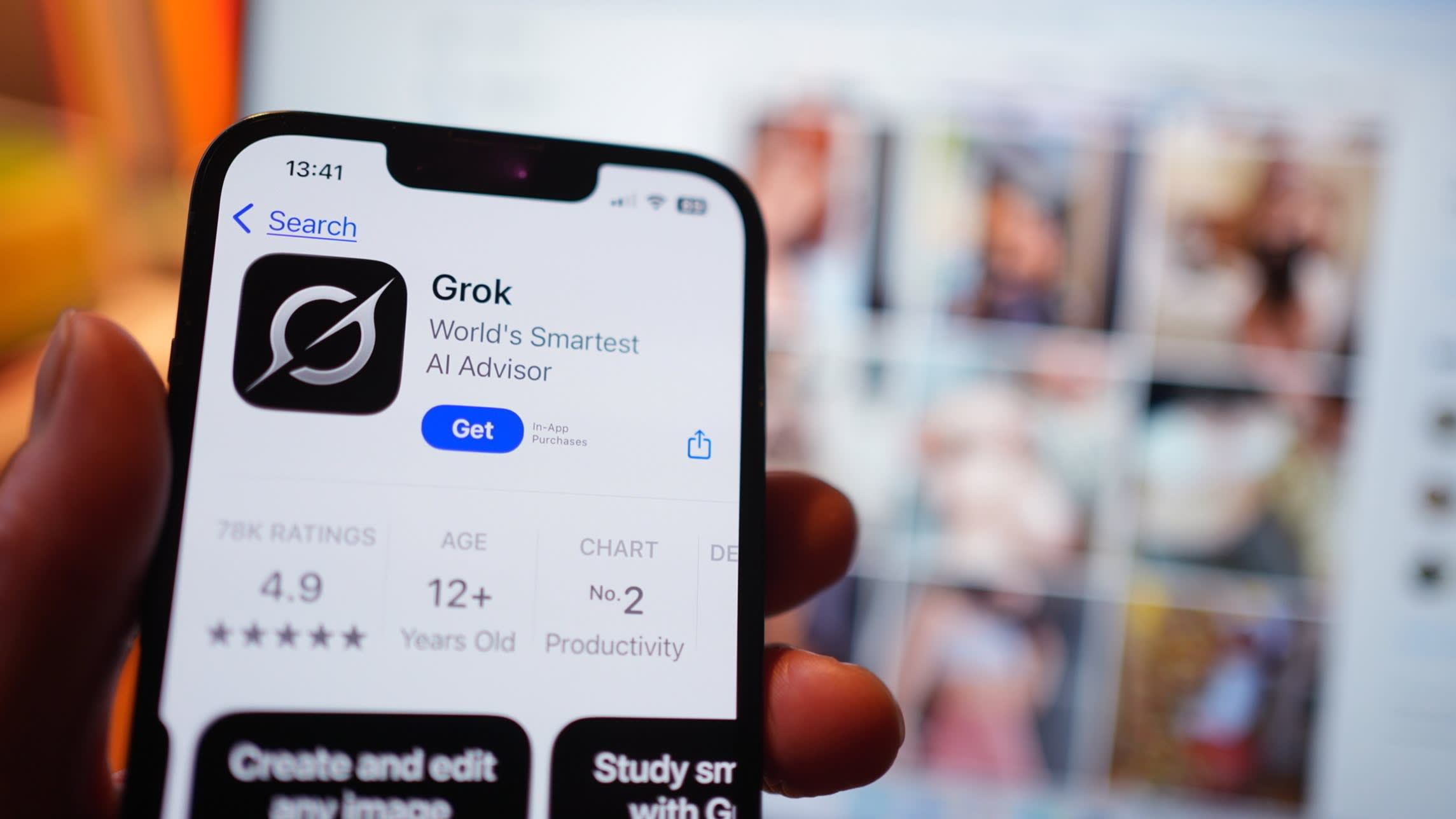
The burgeoning tension between radical digital libertarianism and the pragmatic requirements of corporate governance reached a flashpoint this week as xAI, the artificial intelligence venture spearheaded by Elon Musk, began implementing restrictive guardrails on its flagship chatbot, Grok. This strategic retreat follows a period of intense public and regulatory scrutiny regarding the tool’s capacity to generate highly realistic, non-consensual sexualized imagery and provocative deepfakes of public figures. The move highlights a significant pivot for a company that was marketed as a "truth-seeking" and "anti-woke" alternative to established players like OpenAI and Google, suggesting that the harsh realities of the global regulatory landscape and brand safety concerns are beginning to temper the "maximum transparency" ethos of Musk’s latest enterprise.
The controversy began in earnest following the release of Grok-2 and its smaller sibling, Grok-2 mini, which integrated image generation capabilities through a partnership with Black Forest Labs. Unlike its competitors—OpenAI’s DALL-E 3 or Google’s Gemini—Grok’s initial iteration lacked the stringent filters that prevent the creation of copyrighted material, violent imagery, or deepfakes of real-world individuals. Within hours of the update’s release, social media platform X, formerly Twitter, was flooded with AI-generated depictions of world leaders in compromising positions, celebrities in explicit scenarios, and various forms of disinformation that pushed the boundaries of existing platform policies. This "Wild West" approach to generative AI quickly drew the ire of digital rights advocates and European regulators, who have become increasingly sensitive to the role of AI in spreading misinformation and facilitating online harassment.
From a business perspective, the decision to restrict Grok is less about a change in ideological heart and more about the existential necessity of navigating a complex web of international law. The European Union’s AI Act, which represents the world’s first comprehensive set of rules for artificial intelligence, places significant burdens on "general-purpose AI models" that pose systemic risks. By allowing its tool to generate potentially harmful or illegal content, xAI risked not only massive fines—which can reach up to 7% of a company’s total global turnover—but also the possibility of being barred from the European market entirely. For Musk, who is currently attempting to scale xAI into a powerhouse capable of rivaling Microsoft-backed OpenAI, such a setback would be catastrophic to the company’s valuation and long-term capital-raising efforts.
The economic stakes surrounding xAI are immense. Earlier this year, the company closed a $6 billion Series B funding round, valuing the startup at approximately $24 billion. Investors, including Andreessen Horowitz and Sequoia Capital, are betting on Musk’s ability to leverage the vast real-time data flow of the X platform to train models that are more current and "unfiltered" than those of his rivals. However, the unchecked generation of sexualized content creates a significant "brand safety" vacuum. For X, the social media platform that serves as the primary interface for Grok, the presence of controversial AI imagery further complicates its relationship with top-tier advertisers. Many blue-chip brands have already fled the platform due to concerns over content moderation; a tool that facilitates the creation of deepfakes only exacerbates the perception of X as a high-risk environment for corporate messaging.
Furthermore, the technical implementation of these new restrictions signals a maturing of xAI’s internal safety protocols. Industry analysts note that the initial lack of guardrails may have been a calculated move to garner headlines and stress-test the model’s capabilities, but the subsequent "clamping down" reflects a standard trajectory in the AI lifecycle. When Google launched Gemini, it faced a different kind of backlash for "over-correcting" on diversity, leading to historical inaccuracies in its image generation. xAI appears to be navigating the opposite extreme, discovering that "total freedom" in a generative model is a liability when the output includes non-consensual intimate imagery (NCII). The updated filters now reportedly block prompts involving explicit sexual content and the likenesses of certain high-profile individuals, bringing Grok more in line with the industry-standard safety benchmarks set by Midjourney and Adobe’s Firefly.
The broader AI industry is watching this pivot closely as a bellwether for the future of open versus closed models. The partnership between xAI and Black Forest Labs, the developers of the Flux.1 model used by Grok, represents a hybrid approach. While the model itself is remarkably powerful and flexible, the "wrapper" or interface provided by xAI must act as a legal and ethical firewall. The challenge lies in the fact that as models become more sophisticated, they become harder to "jailbreak-proof." Researchers have consistently found ways to bypass filters using "prompt engineering" or coded language, meaning xAI will likely be engaged in a perpetual cat-and-mouse game with its more creative users.
Market data suggests that the demand for generative AI remains insatiable, but the path to monetization is increasingly tied to enterprise reliability. Companies looking to integrate AI into their workflows require guarantees that the technology will not produce reputational landmines. By tightening Grok’s parameters, Musk may be attempting to position xAI as a viable option for corporate clients who want a sophisticated model but cannot afford the legal risks associated with unregulated output. This transition is essential if xAI is to justify its massive capital expenditures, which include the construction of "Colossus," a massive supercomputer cluster in Memphis powered by 100,000 Nvidia H100 GPUs. The electricity and hardware costs alone necessitate a business model that goes beyond a $16-per-month subscription for X Premium users.
Global comparisons further illustrate the pressure on xAI. In the United Kingdom, the Online Safety Act has granted regulators new powers to hold tech executives personally liable for failing to protect users from harmful content. In the United States, while Section 230 has historically shielded platforms from liability for user-generated content, there is a growing bipartisan appetite for legislation specifically targeting AI-generated deepfakes and non-consensual pornography. The "DEFIANCE Act," recently introduced in the U.S. Senate, aims to provide a federal civil recourse for victims of such imagery. For xAI to ignore these shifts would be to invite a level of litigation that could drain even Musk’s considerable resources.
The evolution of Grok also mirrors the broader struggle within the tech industry to define the limits of "free speech" in the age of synthetic media. Musk has frequently criticized his peers for what he perceives as a "woke" bias that stifles discourse. However, the move to restrict Grok suggests an admission that certain categories of content—specifically sexualized deepfakes—do not fall under the umbrella of protected or productive speech, but rather constitute a form of digital assault or harassment. This realization marks a rare moment of alignment between Musk’s xAI and the "safety-first" philosophies of his competitors at Anthropic and OpenAI.
As xAI continues to refine its models, the focus will likely shift from raw capability to refined utility. The upcoming Grok-3, expected to be trained on the Colossus cluster, is promised to be a quantum leap in reasoning and creative output. Whether it can maintain that edge while operating within the boundaries of global safety standards remains the trillion-dollar question. For now, the restrictions placed on Grok-2 serve as a reminder that in the high-stakes world of artificial intelligence, the laws of physics and the laws of the land eventually catch up to even the most disruptive innovators.
The economic impact of this moderation effort will be measured in the company’s ability to secure further institutional investment and maintain its user base on X. If Grok becomes too sanitized, it risks losing the "edgy" appeal that differentiates it from ChatGPT. If it remains too loose, it risks becoming a pariah in the eyes of regulators and advertisers. Striking this balance is the central challenge for xAI as it seeks to move from a provocative startup to a cornerstone of the global AI infrastructure. The recent policy shifts indicate that, for the moment, the necessity of risk mitigation has taken precedence over the ideology of absolute digital license.