


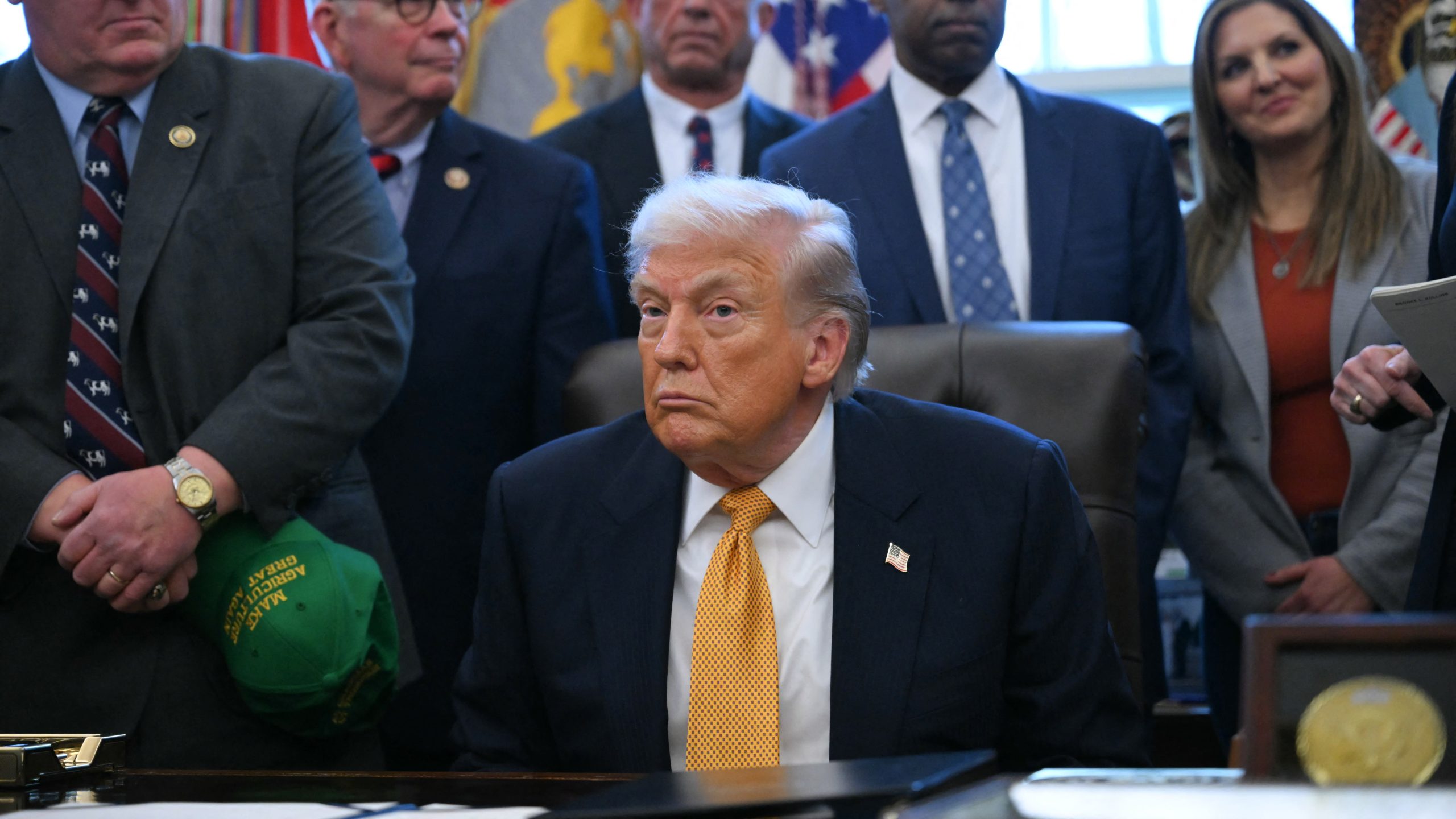
The announcement by President-elect Donald Trump that he has received high-level assurances regarding the cessation of state-sanctioned violence within Iran marks a potential pivot in the volatile relationship between Washington and Tehran. This development comes at a critical juncture for the Islamic Republic, which has faced a cascade of internal unrest, a deteriorating economic landscape, and a series of regional military setbacks involving its proxy networks. While the specifics of these "assurances" remain opaque, the claim suggests a renewed opening for transactional diplomacy, even as human rights organizations and geopolitical analysts remain deeply skeptical of the Iranian government’s long-term commitment to reform.
For the international community, the stakes of such a shift are profound. Since the 2022 death of Mahsa Amini in the custody of the morality police, Iran has been gripped by the "Woman, Life, Freedom" movement, which triggered the most significant challenge to the clerical establishment since the 1979 revolution. The state’s response was characterized by a brutal crackdown, involving thousands of arrests and a sharp uptick in capital punishment. According to data from various human rights monitors, Iran executed more than 800 people in 2023 alone, the highest figure in nearly a decade. If the incoming U.S. administration has indeed secured a commitment to halt such practices, it would represent a startling departure from Tehran’s recent domestic policy of "security at all costs."
The timing of this diplomatic overture is inextricably linked to Iran’s precarious economic position. The Iranian Rial has suffered a precipitous decline, losing significant value against the U.S. dollar over the last four years, a trend that has fueled domestic inflation currently estimated to be hovering between 40% and 50%. The "Maximum Pressure" campaign initiated during the first Trump administration remains a vivid memory for the Iranian leadership; by targeting the country’s oil exports and disconnecting its banks from the global financial system, the policy effectively drained Iran’s foreign exchange reserves and crippled its industrial capacity. Facing the prospect of a "Maximum Pressure 2.0" scenario, Tehran may be calculating that a visible reduction in domestic repression could serve as a low-cost concession to signal a desire for de-escalation.
Market analysts are closely watching how these developments might influence global energy stability. Despite heavy sanctions, Iran has managed to maintain a level of oil production nearing 3.2 million barrels per day, with much of its "dark fleet" exports flowing to independent refiners in China. However, a return to a more aggressive enforcement of U.S. sanctions could potentially remove upwards of 1 million barrels per day from the global market. Conversely, if Trump’s claims of a "stopping of the killing" lead to a broader diplomatic framework, it could stabilize the risk premium currently baked into Brent Crude prices, which have been volatile due to the ongoing conflict between Israel and Iranian-backed groups like Hezbollah and Hamas.
The skepticism surrounding Trump’s announcement is rooted in the "shadow war" that continues to play out across the Middle East. While Tehran may offer rhetorical or even tactical pauses in domestic executions to appease a new administration in Washington, its regional strategy remains aggressive. The "Axis of Resistance"—comprising militias in Iraq, Syria, Lebanon, and Yemen—serves as Iran’s primary deterrent against external threats. Analysts argue that unless the assurances regarding internal violence are paired with a retreat from regional proxy warfare, the fundamental friction between the U.S. and Iran will persist. Furthermore, the lack of a formal diplomatic channel raises questions about how such assurances were delivered and whether they represent a consensus within Iran’s complex power structure, which is split between the pragmatic wing of the presidency and the hardline Islamic Revolutionary Guard Corps (IRGC).
From a humanitarian perspective, the international community is demanding more than just verbal promises. The United Nations Fact-Finding Mission on Iran has previously documented "crimes against humanity" committed during the suppression of protests. Legal experts suggest that for any cessation of violence to be credible, it must be accompanied by the release of political prisoners, the dismantling of the morality police, and the granting of access to independent international observers. Without these tangible steps, critics argue that the Iranian government may simply be "rebranding" its repression or shifting toward less visible forms of control to avoid immediate diplomatic repercussions.
The economic impact of a potential thaw in relations extends beyond the oil sector. Iran sits on some of the world’s largest untapped reserves of natural gas and minerals. For European and Asian markets, a stabilized Iran represents a massive potential trade partner, provided the legal and political risks of engagement are mitigated. However, the legacy of the 2018 U.S. withdrawal from the Joint Comprehensive Plan of Action (JCPOA) has left a lasting scar on investor confidence. Multi-national corporations are unlikely to return to the Iranian market without a treaty-level agreement that can survive changes in U.S. leadership—a hurdle that seems insurmountable in the current polarized political climate.
Global comparisons illustrate the difficulty of trusting autocratic assurances in exchange for sanctions relief. Similar patterns have been observed in countries like Venezuela, where the Maduro government has frequently promised democratic reforms or the release of prisoners to secure temporary eases on oil sanctions, only to revert to authoritarian tactics once the immediate economic pressure subsided. For the Trump administration, the challenge will be to verify these Iranian claims without providing premature economic "carrots" that could be used by Tehran to fund its military ambitions.
Furthermore, the role of China as a geopolitical mediator cannot be overlooked. Beijing’s successful brokering of the normalization agreement between Iran and Saudi Arabia in 2023 demonstrated its growing influence in the region. It is possible that the "assurances" mentioned by the President-elect were facilitated through third-party intermediaries who have a vested interest in preventing a total collapse of the Iranian state or a full-scale regional war. China, as Iran’s primary economic lifeline, has significant leverage to demand domestic stability in exchange for continued investment in Iranian infrastructure and energy.
As the transition to the new administration nears, the focus will shift to the specific metrics the U.S. will use to measure Iran’s compliance. Will the benchmark be a reduction in the number of public executions, or will it require a total overhaul of the judicial system? The Iranian leadership, led by Supreme Leader Ali Khamenei, is facing a succession crisis and an aging elite, making any perceived weakness or "surrender" to Western demands a risky internal political move. Any pivot toward moderation is likely to be met with fierce resistance from the IRGC, which derives its power and funding from the very state of perpetual confrontation that such assurances seek to end.
In conclusion, the assertion that "killing in Iran is stopping" is a provocative entry point into what will undoubtedly be a high-stakes era of foreign policy. If true, it could provide the necessary breathing room for a broader dialogue on nuclear non-proliferation and regional security. If false, it may be viewed as a tactical maneuver by a cornered regime to buy time. For the global economy, the hope is for a de-escalation that secures energy corridors and reduces the threat of a wider Middle Eastern conflagration. However, for the millions of Iranians who have lived through years of state-led violence, the proof will not be found in diplomatic headlines, but in the streets of Tehran and the cells of Evin Prison. The world remains in a state of watchful waiting, cognizant that in the realm of international relations, assurances are only as valuable as the transparency and accountability that follow them.