


The automotive industry’s luxury bellwether, Porsche AG, is navigating its most turbulent fiscal period in over a decade, reporting a significant decline in global deliveries that marks the brand’s sharpest downturn since the height of the Great Recession in 2009. As the Stuttgart-based automaker grapples with a perfect storm of cooling demand in the Far East, a complex transition toward electrification, and a massive overhaul of its product lineup, the figures represent a sobering reality check for a company that has long been considered the profit engine of the Volkswagen Group. This contraction is not merely a localized slump but a reflection of broader macroeconomic shifts and changing consumer preferences in the high-end automotive sector.
The primary driver of this decline is a dramatic softening of the Chinese market, which for years served as Porsche’s most reliable engine of growth. In the first three quarters of 2024, deliveries in China plummeted by nearly 30 percent, a staggering figure for a brand that once enjoyed a seemingly invincible status among the country’s burgeoning middle and upper classes. The reasons for this retreat are manifold. China’s domestic economy continues to struggle with a protracted real estate crisis and tepid consumer confidence, leading even high-net-worth individuals to rethink discretionary spending on luxury goods. Furthermore, the competitive landscape in China has undergone a radical transformation. Domestic manufacturers, such as BYD’s Yangwang brand and tech giants like Xiaomi, are launching high-performance electric vehicles (EVs) that compete directly with Porsche on technology, software integration, and price, eroding the "prestige gap" that European marques once relied upon.
While China represents the most acute pain point, the sales fatigue is global. In North America, Porsche’s second-largest market, deliveries have also dipped, though less severely than in Asia. High interest rates in the United States have increased the cost of financing for luxury leases and purchases, while a general cooling in the electric vehicle segment has impacted the Taycan, Porsche’s flagship electric sports sedan. European markets have remained relatively stable by comparison, yet they have not provided enough volume to offset the losses elsewhere. The global delivery total for the year thus far reflects a mid-to-high single-digit percentage drop, a trajectory that hasn’t been seen since the 2008-2009 financial crisis forced a global retrenchment in luxury spending.
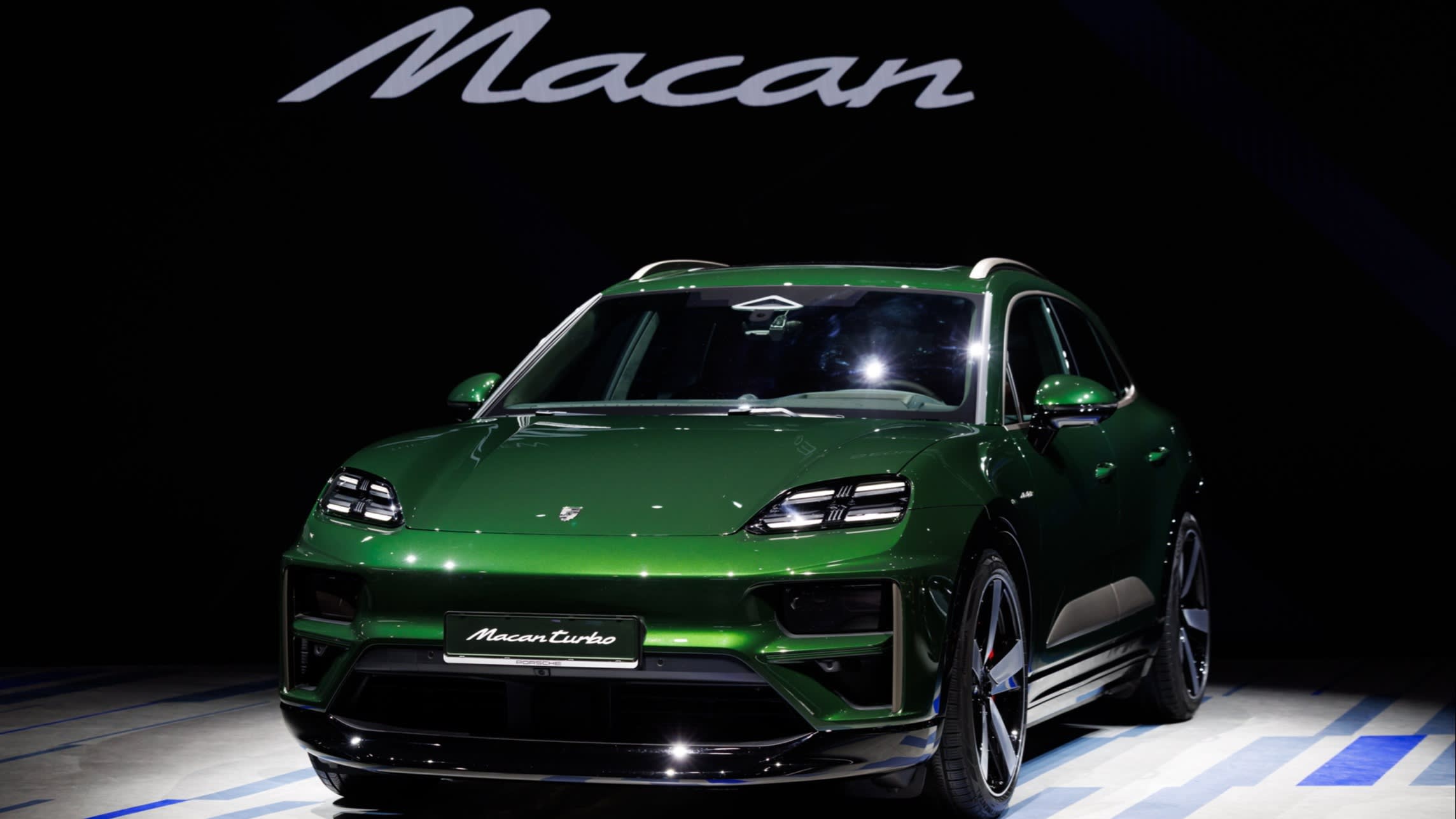
The timing of this sales slump coincides with what Porsche executives describe as a "transition year." The company is currently engaged in the most ambitious product refresh in its history, simultaneously updating or replacing four of its six model lines: the 911, the Panamera, the Taycan, and the best-selling Macan. Such an overhaul inevitably creates supply-side friction. As older models are phased out and production lines are retooled for the next generation, there is a natural gap in inventory. For instance, the transition of the Macan—Porsche’s high-volume SUV—to a purely electric platform in Europe and other markets has created a temporary vacuum. In the European Union, new cybersecurity regulations forced Porsche to discontinue the internal combustion engine (ICE) version of the Macan earlier than planned, leaving a sales hole that the new electric variant is only just beginning to fill.
The shift toward electrification, once viewed as an inevitable and rapid ascent, has encountered significant headwinds. Porsche was an early mover in the luxury EV space with the Taycan, but the model is now facing "generational fatigue" and increased competition. The recent refresh of the Taycan aims to address this with improved range and charging speeds, but the broader market for premium EVs has become increasingly crowded and price-sensitive. Moreover, the cooling of EV demand in the West has forced Porsche to recalibrate its ambitious goal of having 80 percent of its sales be fully electric by 2030. Management has recently signaled more flexibility, suggesting that the pace of the transition will depend on customer demand and the development of charging infrastructure, rather than rigid internal deadlines.
Financially, the sales volume decline is putting intense pressure on Porsche’s operating margins. Since its blockbuster Initial Public Offering (IPO) in late 2022, Porsche has been under the microscope of global investors who expect the brand to maintain its "value over volume" strategy. This strategy prioritizes high margins and brand exclusivity over raw sales numbers. However, with fixed costs remaining high due to massive Research and Development (R&D) investments in software and battery technology, the drop in volume makes it increasingly difficult to hit the company’s long-term operating return on sales target of over 20 percent. For the current fiscal year, Porsche has already tempered expectations, forecasting a margin in the range of 14 to 15 percent, a notable step down from previous highs.
The geopolitical climate adds another layer of complexity to Porsche’s recovery efforts. The escalating trade tensions between the European Union and China, particularly regarding subsidies for electric vehicles, threaten to further complicate Porsche’s position in its most critical growth market. Should China choose to retaliate against EU tariffs on Chinese EVs with its own duties on large-engine European imports, Porsche—which produces the vast majority of its vehicles in Germany and Slovakia—would be disproportionately affected. This potential for a "trade war" hangs over the luxury automotive sector like a Damoclean sword, forcing companies to consider more localized production strategies that could dilute their "Made in Germany" brand equity.
Despite the current downturn, Porsche’s leadership remains outwardly confident in the brand’s long-term resilience. The introduction of the new 911 Carrera GTS, the first street-legal 911 equipped with a performance hybrid system, represents a middle path that the company hopes will satisfy both performance enthusiasts and regulatory requirements. This "T-Hybrid" system is a centerpiece of Porsche’s strategy to keep its iconic sports cars relevant in a decarbonizing world without sacrificing the mechanical soul that defines the brand. Early orders for the new 911 variants remain strong, suggesting that at the very top of the luxury pyramid, brand loyalty remains robust even if the broader market is flagging.
The broader economic implications of Porsche’s struggle are significant for the German economy. As a crown jewel of German engineering, Porsche’s performance is often seen as a proxy for the health of the country’s industrial sector. The current slump highlights the vulnerability of the German export model, which has become heavily reliant on Chinese demand. As China pivots toward domestic champions and self-sufficiency in the EV era, German automakers are finding that the prestige of a European badge is no longer enough to guarantee market share.
Looking ahead to the final quarter of the year and into 2025, the path to recovery for Porsche will depend on a successful ramp-up of its new models and a stabilization of the Chinese market. The company is banking on the new electric Macan to capture a new segment of buyers who want the Porsche badge with a zero-emission powertrain. However, the execution must be flawless; any software glitches or supply chain bottlenecks—issues that have plagued the Volkswagen Group in recent years—could further erode investor confidence.
In summary, the deepest sales fall since 2009 is a watershed moment for Porsche. It marks the end of an era of effortless growth and the beginning of a much more contested and volatile period. While the brand’s heritage and engineering prowess remain undisputed, the external environment has shifted fundamentally. The coming months will determine whether Porsche can successfully pivot its "value over volume" mantra to fit a world where the engine of growth is no longer a traditional combustion engine in the West, but a high-tech, software-driven ecosystem in the East. For now, the "Stuttgart Shield" is being tested by forces that even the most advanced engineering cannot easily overcome.