


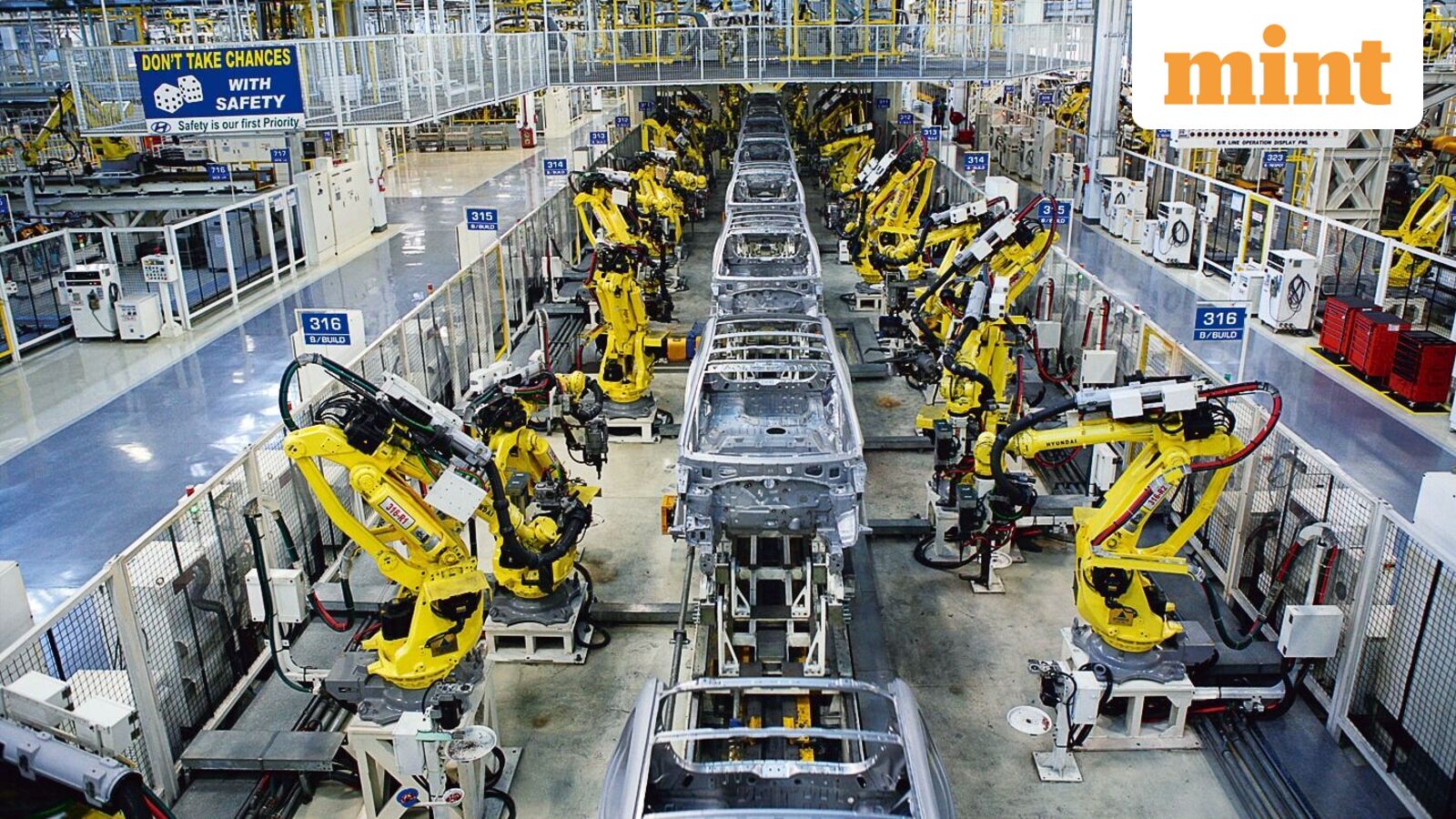
India’s burgeoning automotive export sector, a cornerstone of its "Make in India" manufacturing ambition, finds itself at a critical juncture, buffeted by rising protectionist measures in two of its most significant overseas markets: Mexico and South Africa. This dual challenge, emerging within a mere month, threatens to impede the growth trajectory of Indian carmakers and prompts a strategic re-evaluation of their global outreach, impacting an export volume valued at over $2 billion annually.
The initial shockwave emanated from Mexico, which, effective December 11, escalated import tariffs on a range of vehicles from countries with which it lacks a free trade agreement (FTA), including India and China. The duties on passenger vehicles surged dramatically from an average of 15-20% to a steep 50%. This move, ostensibly aimed at safeguarding Mexico’s domestic automotive industry and fostering local production, specifically targets imports that compete with its own manufacturing base, particularly in the compact and sub-compact segments where Indian exports are strong. For the fiscal year 2025 (FY25), Indian passenger vehicle exports to Mexico totalled a substantial $938 million, making it a pivotal market for several manufacturers.
Hard on the heels of the Mexican decision, South Africa’s Department of Trade, Industry and Competition initiated a review of its national automotive industrial policy, with discussions openly raising the prospect of doubling the current 25% import duty on cars to the World Trade Organization’s (WTO) permissible ceiling of 50%. While officials have clarified that no definitive policy position has been adopted, the very consideration sends a clear signal of South Africa’s intent to strengthen its local manufacturing capabilities. This potential tariff hike looms large over Indian automakers, which collectively exported passenger vehicles worth $1.2 billion to South Africa in FY25, marking a robust 26% year-on-year growth. The momentum continued into the current fiscal year, with exports exceeding $1 billion between April and November, an impressive 30% increase.
These developments underscore a broader global trend of economic nationalism and industrial policy resurgence, where nations increasingly prioritise domestic job creation, value addition, and trade balance over unrestricted imports. Governments are utilising tariffs and non-tariff barriers to incentivise local production, attract foreign direct investment into manufacturing, and de-risk supply chains from over-reliance on single-country sources. This shift challenges the established paradigm of globalised production and export-led growth models, particularly for emerging manufacturing hubs like India.

For India’s automotive giants, Maruti Suzuki India Ltd. and Hyundai Motor India Ltd., these policy shifts are particularly concerning. Maruti Suzuki, India’s largest carmaker, counts South Africa as its single largest export destination. In FY25, the company dispatched 95,597 cars to South Africa, accounting for nearly one-third of its total exports of 332,585 units. Similarly, Hyundai Motor India has consistently identified South Africa and Mexico among its top five global export markets. While the company recorded a marginal 0.1% growth in exports to 163,386 units in FY25, the stability and growth potential of these key markets are integral to its long-term strategy. The immediate market reaction was visible, with Maruti shares declining 2.39% and Hyundai shares falling 0.61% on the day the South African review became public, contrasting with a broader market uptick.
Industry experts are observing these trends with caution. Puneet Gupta, director at S&P Global Mobility, highlights the pervasive global uncertainty created by rising protectionism. "South Africa is a major export market for India, but such signals inevitably prompt automakers to reassess their exposure and growth assumptions in the region," Gupta noted. He added that while a growing domestic market offers some resilience, persistent policy ambiguity significantly undermines business confidence and long-term investment planning.
The strategic importance of exports to these companies cannot be overstated. Both Maruti Suzuki and Hyundai Motor India have articulated aggressive overseas growth targets. Maruti Suzuki’s chairman, R.C. Bhargava, had previously emphasised exports as a crucial driver for the company’s resilience and profitability, projecting a 20% growth in exports for the upcoming fiscal year. Hyundai, too, aims to export three out of every ten cars it produces in India by 2030, a strategy critical for sustaining its double-digit EBITDA margins, which stood at 12.94% in FY25. The potential tariff barriers directly threaten these ambitious growth plans and could force a recalibration of production schedules and investment strategies.
Beyond the immediate impact on these two major players, the broader Indian automotive ecosystem could feel the ripple effects. While other significant Indian automakers like Tata Motors and Mahindra & Mahindra have a comparatively smaller export footprint in South Africa and Mexico, their long-term global expansion strategies could be influenced by these protectionist signals. Manufacturers of automotive components and two-wheelers, though less exposed to these specific markets, face a precedent that could embolden other nations to adopt similar measures, leading to a fragmented global trade landscape.
The composition of vehicle imports into South Africa further illuminates the dynamic at play. In 2024, vehicles sourced from China accounted for a dominant 53% of South Africa’s total vehicle imports, exhibiting an astonishing 368% surge over the past four years. Indian vehicles followed, making up 22% of imports and demonstrating a robust 135% growth over the same period. This rapid increase in imports from Asian manufacturing hubs is likely a key factor driving South Africa’s policy review, as it seeks to channel this demand towards local production and job creation.

In response to these emerging challenges, Indian automakers are likely to pursue multi-pronged strategies. Diversification of export markets will become paramount, with companies exploring new opportunities in other parts of Africa, Latin America, Southeast Asia, and the Middle East, albeit with their own unique market entry barriers and regulatory complexities. Maruti Suzuki, with exports to over 100 countries, already has a diversified base, which its senior executive officer for corporate affairs, Rahul Bharti, highlighted as a de-risking strategy. However, expanding into new territories requires significant investment in logistics, distribution networks, and brand building.
Another critical strategic consideration is the potential for local assembly or manufacturing within the affected markets. Establishing production facilities in Mexico or South Africa could enable Indian automakers to circumvent tariffs and qualify for local content incentives, thereby transforming an export-oriented model into a more localised "in-market" presence. This approach, however, necessitates substantial capital expenditure, technology transfer, and navigating complex labour laws and supply chain integration challenges.
The role of India’s diplomatic and trade policy apparatus will also be crucial. These tariff decisions underscore the increasing importance of bilateral and multilateral free trade agreements. Mexico’s tariffs explicitly target non-FTA countries, highlighting a clear advantage for nations with preferential trade access. India’s ongoing negotiations for FTAs with various blocs and countries could gain renewed urgency as a mechanism to secure market access and protect its export interests from arbitrary tariff hikes.
Looking ahead, the next few months will be critical for India’s automotive export landscape. The outcome of South Africa’s policy review and any potential negotiations with Mexico will shape the immediate future. In the long term, these incidents serve as a potent reminder for Indian manufacturers to build greater resilience into their global strategies, balancing export growth with localised production, strategic market diversification, and a proactive engagement with evolving international trade policies. The era of frictionless global trade, particularly in high-value manufacturing sectors, appears to be yielding to a more fragmented and protectionist environment, demanding agility and strategic foresight from India’s industrial champions.