

Mexico’s beverage industry, a significant contributor to the nation’s economy, continued to demonstrate strong production volumes for flavored soft drinks through November 2025. Data indicates a substantial output, reflecting sustained consumer demand and the sector’s resilience. The production figures, segmented by packaging type, highlight the dual strategies of convenience and sustainability adopted by manufacturers.
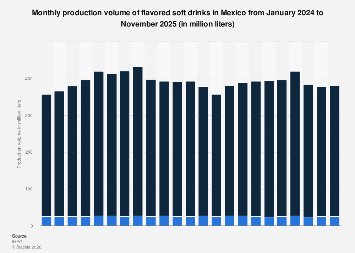
In November 2025, the total monthly production volume for flavored soft drinks across Mexico surpassed an undisclosed threshold, reaching over a significant number of million liters. This comprehensive figure encompasses both non-returnable (single-use) and returnable (reusable) bottle formats, illustrating the diverse market preferences and operational models within the country. Non-returnable bottled drinks constituted a dominant share of this output, amounting to an estimated *** million liters. This segment is often favored for its immediate convenience and broad distribution reach, catering to impulse purchases and on-the-go consumption.
Simultaneously, the production of flavored soft drinks in returnable bottles remained a substantial component of the overall market, with over ** million liters produced in the same month. The continued prevalence of returnable packaging underscores a segment of the market that values environmental considerations, cost-effectiveness for consumers, and established distribution networks that support reverse logistics. This segment often plays a crucial role in more traditional retail channels and in regions where consumers prioritize value and sustainability.
The period from January 2024 to November 2025 provides a broader context for these monthly fluctuations, offering insights into seasonal trends, market dynamics, and the impact of economic factors on production. While specific data for each month between these dates is proprietary, the overall trend suggests a consistent demand for flavored soft drinks. This category, encompassing a wide array of fruit-flavored, cola-based, and other specialty beverages, remains a cornerstone of Mexico’s non-alcoholic beverage market.
Mexico’s soft drink market is one of the largest globally, characterized by intense competition among multinational corporations and robust local players. The flavored segment, in particular, benefits from a young demographic with a high propensity for beverage consumption and a cultural affinity for sweet and diverse flavor profiles. The industry’s ability to adapt to changing consumer preferences, including a growing demand for healthier options and more sustainable packaging, is crucial for its continued success.
Globally, the non-alcoholic beverage market is experiencing shifts driven by health consciousness, environmental concerns, and evolving retail landscapes. In developed markets, there’s a noticeable trend towards reduced sugar content, natural ingredients, and functional beverages. Emerging markets, like Mexico, often exhibit a blend of these trends alongside a continued strong demand for traditional carbonated soft drinks. The dual approach of offering both convenient non-returnable options and environmentally conscious returnable packaging positions Mexican manufacturers to cater to a wider consumer base.
The economic impact of the soft drink industry in Mexico is considerable. It generates significant employment across the value chain, from agricultural inputs (like sugar and fruit flavorings) to manufacturing, distribution, and retail. Furthermore, it contributes substantially to government revenues through taxes, including excise taxes on sugary beverages, which have been implemented in Mexico and other countries as a public health measure. The production volumes observed through late 2025 indicate a healthy operational capacity and a sustained contribution to Mexico’s Gross Domestic Product (GDP).
Industry analysts point to several factors influencing production levels. Economic stability, consumer disposable income, and marketing efforts by beverage companies all play a role. Furthermore, regulatory environments, including those related to sugar content, labeling, and packaging waste, can shape production strategies. The consistent output in flavored soft drinks suggests that, despite potential economic headwinds or public health initiatives, the core demand for these products remains robust.
The distinction between returnable and non-returnable bottles is not merely a logistical one; it reflects deeper market segmentation. Non-returnable bottles, often made of PET (polyethylene terephthalate), offer convenience and are lightweight, reducing transportation costs. However, they contribute significantly to plastic waste, prompting ongoing efforts towards recycling and the development of alternative materials. Returnable bottles, typically made of glass, are heavier and require a more complex infrastructure for collection, cleaning, and refilling. Yet, they offer a lower environmental footprint per use and can be more cost-effective for consumers over time, fostering brand loyalty through a familiar and accessible system.
Mexico’s experience with returnable packaging has a long history, and its continued significance in the flavored soft drink sector is a testament to its enduring appeal. This model aligns with broader global trends pushing for circular economy principles and reduced waste generation. As environmental regulations become more stringent and consumer awareness grows, the balance between these two packaging formats may continue to evolve, potentially favoring more sustainable options.
The production figures for November 2025, while specific to that month, are part of a larger narrative of Mexico’s dynamic beverage market. The sector’s ability to produce millions of liters of flavored soft drinks, catering to diverse consumer preferences and packaging choices, underscores its economic importance and its integral role in the daily lives of Mexican consumers. Continued monitoring of these production trends, alongside shifts in consumer behavior and regulatory landscapes, will be key to understanding the future trajectory of this vital industry. The ongoing investment in production capacity and the strategic segmentation of product offerings suggest a sector poised for continued engagement with its market.