


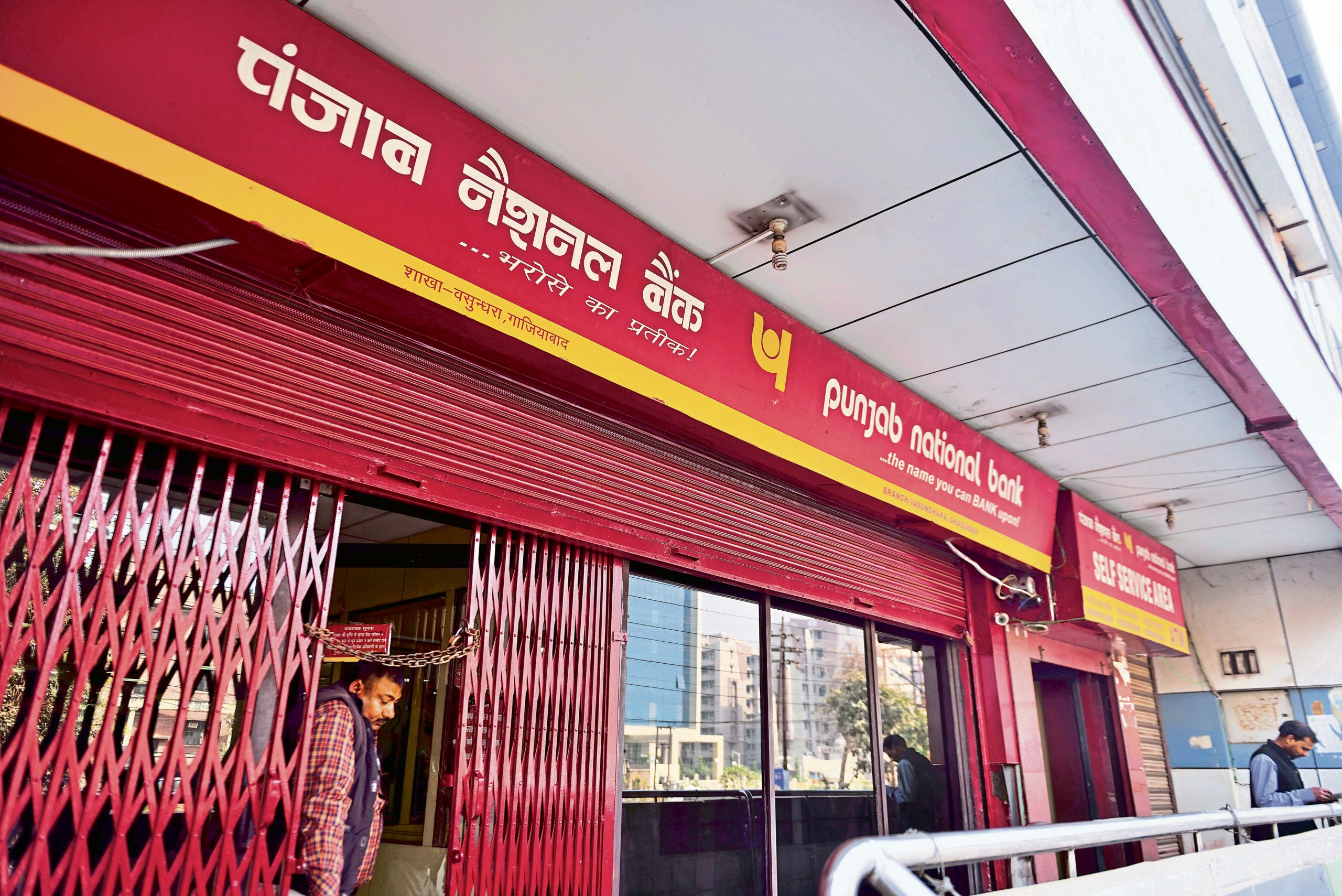
The Indian banking sector finds itself at a critical juncture, grappling with the nuanced challenge of maintaining profitability amidst a softening interest rate environment. Public sector lender Punjab National Bank (PNB) epitomizes this predicament, actively recalibrating its funding strategy by pursuing deeper deposit rate cuts to defend its net interest margin (NIM) in the wake of successive policy rate reductions by the Reserve Bank of India (RBI). This strategic pivot reflects a broader industry trend where banks are compelled to optimize their cost of funds as loan yields decline more rapidly.
PNB’s domestic net interest margin, a key indicator of a bank’s profitability from its core lending activities, registered a noticeable decline to 2.65% in the third quarter of fiscal year 2026 (Q3FY26). This figure represents a sequential drop from 2.72% in the preceding quarter and a more significant dip from 3.09% a year earlier. The primary driver behind this compression is the divergent pace at which asset and liability costs are adjusting. While the domestic cost of deposits eased only marginally to 5.1% from 5.18% in the September quarter, yields on advances experienced a sharper contraction, falling to 7.8% in Q3 from 8.01% in Q2 and 8.5% in Q3FY25. This asymmetry in rate transmission creates immediate pressure on the bank’s earnings, underscoring the urgency for proactive asset-liability management.

The impetus for these adjustments stems directly from the RBI’s accommodative monetary policy stance, which has seen cumulative rate cuts amounting to 125 basis points (bps) since February 2025, including a 25 bps reduction in December 2025. While these cuts are designed to stimulate economic growth by making credit cheaper, they simultaneously squeeze bank margins by lowering the income generated from loans. The transmission of policy rates to deposit rates, however, often exhibits a lag, as banks must balance their need for stable funding with the competitive landscape for attracting deposits. PNB’s managing director and chief executive, Ashok Chandra, acknowledged this dynamic, noting that the bank had only trimmed deposit rates by approximately 80 bps in response to the RBI’s 125 bps cuts, indicating significant room for further adjustments. A 20 bps cut across tenures implemented from January 1, 2026, is an initial step, with the bank’s asset-liability committee poised to assess its impact and consider additional reductions if the repo rate remains stable.
The challenge of managing Net Interest Margin is not unique to PNB but is a pervasive theme across the Indian banking landscape. Both public and private sector banks have been compelled to re-evaluate their deposit strategies. Data from the RBI indicates that weighted average rates on domestic term deposits across the system declined to 6.8% in November 2025 from 7.2% in February 2025. However, the degree of repricing varies significantly based on individual bank-specific factors such as the composition of their loan and deposit portfolios, their cost of funds, and their competitive position. Banks with a higher proportion of low-cost Current Account and Savings Account (CASA) deposits generally possess a more resilient NIM, as these deposits are less sensitive to interest rate fluctuations.
PNB’s CASA ratio, a measure of these low-cost deposits as a percentage of total deposits, stood at 37.1% in Q3FY26, a slight decline from 37.3% in the previous quarter and 38.1% a year earlier. This downward trend amplifies the reliance on term deposits, which are typically more expensive and interest-rate sensitive, thereby increasing the overall cost of funds. Recognizing this, PNB revamped its CASA portfolio in April 2025, launching new individual and institutional savings and current account schemes. Management reports "good traction" from these initiatives, with over 30,000 new accounts opened, signaling a concerted effort to improve the quality and reduce the cost of its deposit base. Enhancing the CASA ratio remains a strategic imperative for most Indian banks seeking to improve their NIMs and build a more stable funding profile.

A critical element in PNB’s forward-looking strategy is the repricing schedule of its special 440-day term deposit scheme, launched last year. This scheme successfully mobilized over ₹2.8 trillion at rates of 7.25% and 7.75%. While these rates were attractive for depositors, they initially contributed to higher funding costs. However, the staggered repricing of these deposits offers a future buffer. Chandra highlighted that 70% of these deposits had been repriced by December 31, 2025, with another 21% slated for repricing in the March quarter and the remaining 9% in the first quarter of FY27. The bank anticipates a positive impact of 60-70 basis points from this deposit repricing on its margins, expected to materialize from the first quarter of the next financial year (FY27). This suggests a lag effect, where current margin pressures are anticipated to ease as older, higher-cost deposits mature and are renewed at lower rates.
Despite the management’s optimism regarding future margin stabilization, external analysts have expressed caution. Brokerage firm Elara Capital, in a post-earnings note, flagged PNB’s Q3 NIM as falling below estimates and declining more sharply than its peers, impacting net interest income (NII). The bank’s NII for the quarter registered a marginal sequential increase of 0.6% to ₹10,533 crore, but a 4.5% decline year-on-year, underscoring the ongoing pressure. Elara’s forecast for PNB’s full-year FY26 NIM stands at 2.4%, significantly lower than the bank’s initially guided range of 2.9-3%, which was subsequently revised downwards to 2.8-2.9% in the December quarter. This divergence highlights the differing perspectives on the pace and extent of margin recovery, with analysts often adopting a more conservative stance given the prevailing market dynamics.
The broader economic context further complicates the outlook. Global interest rate movements, inflation trends, and domestic credit demand all play a role in shaping the operating environment for Indian banks. While India’s economic growth remains robust, ensuring sufficient credit flow at sustainable margins is crucial for supporting investment and consumption. Banks, especially large state-owned entities like PNB, are key pillars of the financial system, and their profitability directly impacts their ability to lend, absorb shocks, and contribute to economic stability. The current environment demands heightened vigilance in asset-liability management, a relentless focus on operational efficiency, and a strategic approach to deposit mobilization to navigate the complexities of interest rate cycles.

In conclusion, PNB’s proactive stance on deposit repricing is a pragmatic response to the evolving interest rate landscape and the imperative to protect profitability. While the immediate quarters may continue to present margin challenges, the bank’s efforts to lower its cost of funds through both term deposit repricing and enhanced CASA mobilization are critical steps. The success of these strategies, however, will be contingent on the continued stability of the monetary policy environment, the competitive dynamics within the banking sector, and the bank’s ability to effectively execute its long-term funding plan. The ongoing balancing act between attracting deposits, managing costs, and maintaining lending growth will define the performance of PNB and indeed, a significant portion of the Indian banking industry, in the coming fiscal periods.