


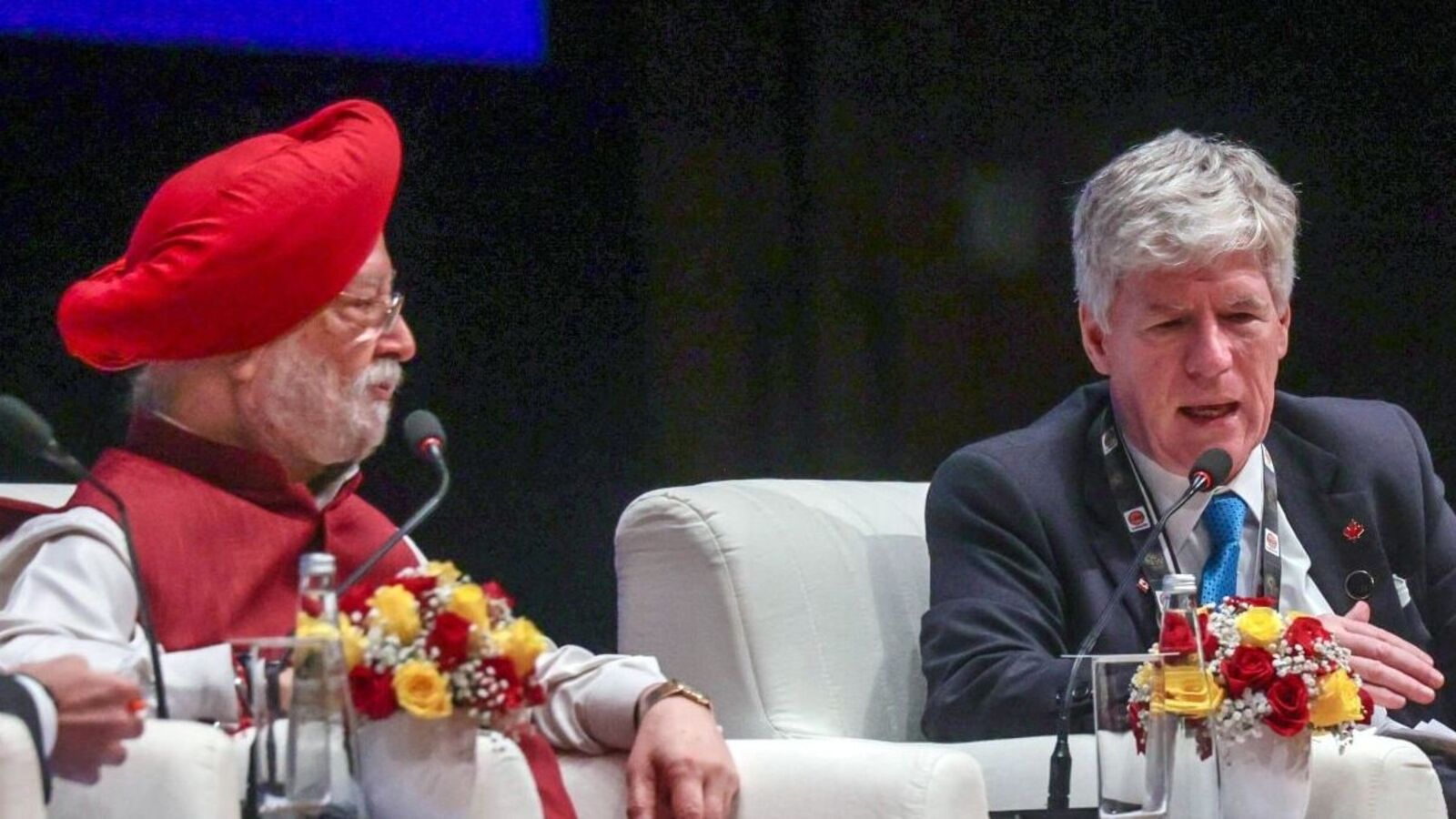
New Delhi and Ottawa have formally committed to a significant deepening of their bilateral energy and resource partnership, an initiative poised to reshape global supply dynamics for both conventional fuels and the vital minerals underpinning the clean energy transition. This strategic accord, affirmed during India Energy Week, signals India’s intent to invest substantially in Canada’s critical minerals sector, alongside an intensification of two-way energy trade. The announcement, made by India’s Oil Minister Hardeep Singh Puri following discussions with Canadian Minister of Energy and Natural Resources Tim Hodgson, underscores a shared vision for energy security and supply chain diversification amidst escalating geopolitical uncertainties.
The cornerstone of the expanded energy trade involves a multi-faceted exchange. Canada, a nation rich in natural resources, is set to become a key provider of liquefied natural gas (LNG), liquefied petroleum gas (LPG), and raw petroleum to India. This influx of Canadian hydrocarbons is crucial for India, which stands as the world’s third-largest oil consumer, fourth-largest LNG importer, and third-biggest LPG user. India’s burgeoning economy and population growth are projected to account for more than a third of the increase in global energy demand over the next two decades, making stable and diversified supply sources paramount. In return, India, possessing the fourth-largest processing capacity globally, will export processed fuel products to Canada, creating a symbiotic flow that leverages both nations’ strengths.
Beyond conventional energy, the partnership extends into the strategically critical domain of mineral resources. India has expressed a keen interest in funding and participating in the mining of vital minerals within Canada. Minister Puri confirmed that a dedicated team would soon be dispatched to Canada to explore and negotiate mutual cooperation in this burgeoning industry. This move is particularly significant given the global race to secure access to minerals essential for modern technologies. Critical minerals such as lithium, cobalt, and rare earth elements are indispensable components for electric vehicle (EV) batteries, solar panels, wind turbines, and advanced defense systems. The global market for these materials is projected to grow exponentially, with lithium demand, for instance, anticipated to more than quadruple by 2030.
The geopolitical dimension of critical minerals cannot be overstated. Currently, the supply chains for many of these essential materials are heavily concentrated, with a single nation often dominating mining, processing, or refining capacities. China, for example, controls upwards of 60-70% of global processing capacity for several key minerals, including rare earths and cobalt. This concentrated control presents significant geopolitical risks, vulnerability to supply disruptions, and potential leverage in international relations. India’s proactive engagement with Canada represents a strategic effort to de-risk its supply chains, foster greater resilience, and ensure the uninterrupted flow of materials vital for its industrial growth and green energy ambitions. Government-run enterprises like Oil India Ltd (OIL), operating under Minister Puri’s department, are actively exploring acquisition opportunities in this sector, highlighting the national strategic imperative behind this initiative. OIL’s Chairman and Managing Director Ranjit Rath confirmed the imminent visit of a representative group to Canada to identify and evaluate funding prospects for critical mineral mining projects.

Canada’s potential as a critical minerals powerhouse is immense. The nation is estimated to hold significant untapped reserves of lithium, cobalt, nickel, graphite, and rare earth elements across its vast geological landscape. The Canadian government has outlined an ambitious Critical Minerals Strategy, aiming to leverage these endowments to become a leading global supplier, focusing on responsible extraction and sustainable processing. This aligns perfectly with India’s requirements, offering a democratic, stable, and ethically sourced alternative to existing supply networks. The joint statement released after the ministerial meeting underscored Canada’s goal of becoming an "energy superpower" in both clean and conventional energy, with export diversification, particularly to Asian markets, as a priority. India, conversely, was recognized as the "epicentre of the global energy landscape," presenting a natural and symbiotic partnership grounded in scale, stability, and long-term opportunity.
Beyond minerals, the two nations are also exploring collaboration in cutting-edge energy technologies, specifically Small Modular Reactors (SMRs). Minister Puri noted India’s interest in Canada’s advancements in SMR technology, highlighting a potential avenue for future cooperation in nuclear energy. SMRs represent a promising pathway for decarbonization, offering scalable, flexible, and potentially safer nuclear power generation, which could play a crucial role in meeting India’s growing electricity demand while reducing its carbon footprint. This interest signifies a holistic approach to energy security, encompassing traditional fossil fuels, critical raw materials for renewables, and advanced nuclear solutions.
Economically, the partnership promises substantial benefits for both nations. For Canada, Indian investment in its critical minerals sector could accelerate project development, create thousands of high-quality jobs, and solidify its position as a reliable global supplier. For India, securing direct access to these resources mitigates supply chain risks, stabilizes input costs for its manufacturing sectors, and accelerates its transition to a green economy. The joint statement explicitly recognized "the importance of joint commercial and investment partnerships in each other’s energy sector," emphasizing Canada’s swift action to develop energy projects and supply products to international markets, with Asia as a priority region. This collaborative framework could unlock billions of dollars in trade and investment flows, fostering deeper economic integration and technological exchange.
Analysts widely view this burgeoning partnership as a strategic alignment between two democratic nations seeking to enhance their economic resilience and reduce vulnerabilities in a multipolar world. The diversification of energy and mineral supplies away from concentrated sources is not merely an economic imperative but also a significant geopolitical strategy. By strengthening ties with reliable partners like Canada, India aims to build robust, resilient supply chains that can withstand future shocks and disruptions, thereby safeguarding its long-term economic growth and national security interests. While logistical challenges and the significant capital investment required for new mining projects will need careful navigation, the political will and strategic imperative from both sides suggest a strong foundation for this enduring collaboration. The commitment to mutual growth and energy security positions this India-Canada partnership as a pivotal development in the global energy landscape for the decades to come.