

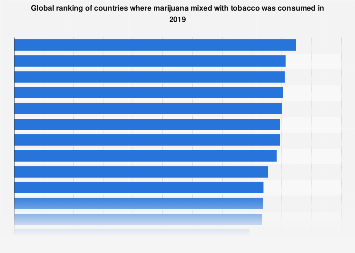
In 2019, a significant portion of global cannabis consumers integrated tobacco into their consumption habits, a practice that varies considerably by country and carries substantial implications for public health, economic policy, and the evolving landscape of the cannabis industry. While precise, universally standardized data on this specific co-consumption practice remains a complex challenge to aggregate, available analyses from that year offer a compelling snapshot of a widespread phenomenon. The integration of tobacco, often through rolling cannabis joints with loose tobacco, represents a long-standing method of consumption in many cultures, predating the widespread legalization and commercialization of cannabis seen in recent years.
This practice is not merely a matter of personal preference; it intertwines with established nicotine addiction patterns, potentially influencing the initiation and maintenance of cannabis use. Understanding the prevalence of this co-consumption is crucial for public health initiatives aiming to address both substance use disorders and the unique health risks associated with combining these two substances. For instance, the combustion of both cannabis and tobacco produces a complex array of carcinogens and toxins, posing amplified risks to respiratory health compared to the use of either substance in isolation. Medical research has consistently highlighted the detrimental effects of smoking, and combining it with cannabis can exacerbate these issues, including increased risk of lung cancer, cardiovascular disease, and chronic obstructive pulmonary disease (COPD).
Economically, the data on co-consumption offers insights into distinct market dynamics. In regions where tobacco is readily available and socially accepted, its incorporation into cannabis consumption can lower the perceived barrier to entry for cannabis use, particularly for individuals already accustomed to tobacco products. This can influence demand for specific types of cannabis products, potentially favoring strains or preparations that blend well with tobacco. Conversely, in markets where cannabis is legally regulated and sold in forms like flower, edibles, or concentrates, the trend towards cleaner consumption methods may be influenced by product innovation and public health messaging that discourages co-consumption. The development of vaporization technologies and the increasing availability of non-combustible cannabis products are examples of market forces responding to, and potentially shaping, consumption patterns.
Examining country-specific data from 2019, albeit with the caveat of data limitations, reveals significant geographical disparities. While specific country rankings for this precise metric are proprietary and not publicly disseminated in a comprehensive, open-access format, general trends can be inferred from broader cannabis and tobacco use surveys. In many European countries, for example, the practice of mixing cannabis with tobacco has historically been more prevalent than in North America. This is partly attributed to cultural norms and the historical availability of both substances. The "spliff," a joint containing both cannabis and tobacco, is a common form of cannabis consumption in many European nations, influencing the demand for loose tobacco alongside cannabis flower. Countries with high rates of tobacco smoking generally tend to exhibit higher rates of cannabis-tobacco co-consumption.
In contrast, countries with more recent cannabis legalization, particularly within the United States and Canada, have seen a rise in the consumption of unadulterated cannabis flower, often consumed via pipes, bongs, or vaporizers, as well as a burgeoning market for edibles and concentrates. This shift is driven by factors such as increased awareness of the health risks of combustion, the availability of diverse product formats, and marketing efforts by legal cannabis businesses that often emphasize the purity and specific terpene profiles of their flower. However, even in these markets, the practice of co-consumption persists among certain demographics and in specific regions, reflecting deeply ingrained habits and individual preferences.
The economic impact of this trend is multifaceted. For governments, understanding co-consumption patterns is vital for tax revenue projection and public health expenditure. If a significant portion of cannabis users are also regular tobacco users, the health costs associated with this dual consumption may be higher than for exclusive cannabis users, necessitating targeted public health interventions. From an industry perspective, the prevalence of co-consumption can influence product development and marketing strategies. Companies may cater to the demand for tobacco-friendly cannabis products, or they may focus on educating consumers about the benefits of alternative consumption methods. The legal cannabis industry, in its nascent stages in many jurisdictions, is also navigating the complexities of regulating products that combine cannabis with other controlled substances, such as tobacco, which is regulated separately.
Globally, the trend in cannabis consumption is moving towards diversification. While combustion remains a dominant method, the growth of the legal cannabis market has spurred innovation in product development. This includes the increasing popularity of vaporizers, edibles, tinctures, and topicals, which offer alternatives to smoking. These product innovations can, over time, influence co-consumption habits by providing consumers with more appealing and potentially less harmful ways to consume cannabis. However, the deeply entrenched nature of tobacco use in many societies means that the practice of mixing cannabis with tobacco is unlikely to disappear rapidly, even with the rise of new consumption methods.
Furthermore, the intersection of cannabis and tobacco policies presents a unique challenge for regulators. In jurisdictions where both substances are legal, policymakers must consider how to address the combined health risks and potential for addiction. This might involve coordinated public health campaigns, taxation strategies that account for the combined use, or regulations on product labeling and marketing that highlight the risks of co-consumption. The lack of comprehensive data on co-consumption can hinder the development of effective and targeted policies. Future research and data collection efforts need to prioritize understanding these complex consumption patterns to inform evidence-based policymaking and public health strategies. The year 2019, therefore, serves as a crucial benchmark in understanding the landscape of cannabis use before the full maturation of many legal markets, offering valuable insights into the persistent and evolving ways consumers integrate cannabis into their lives, often alongside established habits like tobacco use. The economic and social ramifications of this practice continue to be a subject of significant interest for policymakers, public health professionals, and the burgeoning global cannabis industry.