

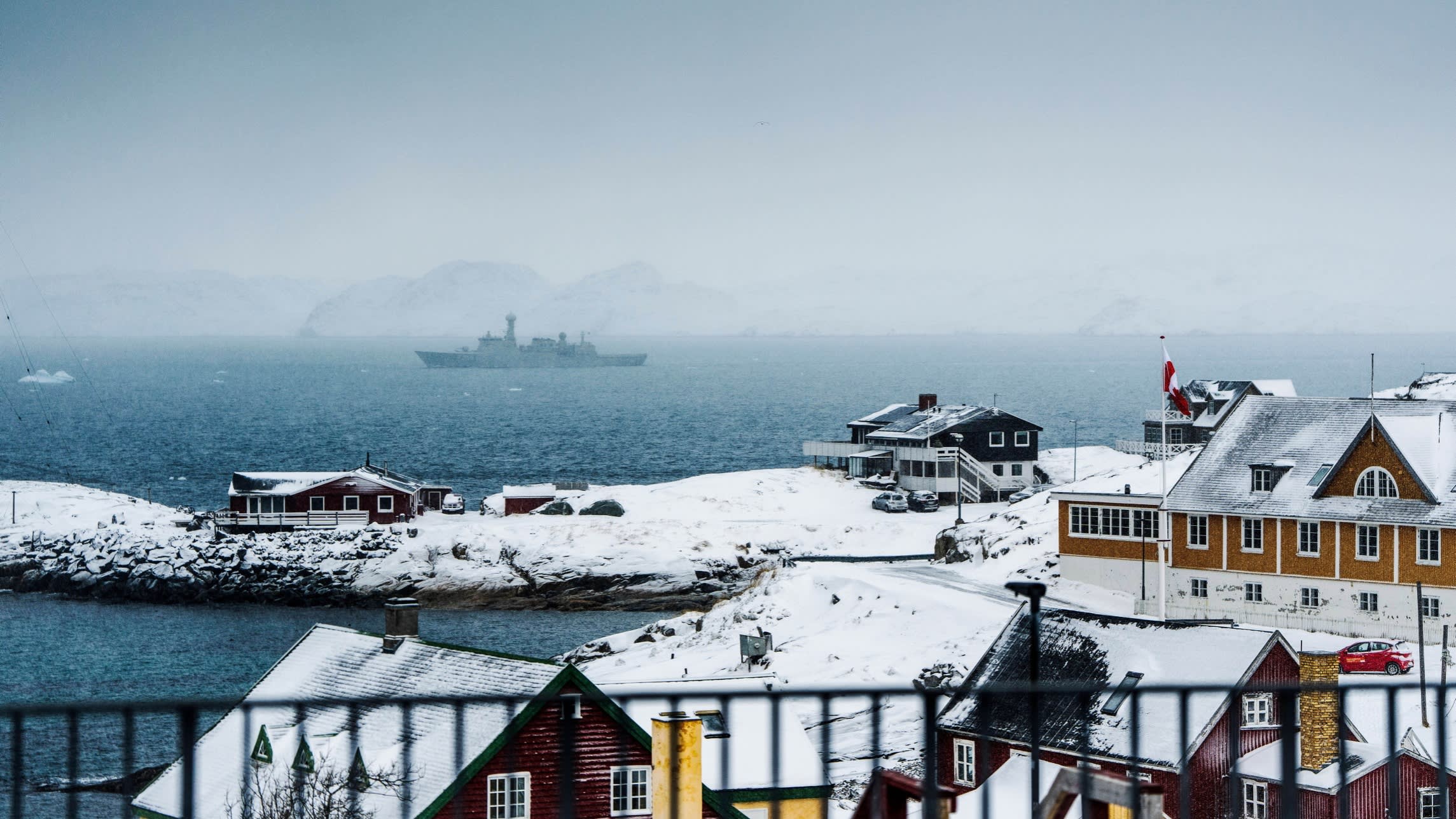
The international financial landscape underwent a seismic shift this week as escalating geopolitical and environmental tensions surrounding Greenland sent shockwaves through global exchanges. Investors, rattled by the deepening instability in the Arctic territory, have aggressively retreated from equities, seeking refuge in traditional safe-haven assets. This flight to quality has propelled gold prices to a historic all-time high, while major stock indices across New York, London, and Tokyo recorded their sharpest single-day declines in months. The crisis, which sits at the intersection of sovereign territorial disputes and the accelerating climate emergency, has introduced a new layer of volatility into a global economy already grappling with high interest rates and precarious supply chains.
Gold, the perennial barometer of global anxiety, surged past previous resistance levels to trade at an unprecedented premium. Spot gold rose by more than 3.5% in a single session, as institutional investors and central banks ramped up their bullion holdings. Market analysts suggest that the "geopolitical risk premium" is currently the primary driver of the precious metal’s ascent. Unlike previous rallies driven by inflationary fears or currency devaluation, the current spike is being characterized by a fundamental breakdown in the perceived stability of the North Atlantic region. As the situation in Greenland deteriorates, the metal has solidified its role as the ultimate insurance policy against systemic shocks.
In contrast, the equity markets have faced a grueling sell-off. The S&P 500 and the Nasdaq Composite both tumbled, led by significant losses in the technology and industrial sectors. Investors are particularly concerned about the implications for companies involved in Arctic resource extraction and those reliant on North Atlantic shipping routes. The VIX, often referred to as Wall Street’s "fear gauge," spiked by nearly 25%, signaling a period of prolonged turbulence. The sell-off was not limited to the United States; the Euro Stoxx 50 fell sharply as European leaders convened emergency sessions to discuss the economic and security ramifications of the Greenlandic impasse.
At the heart of the crisis is a complex struggle over Greenland’s political future and its vast, untapped natural resources. For years, the island—an autonomous territory of the Kingdom of Denmark—has been the subject of increasing interest from global superpowers. The current flashpoint appears to be a breakdown in negotiations regarding the island’s path to full independence, coupled with aggressive maneuvering by foreign entities seeking to secure rights to its massive deposits of rare earth minerals. These minerals, including neodymium and praseodymium, are essential for the global transition to green energy, making Greenland a pivotal player in the supply chains for electric vehicles and renewable energy infrastructure.
The economic stakes are intensified by the strategic importance of the Arctic as a whole. As polar ice continues to melt at an alarming rate, new shipping lanes are opening, promising to shave weeks off the transit time between Asia and Europe. However, the deepening crisis in Greenland threatens to turn these potential commercial arteries into zones of military and diplomatic friction. The prospect of a "New Cold War" in the North has forced insurance underwriters to reconsider the risk profiles of Arctic maritime operations, leading to a surge in premiums that could further stoke global inflationary pressures.
Economists are also closely monitoring the environmental dimension of the crisis. Recent reports from glaciologists indicate that the Greenland ice sheet is experiencing a period of unprecedented instability, which could have catastrophic implications for global sea levels and the Atlantic Meridional Overturning Circulation (AMOC). If this ocean current system were to collapse or significantly weaken, the economic fallout for Northern Europe and North America would be measured in the trillions of dollars. This "climate-driven systemic risk" is no longer a theoretical concern for the distant future; it is now being priced into the markets as a clear and present danger to global macroeconomic stability.
The impact on the bond markets has been equally pronounced. Yields on 10-year U.S. Treasuries plummeted as prices rose, reflecting a classic "risk-off" environment. Investors are essentially betting that the Greenland crisis will force central banks to pause their quantitative tightening measures or even consider interest rate cuts to prevent a broader economic contraction. However, this creates a policy dilemma for the Federal Reserve and the European Central Bank, which are still struggling to bring inflation back to their 2% targets. A prolonged crisis in the Arctic could lead to "stagflation"—a scenario of stagnant growth and high inflation—if resource shortages and shipping disruptions drive up the cost of goods.
Currency markets have also seen significant realignment. The Danish krone has faced selling pressure due to the uncertainty surrounding its relationship with Nuuk, while the U.S. dollar and the Swiss franc have strengthened as investors seek liquidity. The volatility has been particularly hard on emerging market currencies, which often suffer when global risk appetite evaporates. Analysts warn that if the Greenland crisis is not resolved through diplomatic channels quickly, the resulting capital flight could trigger debt crises in more vulnerable economies that rely on foreign investment.
Expert insights suggest that the current market reaction is a delayed acknowledgment of the Arctic’s rising importance. For decades, the region was considered a peripheral concern for global finance, but the convergence of resource scarcity and climate change has moved it to the center of the world stage. "We are seeing a fundamental repricing of geopolitical risk," noted one senior strategist at a major London-based investment bank. "Greenland is no longer just a remote island; it is a critical node in the global energy transition and a frontline in the struggle for resource sovereignty. The markets are finally waking up to the fact that the stability of the North Atlantic can no longer be taken for granted."
From a corporate perspective, the crisis is forcing a re-evaluation of long-term capital expenditures. Mining giants and energy firms that had planned multi-billion dollar projects in the Arctic are now facing "stranded asset" risks. The legal and political uncertainty makes it nearly impossible to secure financing for new ventures, which could lead to a supply crunch in the very minerals needed for the global climate goals. This irony has not escaped market observers, who point out that the instability caused by climate change is now hindering the world’s ability to fight it.
As the international community looks for a resolution, the focus has shifted to the halls of the United Nations and the Arctic Council. However, the effectiveness of these institutions is being questioned in an era of increasing bilateralism and "great power" competition. The lack of a clear framework for managing Greenland’s transition and its resources has created a vacuum that market forces are now filling with volatility and speculation.
In the short term, the outlook for global markets remains tethered to the headlines coming out of Nuuk and Copenhagen. If a diplomatic breakthrough occurs, we could see a relief rally in equities and a cooling of gold prices. However, if the crisis continues to deepen, the current flight to safety may only be the beginning. The record-breaking price of gold serves as a stark reminder that in times of profound uncertainty, the oldest form of wealth remains the most trusted. For the global economy, the Greenland crisis is a "black swan" event that highlights the fragility of the post-Cold War order and the high cost of geopolitical and environmental neglect. The coming weeks will be critical in determining whether this is a temporary market tremor or the start of a more permanent shift in the global economic hierarchy.