
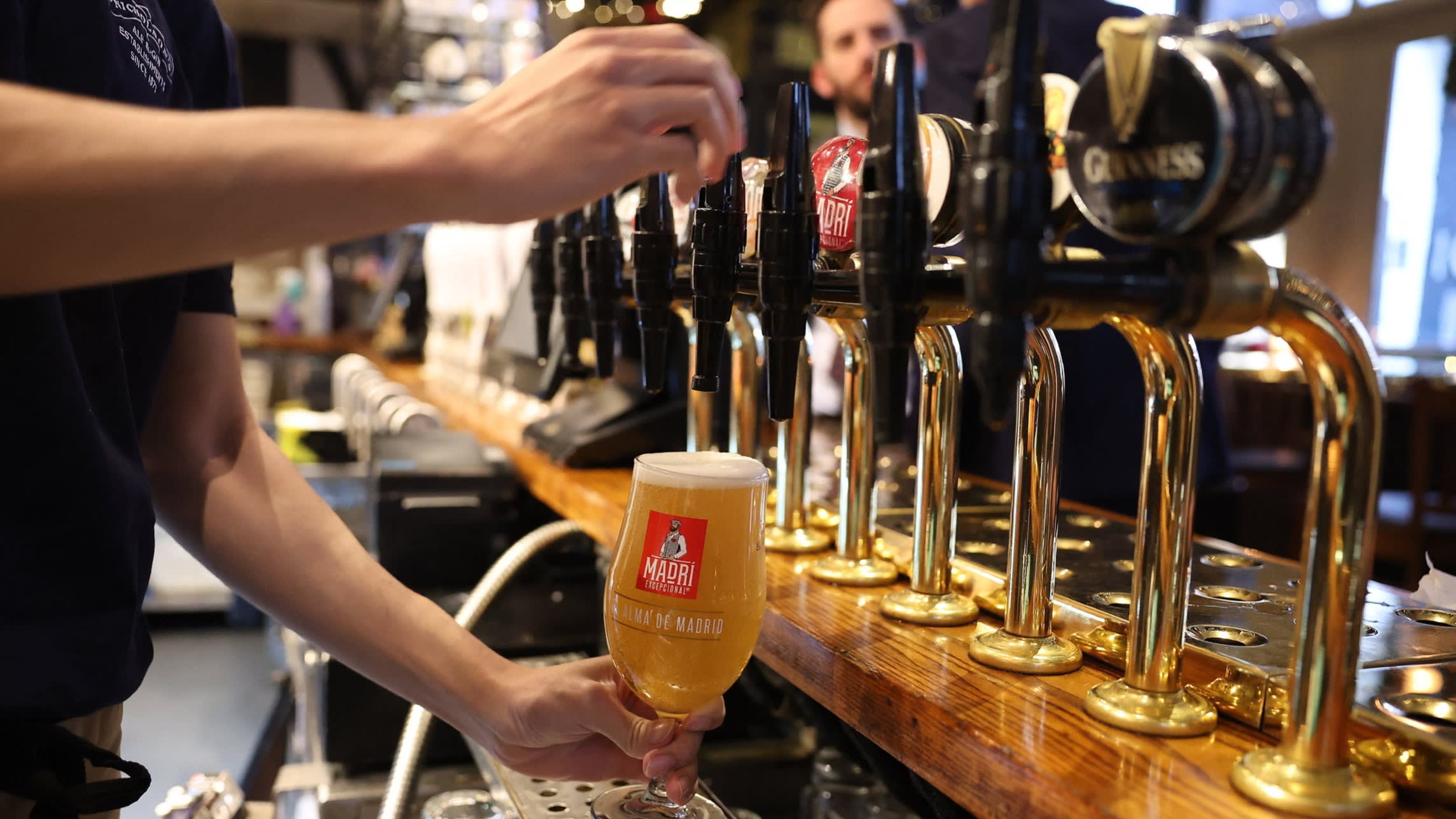
The British pub, a cornerstone of the nation’s social fabric and a vital contributor to its service economy, has been granted a significant fiscal reprieve following a strategic policy pivot by the Treasury. In a move designed to stave off a wave of permanent closures across the high street, the government has announced a targeted support package worth approximately £80 million per year. This intervention comes as a direct response to intense lobbying from industry trade bodies and a recognition of the "cliff edge" facing small and medium-sized enterprises (SMEs) as temporary pandemic-era tax reliefs were scheduled to expire. The decision marks a notable shift in the government’s fiscal approach, signaling a commitment to protecting brick-and-mortar businesses from the mounting pressures of an evolving retail and hospitality landscape.
At the heart of this announcement is the contentious issue of business rates—a property-based tax that has long been criticized by economists and industry leaders as an archaic burden on physical businesses. For years, the hospitality sector has argued that the current valuation system disproportionately penalizes venues that require large physical footprints, such as pubs and restaurants, while allowing asset-light digital giants to operate with significantly lower tax liabilities. The new £80 million annual package is intended to bridge the gap as the government transitions toward a more permanent structural reform of the business rates system, aimed at rebalancing the scales between the digital and physical economies.
The immediate catalyst for this support package was the looming expiration of the 75% business rates relief that had been in place to assist the sector’s recovery from the COVID-19 pandemic. Without government intervention, thousands of pubs would have seen their tax bills quadruple overnight—a shock that many analysts predicted would lead to a catastrophic spike in insolvencies. Under the revised plan, the government will implement a more gradual tapering of support, offering a 40% relief on business rates for retail, hospitality, and leisure (RHL) properties for the 2025-26 fiscal year, up to a cap of £110,000 per business. The specific £80 million allocation serves as a targeted enhancement to ensure that smaller, community-focused pubs, which often operate on razor-thin margins, are shielded from the brunt of the valuation increases.
To understand the economic gravity of this intervention, one must look at the current state of the UK hospitality market. According to data from the British Beer and Pub Association (BBPA), the industry has been grappling with a "perfect storm" of rising operational costs. While energy prices have stabilized somewhat from their 2022 peaks, they remain significantly higher than pre-pandemic levels. Furthermore, the recent increase in the National Living Wage, while beneficial for workers, has added substantial pressure to the payroll expenses of hospitality operators, where labor typically accounts for 30% to 35% of total turnover. When combined with food and beverage inflation, which has consistently outpaced the general Consumer Price Index (CPI) over the last 18 months, the financial viability of the traditional pub has never been more precarious.
The economic impact of the pub sector extends far beyond the sale of beverages. The hospitality industry is the UK’s third-largest employer, providing jobs for over 3.2 million people and contributing roughly £93 billion annually to the national GDP. Pubs, specifically, act as essential hubs for tourism and local employment, particularly in rural areas where alternative job opportunities may be scarce. Industry analysts suggest that for every job created in a pub, another is supported in the wider supply chain, from agriculture and brewing to logistics and maintenance. By committing £80 million in annual support, the government is effectively making a calculated investment in the stability of the broader labor market and the health of local economies.
Expert insights into the move suggest a mix of relief and cautious optimism. "This support package is a vital sticking plaster that will undoubtedly save hundreds of community locals from locking their doors for the last time," noted one senior retail analyst. "However, the fundamental problem remains the structural inequality of the business rates system. Until we see a shift toward a system that accounts for the modern reality of online versus offline commerce, the hospitality sector will remain in a state of perpetual vulnerability." This sentiment is echoed by the Campaign for Real Ale (CAMRA), which has long advocated for a permanent "lower multiplier" for licensed premises to reflect their unique social value.
The government’s "U-turn" on business rates also reflects a broader global trend in how developed economies are rethinking property and consumption taxes. In many European jurisdictions, hospitality businesses benefit from reduced Value Added Tax (VAT) rates—a policy lever that the UK government has so far resisted despite heavy pressure. For instance, countries like France and Spain have historically utilized lower VAT tiers for sit-down meals to stimulate domestic tourism and protect their cultural heritage. By opting for business rates relief rather than VAT reduction, the UK Treasury is focusing its support on the fixed costs of operation rather than the variable costs of consumption, a strategy intended to provide more predictable stability for business owners.
Furthermore, the fiscal mechanics of this support package are intrinsically linked to the government’s wider tax strategy. To fund these reliefs and the broader modernization of the high street, the Treasury is looking toward increased levies on large distribution warehouses and fulfillment centers—the backbone of the e-commerce sector. This "two-tier" approach represents a significant ideological shift, moving away from a uniform property tax toward a system that penalizes high-volume, low-employment digital distribution while incentivizing high-employment, community-centric physical venues.
However, the road ahead remains fraught with challenges. The £80 million package, while significant, must be viewed in the context of the total tax take from the sector. Critics point out that the UK continues to have some of the highest beer duties in the world, with tax accounting for roughly one-third of the price of a pint. When business rates, VAT, and excise duties are aggregated, the hospitality sector remains one of the most heavily taxed industries in the British economy. Business owners argue that while the rates relief is welcome, the cumulative burden of regulation and taxation continues to stifle investment and modernization.
The social implications of this policy shift are equally noteworthy. Pubs are increasingly recognized by policymakers as "social infrastructure"—venues that combat loneliness, foster community cohesion, and support local charities. The loss of a local pub often coincides with a decline in community engagement and a reduction in the "soft power" of a neighborhood. By providing a targeted £80 million annual buffer, the government is acknowledging that the value of these establishments cannot be measured solely through tax receipts or profit-and-loss statements.
As the industry looks toward the 2026-27 period, the focus will shift to the promised permanent reform of the business rates system. The hospitality sector is calling for a "Hospitality Multiplier" that would permanently decouple their tax assessments from the standard commercial rate. The success of the current interim support package will likely be measured by the rate of business survivability over the next 24 months. If the intervention succeeds in stabilizing the sector, it could provide the political capital needed for more radical reforms. If closures continue at the current rate of approximately 80 per month, pressure will mount for even more aggressive fiscal interventions.
In conclusion, the £80 million annual support package represents a strategic victory for the UK hospitality industry and a pragmatic realization by the government that the high street cannot survive on sentiment alone. While it does not solve the underlying issues of high operational costs and shifting consumer habits, it provides a necessary financial cushion for an industry that is central to the British identity. As the Treasury moves forward with its plans for structural tax reform, the eyes of the business world will be on whether this "U-turn" marks the beginning of a new era of support for physical commerce or merely a temporary delay of an inevitable economic transition. For now, the nation’s publicans can breathe a sigh of relief, knowing that the immediate threat of a tax-induced "cliff edge" has been averted, allowing them to focus on the essential task of serving their communities and contributing to the country’s economic recovery.