


India’s burgeoning gig economy, a dynamic force employing over 20 million individuals, stands at a critical juncture. While offering flexible work arrangements and vital income streams, it often presents a landscape fraught with precarity, volatile earnings, and limited avenues for professional growth or social recognition. However, a transformative trend is reshaping this narrative: a growing cohort of food delivery riders, cab drivers, and other service providers are meticulously documenting their daily routines and uploading them to social media platforms, inadvertently forging a parallel economy of digital content that promises both supplementary income and a newfound sense of identity and visibility. This convergence of physical labour and digital creativity is not merely a hobby; it is a strategic response to economic insecurity, leveraging the ubiquity of smartphones and the vast reach of platforms like YouTube and Instagram.
The foundational challenges within India’s gig economy are well-documented. Data compiled by talent solutions firm CIEL HR illuminates the challenging financial realities: nearly 70% of India’s gig workers reportedly earn less than ₹50,000 per month, with a significant 29% struggling with incomes below ₹25,000 and another 41% falling within the ₹25,000 to ₹50,000 bracket. Only a small fraction, approximately 9%, manages to exceed ₹80,000. This stark economic backdrop underscores why many are compelled to seek additional income streams beyond the core gig work itself. As Aditya Narayan Mishra, managing director and CEO of CIEL HR, points out, "This widening gap between effort and earnings is also why we see growing demands for better pay, stability and protections, something the government has begun addressing through recent labour code reforms." Yet, despite legislative efforts and occasional platform-led incentive boosts, as seen during recent worker protests against low pay and demanding timelines, the fundamental insecurity often persists, driving innovation in income generation.
The digital imperative to supplement income is further fueled by India’s deep internet penetration, now exceeding 800 million users, and a flourishing smartphone market. This ecosystem lowers entry barriers for content creation, allowing anyone with a phone to become a broadcaster. For many gig workers, social media offers a democratic space where effort can translate directly into visibility and, crucially, monetary reward. This digital pivot is transforming the nature of their work, extending their "shift" from the streets to the screens, turning the mundane into monetizable content.

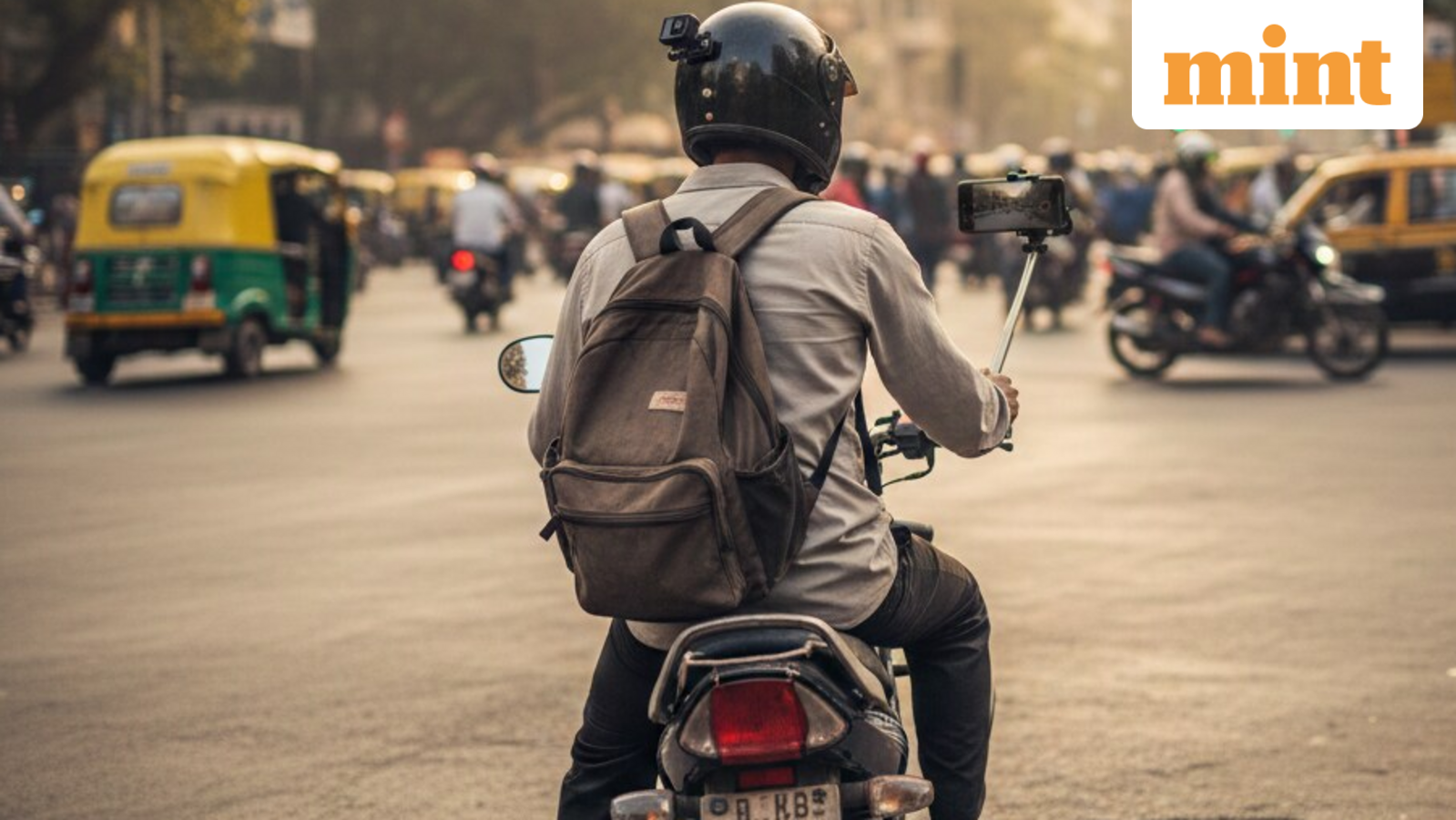
Consider the journey of Deepak Saini, a newspaper delivery worker from Haryana, whose morning routine has captivated thousands. Each day, Saini navigates the labyrinthine streets on his motorcycle, executing precise tosses of folded newspapers into balconies—a skill honed over years. In the evenings, these meticulously filmed snippets of his daily grind are uploaded to YouTube and Instagram. The authenticity and unique perspective resonated deeply with viewers, propelling his following to over 77,100 on YouTube and 117,000 on Instagram. Saini, who even appeared on the reality TV show India’s Got Talent, began posting online just six months ago, yet the impact has been profound. He reveals that the income generated from his social media channels now mirrors his primary earnings from newspaper delivery, effectively doubling his monthly income to around ₹30,000 after accounting for the salaries of the four individuals he employs to assist him. This exemplifies how a supplementary digital hustle can evolve into a significant, even equal, financial pillar.
Beyond mere income, social media provides a powerful platform for personal branding and recognition—aspects largely absent in the anonymous world of gig work. The job title "delivery partner" or "cab driver" offers little scope for individual identity or progression. Social media, however, enables workers to construct a unique narrative, transforming a functional role into a relatable personality. Aryan Ajay Singh, a 20-year-old from Thane, began food delivery part-time to support his college education. In October 2023, he embarked on a social media challenge: to earn ₹1 lakh in three months by vlogging his delivery experiences. Despite being a ‘nano-creator’ with around 6,620 YouTube subscribers, Singh now reports that the bulk of his earnings flow from his digital presence. He starkly contrasts the two income streams: "In part-time food delivery, one makes ₹500–600 after four hours of physically tiring and stressful work. A video that can be recorded and edited in 1.5 hours has the potential to make ₹5,000–6,000."
Singh’s audience demographics offer crucial insights into the appeal of this content: approximately 60% are fellow gig workers and delivery partners seeking solidarity and practical insights, while the remaining 40% are urban viewers drawn to the emotionally charged, first-person accounts of everyday labour. This broad appeal has attracted brand interest, translating into endorsement deals. Singh has already promoted the offline discovery and rewards platform Magicpin and is reportedly in discussions with a personal care brand. As Dhruv Khurana, co-founder of influencer marketing platform Astatine, explains, "Gig worker content works because it shows real lives in motion—daily hustle, financial pressure, and small wins that audiences instantly relate to. Brands collaborate with these creators through simple integrations like using the product during their workday, first-person reviews, voiceovers over real shifts… it feels human, not aspirational." This authentic integration creates a powerful connection that traditional advertising often struggles to achieve.
The sociological dimension of this trend is equally significant. Gig work, despite its economic necessity, often carries a perception of low status and a lack of dignity in many societies. Professor Bibhuti Bhushan Malik, a professor of sociology at Babasaheb Bhimrao Ambedkar University in Lucknow, notes that "Many gig workers use social media as a platform to share content about their daily struggles, both to change perceptions and to gain fame that can increase the respect associated with themselves and their profession." By humanizing their experiences, showcasing their resilience, and inviting an audience into their daily lives, these creators challenge stereotypes and foster a greater understanding and respect for their labour. The viral nature of some of these stories further amplifies their voices, allowing them to transcend their perceived station and gain public admiration.

However, this newfound success is not without its complexities and constraints. For some, the very content that brought them fame and fortune can also lock them into their original gig identity. Bhanu Pratap Singh from Jaipur experienced this dilemma. After his café franchise incurred losses, he turned to food delivery in February 2023 as his primary income. By September, he began vlogging his shifts, quickly gaining over 34,000 Instagram followers and earning nearly ten times more from content than from delivering food. Yet, this success has created a challenge: "It is difficult to switch to a new form of content with the same audience," he admits. He is now strategically transitioning to broader food-related content, hoping to eventually move away from the delivery identity altogether. This highlights the precarious balance between leveraging one’s current reality for content and the desire for personal and professional evolution.
In contrast, some gig worker-creators approach content creation not out of immediate financial desperation but as a deliberate investment in a future career. Angkit Joshi, a Delhi-based cab driver, purposefully quit a corporate job in September 2023 to drive full-time and record each ride (with passenger consent). Today, his combined income doubles his previous corporate salary, with 60% derived from content. Joshi views his digital presence as a long-term venture, investing in high-quality equipment like GoPro cameras, microphones, and dashcams, and planning car upgrades. "With content, the income is not fixed—some months bring one brand deal, others four. But the earning potential is higher, so I invest in making it better," he explains. This entrepreneurial mindset transforms the gig from a means to an end into a springboard for a new creative profession.
From the perspective of the gig platforms, the response to this trend is largely one of cautious neutrality. While they do not formally partner with these content creators, they rarely restrict such activity unless it compromises safety or privacy standards. Rapido, for instance, stated that many of its captains pursue "interests and supplementary income beyond the platform." A company spokesperson affirmed, "If some captains choose to explore content creation, we respect this as an individual choice, provided safety and professional service to customers remain uncompromised," clarifying that such creators are not part of Rapido’s formal influencer programmes. Other major players like Zomato, Swiggy, Uber, Ola, and Zepto have largely remained silent on the phenomenon, indicating a passive acceptance rather than active encouragement or regulation.
The emergence of this hybrid livelihood model represents a fascinating evolution in the global gig economy, where individuals are actively reshaping their economic realities through digital entrepreneurship. It underscores the ingenuity and resilience of workers in the face of systemic precarity. While social media offers unprecedented opportunities for supplementary income, personal branding, and the reclamation of dignity, it also introduces new forms of labour—the constant pressure of content creation, the unpredictability of algorithmic visibility, and the challenge of navigating an ever-evolving digital landscape. As India’s digital infrastructure continues to expand and the creator economy matures, the line between traditional gig work and digital content creation will likely blur further, forging a new archetype of entrepreneurship where physical labour intertwines with virtual influence, creating a dynamic and often complex future of work.