

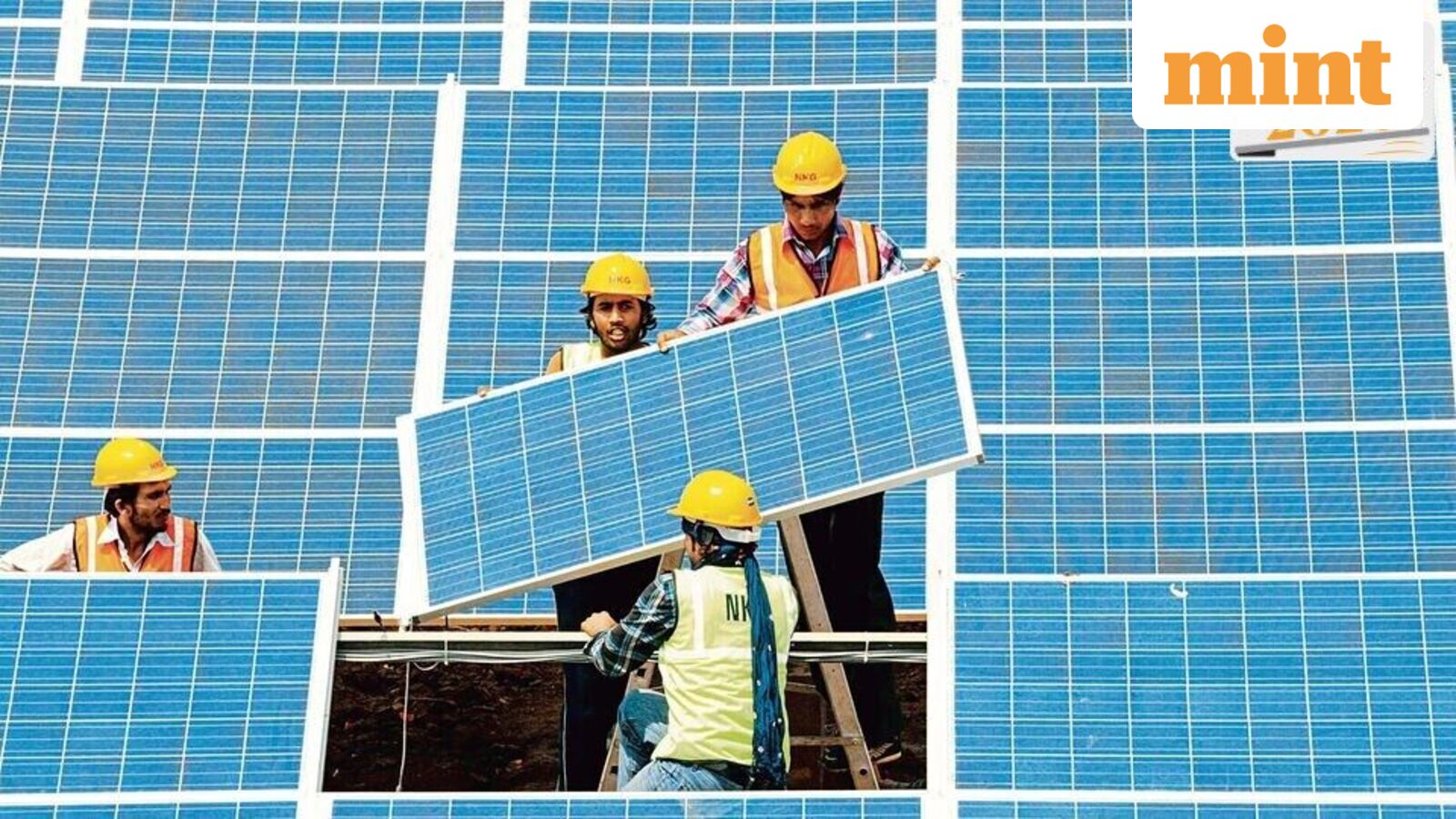
India stands at the precipice of a profound energy transformation, having already achieved remarkable milestones in its journey towards decarbonization. With non-fossil sources, predominantly solar and wind, now accounting for over 50% of the nation’s total electricity generation capacity, the initial phase of aggressive renewable deployment has successfully laid the groundwork. However, this impressive installed capacity has brought into sharp focus the inherent challenges of integrating intermittent energy sources into a vast and rapidly growing grid. The prevailing low capacity utilization factors for solar and wind, coupled with instances of forced curtailment, underscore a critical pivot: the strategic imperative to shift focus from mere capacity addition to the holistic strengthening of energy infrastructure, robust storage solutions, and the strategic diversification into stable, non-fossil baseload power, notably nuclear energy.
The burgeoning renewable energy landscape, while vital for India’s climate commitments and energy security, faces an inherent paradox: abundant clean energy capacity does not automatically translate into reliable, round-the-clock power. Solar generation peaks during daylight hours, while wind power is subject to atmospheric conditions, creating significant fluctuations in supply that often do not align with demand patterns. This intermittency necessitates sophisticated solutions to ensure grid stability and continuous supply. Energy storage emerges as the cornerstone of this next phase, designed to bridge the gap between variable generation and constant demand. Experts foresee a multi-pronged approach encompassing diverse storage technologies. Lithium-ion battery costs, having declined dramatically in recent years, are making grid-scale battery storage increasingly viable for short-to-medium duration applications, such as shifting solar power to meet evening peak demand. Concurrently, the revival of pumped hydro storage projects, leveraging India’s extensive topographical advantages, is gaining momentum for longer-duration energy banking. Looking further ahead, emerging technologies like long-duration storage solutions and green hydrogen production, which can act as a flexible energy carrier, are expected to enable renewable energy penetration far beyond the current 40-50% threshold, ensuring a resilient and dispatchable power system.
Recognizing this critical need, regulatory bodies have already begun mandating the integration of storage. The Central Electricity Authority (CEA), for instance, now requires new solar power projects to include a minimum of two hours of storage capacity or 10% of the project’s output, signalling a clear policy direction. State-level distribution companies are also initiating tenders for battery storage capacity, indicating a nascent but rapidly evolving market. Industry projections suggest that India needs an astounding five to six-fold increase in storage deployment over the next five years to realize its ambition of a grid powered by round-the-clock green energy. This monumental scale-up will require substantial capital investment, technological innovation, and a supportive policy framework that incentivizes both domestic manufacturing and international partnerships in the energy storage sector. The global market for grid-scale batteries alone is projected to reach hundreds of billions of dollars by the end of the decade, presenting a significant opportunity for India to become a leader in this domain.

Complementing advanced storage solutions, a robust and expanded transmission network is indispensable. The rapid proliferation of renewable energy projects, often concentrated in resource-rich but sparsely populated regions like Rajasthan and Gujarat, has exposed significant bottlenecks in the existing grid infrastructure. A staggering 44 gigawatts (GW) of renewable power capacity currently lacks signed power purchase agreements (PPAs), primarily due to insufficient evacuation and transmission capacity. This situation not only leads to financial losses for developers but also represents a missed opportunity to deliver clean energy to demand centers. The lag in grid expansion is a complex issue, plagued by challenges such as land acquisition, right-of-way issues, and the sheer scale of investment required. Data from the CEA highlights this disparity, with approximately 8,830 circuit kilometers (ckm) added in transmission lines in FY25, a significant 38% decrease from the 14,203 ckm added in FY24. To meet the nation’s burgeoning electricity demands and integrate its ambitious renewable targets, the National Electricity Plan projects a requirement for an additional 191,000 ckm of transmission lines by FY32. This massive undertaking necessitates strategic planning, streamlined regulatory processes, and accelerated project execution. The deployment of High Voltage Direct Current (HVDC) networks, which can transmit massive amounts of electricity over long distances with minimal losses, will be crucial for connecting remote renewable energy hubs with major urban and industrial load centers, transforming the national grid into a truly interconnected and resilient system.
Beyond optimizing intermittent renewables, India’s long-term energy security and decarbonization goals demand a significant role for stable, non-fossil baseload power. Nuclear energy, with its capacity for continuous, high-output generation and minimal greenhouse gas emissions, is poised to play a decisive, albeit quiet, role in reducing the country’s reliance on thermal power. Currently, India possesses approximately 9 GW of nuclear power capacity, a modest contribution compared to its overall generation mix. However, the government has set an ambitious target of achieving 100 GW of nuclear power by 2047, a goal that necessitates a radical shift in policy and investment. Recognizing the capital-intensive nature and specialized expertise required for nuclear projects, the government has signalled a landmark opening of the sector to private and international players. The introduction of the Sustainable Harnessing and Advancement of Nuclear Energy for Transforming India (SHANTI) Bill, 2025, in the Lok Sabha marks a pivotal moment. This legislation aims to permit any company or joint venture to construct, own, operate, or decommission nuclear power plants and reactors within the country, moving beyond the traditional monopoly of government-owned entities. Crucially, the bill also addresses concerns by excluding global component and fuel suppliers from certain liabilities, a move designed to attract foreign investment and technological collaboration.
The SHANTI Bill represents a "second-generation" reform of India’s nuclear governance framework, designed to unlock its vast potential. This strategic pivot is expected to draw substantial private and foreign capital, bringing with it advanced technologies and project management expertise. The future expansion of India’s nuclear fleet is envisioned through a combination of large-scale reactors for grid stability and, potentially, the future introduction of Small Modular Reactors (SMRs). SMRs offer advantages in terms of modular construction, reduced lead times, and flexible deployment, making them suitable for diverse applications, including powering remote industrial clusters and providing low-carbon process heat to hard-to-abate sectors. This diversified approach to nuclear technology can enhance both grid stability and industrial decarbonization, positioning India as a global leader in responsible nuclear power expansion.
The journey ahead for India’s energy transition is complex, moving beyond the relatively straightforward phase of adding renewable capacity. The focus is now firmly on "deeper system reforms" that tackle grid integration, energy storage, hybridization, and market mechanisms. This period of recalibration, while perhaps slowing the pace of raw capacity additions in the short term, is vital for ensuring that future growth is not only substantial but also stable, dispatchable, and resilient. The government’s consistent policy support and clarity in reforms have bolstered industry confidence, fostering an environment conducive to innovation and end-to-end project execution. The synergistic development of advanced energy storage, a robust transmission network, and a significantly expanded nuclear power fleet forms the foundational trinity upon which India will build its 500 GW-plus non-fossil energy future. This integrated strategy is not merely about meeting ambitious climate targets; it is about securing a reliable, affordable, and sustainable energy future for one of the world’s fastest-growing major economies, demonstrating a pathway for other nations grappling with similar energy transition challenges.