

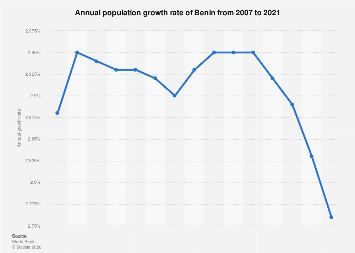
Benin, a West African nation situated on the Gulf of Guinea, has experienced a significant and sustained population increase over the period spanning 2007 to 2021. This demographic expansion, characterized by a rising birth rate and declining mortality, presents a complex interplay of opportunities and challenges for the nation’s economic development, social infrastructure, and long-term sustainability. Understanding the trajectory and drivers of this growth is crucial for policymakers, investors, and international development partners aiming to foster inclusive and prosperous futures for Benin.
The period under review, from 2007 to 2021, witnessed Benin’s population climb from an estimated 9.1 million in 2007 to over 12.9 million by 2021. This represents a growth rate that has consistently outpaced the global average, highlighting a dynamic demographic landscape. While specific figures vary slightly across data sources, the trend is undeniably upward, pointing to a fertility rate that remains considerably higher than replacement levels. This sustained high fertility, coupled with improvements in healthcare and public health initiatives leading to a gradual decrease in mortality rates, particularly infant and child mortality, has fueled this demographic acceleration.
This population surge is not merely a statistical curiosity; it carries profound economic implications. A larger populace can translate into a more substantial labor force, potentially driving economic output and consumption. As the working-age population expands, there is an opportunity to capitalize on a demographic dividend, provided that education, skills development, and job creation initiatives keep pace. However, if the growth in job opportunities does not match the expansion of the labor pool, it risks exacerbating unemployment and underemployment, potentially leading to social unrest and hindering poverty reduction efforts. The informal sector, already a significant component of Benin’s economy, may continue to absorb a portion of this growing labor supply, but its inherent volatility and limited social protections pose challenges for long-term economic security.
The sheer scale of population growth also places immense pressure on Benin’s social infrastructure and public services. Education systems must adapt to accommodate a larger influx of students, requiring increased investment in schools, teachers, and learning materials. Similarly, the healthcare sector faces the dual challenge of serving a growing population while simultaneously addressing existing health disparities and improving access to quality care. Water and sanitation infrastructure, often already strained in many parts of the country, will need significant expansion to meet the demands of a burgeoning population, particularly in urban centers where migration from rural areas is likely to intensify.
Urbanization is a closely linked phenomenon to population growth. As more people are born and as economic opportunities become concentrated in cities, Benin is likely to witness continued rapid urbanization. This trend, while potentially fostering innovation and economic dynamism, also presents significant challenges related to housing, transportation, waste management, and the provision of essential services. Slum development and overcrowding can become prevalent if urban planning and infrastructure development do not proactively address the needs of a growing urban population.
Globally, Benin’s demographic trajectory places it among nations with high population growth rates. While many developed economies are grappling with aging populations and declining birth rates, sub-Saharan Africa, including Benin, continues to be characterized by youthful and expanding populations. This contrast has implications for global economic dynamics, labor migration patterns, and the distribution of global resources. International organizations and development agencies are keenly observing these trends, as they influence aid allocation, trade relationships, and strategies for global development.
Statistics from organizations like the World Bank and the United Nations consistently show Benin’s fertility rate hovering around the 5-6 children per woman mark, a figure considerably higher than the global average of approximately 2.3. While this has been declining from even higher levels in previous decades, it remains a key driver of population expansion. The average life expectancy, while improving, is still lower than in more developed regions, indicating the ongoing impact of public health challenges and access to healthcare.
The economic impact analysis of such growth is multifaceted. On the one hand, a young and growing population can represent a demographic dividend, a period where the proportion of the working-age population is high relative to dependents, leading to potential economic acceleration. This dividend is realized when investments in human capital – education and healthcare – are sufficient to equip the workforce with the skills needed for a modern economy. Without these investments, the demographic dividend can turn into a demographic burden, characterized by high unemployment and social strain.
Conversely, the increased demand for goods and services stemming from a larger population can stimulate domestic markets and attract foreign investment. Sectors such as agriculture, consumer goods, and construction are likely to see increased demand. However, the sustainability of this growth hinges on prudent resource management, particularly concerning water, land, and energy. Environmental challenges, including deforestation and land degradation, can be exacerbated by population pressure if not managed with sustainable practices.
For Benin to effectively harness the potential benefits of its demographic expansion and mitigate its challenges, a strategic and forward-looking approach is essential. Investing in quality education and vocational training programs that align with market demands is paramount to equipping the youth with employable skills. Enhancing access to comprehensive healthcare services, including reproductive health services, can contribute to both maternal and child well-being and influence long-term fertility trends. Furthermore, fostering an enabling business environment that encourages private sector investment and job creation, particularly in sectors with high growth potential, is crucial.
Government policies aimed at promoting sustainable urban planning, developing resilient infrastructure, and ensuring equitable access to essential services will be critical in managing the urbanization that accompanies population growth. International cooperation and partnerships can play a vital role in providing financial and technical assistance to support these development efforts. By understanding the nuances of its demographic trajectory and implementing proactive strategies, Benin can strive to transform its growing population into a powerful engine for sustainable economic development and improved living standards for all its citizens. The coming years will be a testament to Benin’s ability to navigate these complex demographic currents and chart a course towards a prosperous future.