

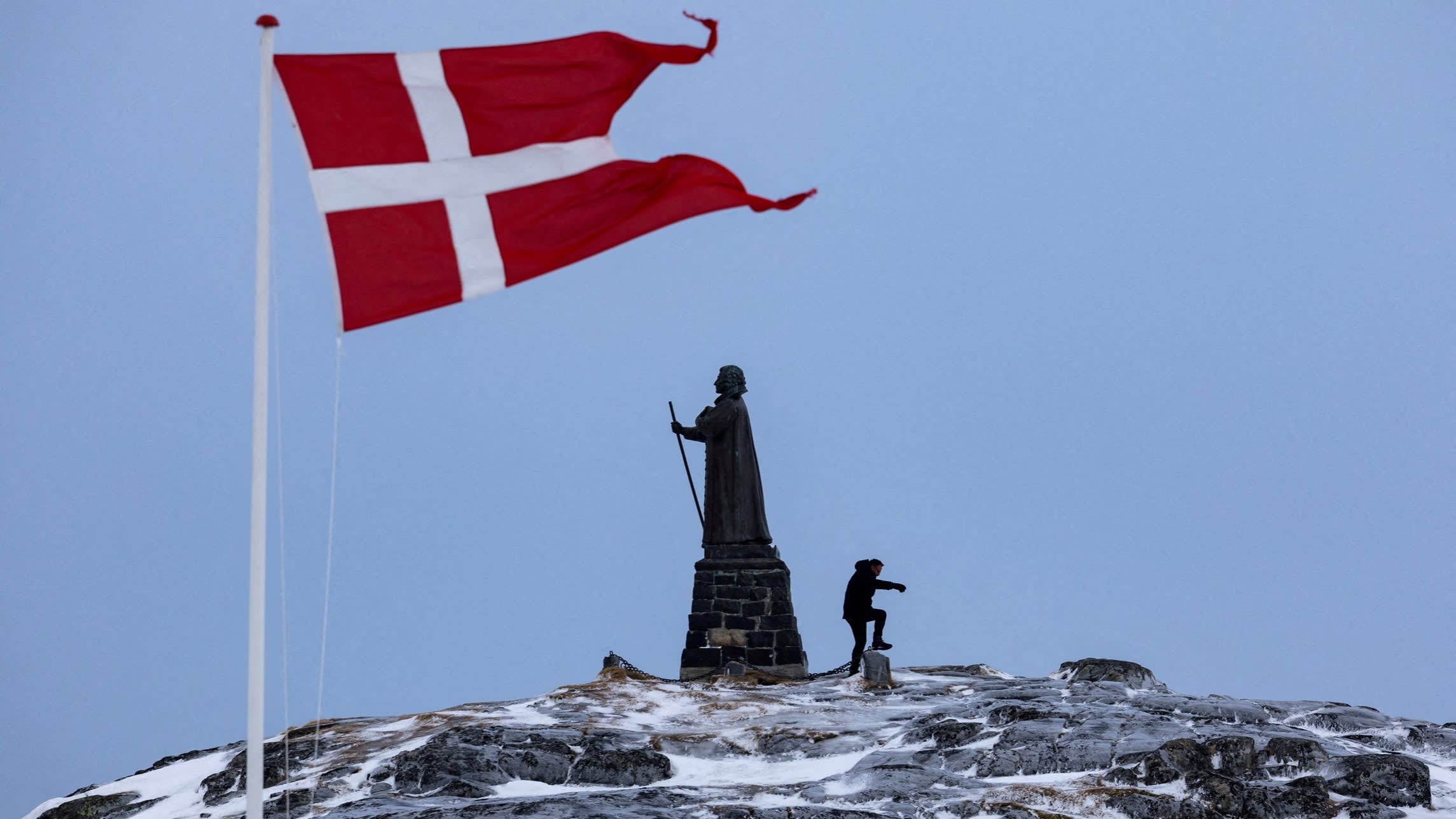
The persistent interest of the United States in the acquisition of Greenland has shifted from a perceived diplomatic eccentricity to a cornerstone of national security discourse, with recent assertions suggesting that military avenues are being considered among the broader "options" for securing the territory. This development marks a significant escalation in the rhetoric surrounding the Arctic, a region increasingly viewed by Washington as a critical frontier for both economic resources and defense capabilities. While the concept of purchasing a sovereign territory belongs to an era of 19th-century expansionism, the modern rationale is rooted in the 21st-century realities of climate change, resource scarcity, and the intensifying rivalry between the United States, Russia, and China.
The strategic value of Greenland is multifaceted, encompassing its geographic location, its untapped natural wealth, and its role as a sentinel in the North Atlantic. For decades, the United States has maintained a significant presence on the island through the Pituffik Space Base, formerly known as Thule Air Base. Situated 750 miles north of the Arctic Circle, the base is a vital link in the U.S. ballistic missile early warning system and provides essential satellite tracking for the U.S. Space Force. However, as the polar ice caps recede, the strategic importance of this location has expanded. New shipping lanes, such as the Northwest Passage, are becoming viable for longer periods of the year, potentially revolutionizing global trade by cutting transit times between Asia and Europe by up to 40%. Controlling Greenland would effectively grant the United States a dominant position over these emerging maritime arteries.
From an economic perspective, Greenland is often described as a "treasure trove" of critical minerals. The island is estimated to hold some of the world’s largest undeveloped deposits of rare earth elements (REEs), including neodymium, praseodymium, dysprosium, and terbium. These minerals are indispensable for the production of high-tech electronics, electric vehicle motors, wind turbines, and advanced weapon systems. Currently, China controls approximately 85% to 90% of the global processing capacity for rare earths, a monopoly that Washington views as a profound vulnerability. The acquisition or deepened control of Greenland’s mineral wealth would be a decisive move toward decoupling Western supply chains from Chinese influence. Furthermore, the U.S. Geological Survey estimates that the Arctic may contain up to 13% of the world’s undiscovered oil and 30% of its undiscovered natural gas, much of which lies within Greenland’s continental shelf.
The mention of "military options" in the context of acquiring or securing Greenland introduces a volatile element to transatlantic relations. Greenland is an autonomous territory within the Kingdom of Denmark, and the Danish government has consistently maintained that the island is not for sale. In Copenhagen, the suggestion of a forced or military-backed acquisition is viewed with a mixture of incredulity and alarm. For Denmark, Greenland is not merely a piece of real estate but a constituent part of its sovereign identity. However, the United States may be framing "military options" not as an overt invasion, but as a heightened security presence or a "security-for-sovereignty" arrangement that leverages U.S. defense guarantees to influence the island’s political future.
This geopolitical tension is exacerbated by the "Polar Silk Road" initiative proposed by Beijing. China has actively sought to invest in Greenlandic infrastructure, including airports and mining projects, such as the controversial Kvanefjeld rare earth project. While the Greenlandic government eventually blocked the Kvanefjeld project due to environmental concerns regarding uranium byproducts, the persistent interest from Chinese state-owned enterprises has rattled Washington. U.S. officials argue that Chinese economic investment is a precursor to a permanent military footprint in the Arctic, mirroring Beijing’s strategy in the South China Sea. By signaling that military options are on the table, the United States is drawing a "red line" in the High North, signaling to both allies and adversaries that it will not permit the Arctic to fall under the sphere of influence of a rival power.
The internal politics of Greenland also play a crucial role in this unfolding drama. The island’s population of roughly 56,000 has long harbored aspirations for full independence from Denmark. Currently, Greenland relies on an annual block grant from Copenhagen of approximately $600 million, which accounts for more than half of its government budget. Pro-independence factions in the Greenlandic parliament, the Inatsisartut, view the island’s mineral wealth as the ticket to fiscal self-sufficiency. However, the transition from a fishing-based economy to a mining powerhouse requires massive capital investment and technical expertise—resources that both the United States and China are eager to provide. The U.S. approach appears to be a dual-track strategy: engaging in "soft power" through the opening of a consulate in Nuuk and offering economic aid, while simultaneously reinforcing the "hard power" reality that Greenland is an area of "vital national interest" where military considerations are paramount.
Economic analysts suggest that if the United States were to successfully integrate Greenland into its economic orbit, the impact on global markets would be transformative. A U.S.-backed mining boom in the Arctic could stabilize the volatility of the rare earth market and provide a secure source of materials for the burgeoning green energy sector. However, the environmental costs are significant. Greenland’s ecosystem is fragile, and the melting of the Greenland Ice Sheet is already a primary driver of global sea-level rise. Extensive industrialization could accelerate local environmental degradation, creating a paradox where the materials needed for "green" technology are extracted through processes that threaten one of the world’s most sensitive environments.
The legal framework for such an acquisition remains a major hurdle. Under international law, particularly the UN Charter and the principle of self-determination, the transfer of territory cannot be legally executed without the consent of the local population and the sovereign power. The 1917 purchase of the Danish West Indies (now the U.S. Virgin Islands) for $25 million in gold serves as the historical precedent often cited by proponents of the Greenland purchase. Yet, the legal and ethical standards of the 21st century are vastly different. Any attempt to use military leverage to influence the status of Greenland would likely trigger a diplomatic crisis within NATO and the United Nations, potentially isolating the United States from its European allies.
Furthermore, Russia’s activities in the Arctic cannot be ignored. Moscow has been aggressively refurbishing Soviet-era military bases along its northern coast and deploying advanced S-400 missile systems to the region. The Kremlin views the Arctic as its "strategic backyard" and a vital source of future revenue. The prospect of a heightened U.S. military posture in Greenland is seen by Moscow as a direct threat to its Northern Fleet and its sea-based nuclear deterrent. This sets the stage for a "New Cold War" in the Arctic, where Greenland becomes the primary theater of competition.
As the debate continues, the focus remains on the strategic "options" mentioned by U.S. officials. These may include a long-term lease of the entire island, a formal "compact of free association" similar to those the U.S. holds with Pacific island nations like Palau or the Marshall Islands, or a gradual increase in military infrastructure that renders the island a de facto U.S. protectorate. Regardless of the specific mechanism, the underlying message is clear: the United States no longer views the Arctic as a peripheral zone of scientific research, but as a core arena of sovereign competition.
The potential for Greenland to become a focal point of U.S. military and economic policy represents a paradigm shift in global affairs. As the ice thins, the world is witnessing the emergence of a new geopolitical map where the High North holds the keys to resource security and military dominance. The assertion that military options are being weighed underscores the gravity with which Washington views the situation. In the coming years, the struggle for Greenland will likely test the limits of international law, the strength of the transatlantic alliance, and the resilience of the global economic order. For the people of Greenland, caught between the interests of global superpowers, the challenge will be to navigate these turbulent waters while preserving their culture, their environment, and their right to self-determination in an increasingly crowded and contested Arctic.