

As India’s burgeoning digital economy charges into 2026, its foundational telecom sector is poised at a critical juncture, facing high-stakes decisions that will redefine its competitive landscape, accelerate digital inclusion, and influence consumer experiences. Central to this transformation is the precarious future of Vodafone Idea Ltd. (Vi), the anticipated market entry of global satellite broadband players like Starlink, and the strategic direction of upcoming spectrum auctions. These developments, alongside crucial regulatory adjustments, are set to profoundly impact India’s nearly 1.2 billion mobile subscribers and its ambitious digital infrastructure goals.
Vodafone Idea’s Quest for Resilience
The survival and revitalization of Vodafone Idea represent one of the most significant challenges and opportunities for the Indian telecom market. With a market share that has significantly eroded, placing it behind the dominant duo of Reliance Jio and Bharti Airtel, Vi’s trajectory is intrinsically linked to government intervention, particularly concerning its adjusted gross revenue (AGR) dues. AGR, a contentious calculation of income that forms the basis for regulatory fee payments, has historically burdened Indian telcos, leading to significant financial distress and even market exits. Following a Supreme Court order, the government’s ongoing review of Vi’s AGR liabilities is seen as a pivotal moment. Analysts, such as Vivekanand Subbaraman, lead analyst for telecom and media at Ambit Capital, underscore that substantial AGR relief would provide a "meaningful shot in the arm," potentially unlocking crucial bank funding necessary for network investment and subscriber stabilization.
The financial stakes are immense. Vodafone Idea reported AGR dues of approximately ₹78,500 crore as of September, part of its staggering ₹2 trillion total debt, which also includes significant spectrum payments. Without relief, the company faces an annual outgo of ₹18,000 crore starting March 2026 for statutory dues alone. The Indian government, having already converted ₹36,950 crore of Vi’s spectrum dues into a 49% equity stake in 2025, has demonstrated a strategic interest in maintaining a three-player market. This stance is largely driven by the concern that a duopoly could lead to reduced competition, stifle innovation, and prompt a "heavy-handed" regulatory approach to tariffs, replacing the current "light-touch" policy. A competitive market, as Konark Trivedi, founder and managing director of Frog Innovations Ltd., points out, fosters innovation, promotes tariff stability beneficial to consumers, and encourages network expansion into rural areas. While Vi’s recovery might slightly temper average revenue per user (ARPU) growth for Jio and Airtel, it would force these leaders to further differentiate through premium 5G experiences, enterprise private networks, and fixed-wireless access solutions, rather than solely competing on aggressive pricing.
Vi has outlined a near-term capital expenditure plan of ₹50,000-55,000 crore, contingent on securing bank funding. An immediate resolution to the AGR issue could release ₹25,000 crore in pending bank debt, enabling critical, albeit partial, network expansion. This investment is crucial not just for Vi’s survival but also for accelerating 5G deployment across India, a key pillar of the nation’s digital transformation agenda.
The Evolving Landscape of Spectrum Auctions
Beyond financial relief, the upcoming spectrum auctions will significantly shape the operational capabilities of telecom operators. Despite the broad array of spectrum bands on offer, including 800MHz, 900MHz, 1800MHz, 2100MHz, 2300MHz, 2500MHz, 3300MHz, and 26GHz, along with new blocks in the 6GHz, 1427-1518MHz, and 37-40GHz bands, analysts anticipate a muted response. This reflects a broader industry trend where operators, having invested heavily in 5G spectrum in 2022 (₹1.5 trillion out of ₹4.3 trillion on offer), are now focused on monetizing those assets and managing existing debt. The 26GHz band, for instance, remains largely unutilized due to the nascent device ecosystem, dampening immediate demand.
PwC India’s Vinish Bawa notes that operator participation will likely be driven by renewal obligations, existing spectrum utilization, and cash-flow priorities. Incremental demand is expected to concentrate on sub-GHz and mid-band blocks to enhance coverage and capacity, rather than large-scale, pan-India acquisitions. Telecom operators have also vociferously advocated for a drastic reduction in base prices for spectrum, arguing that current valuations are disproportionately high compared to global benchmarks and hinder investment. They also seek an extension of the spectrum usage period from the current 20 years to 40 years, providing a more stable return on investment and facilitating long-term network planning.
The June 2024 auction, where only ₹11,341 crore worth of airwaves were sold out of ₹96,238.45 crore offered, underscores the industry’s cautious approach. No bids were received for the 800MHz, 2300MHz, 3300MHz, and 26GHz bands, signaling that operators are prioritizing the monetization of their existing 5G spectrum. The delicate balance between the government’s revenue generation goals and the industry’s need for affordable spectrum to drive innovation and infrastructure development remains a central theme. The judicious allocation and pricing of spectrum are critical for India’s 5G rollout, the expansion of broadband to underserved regions, and the development of new enterprise use cases like private networks and fixed-wireless access (FWA).

The Dawn of Satellite Broadband
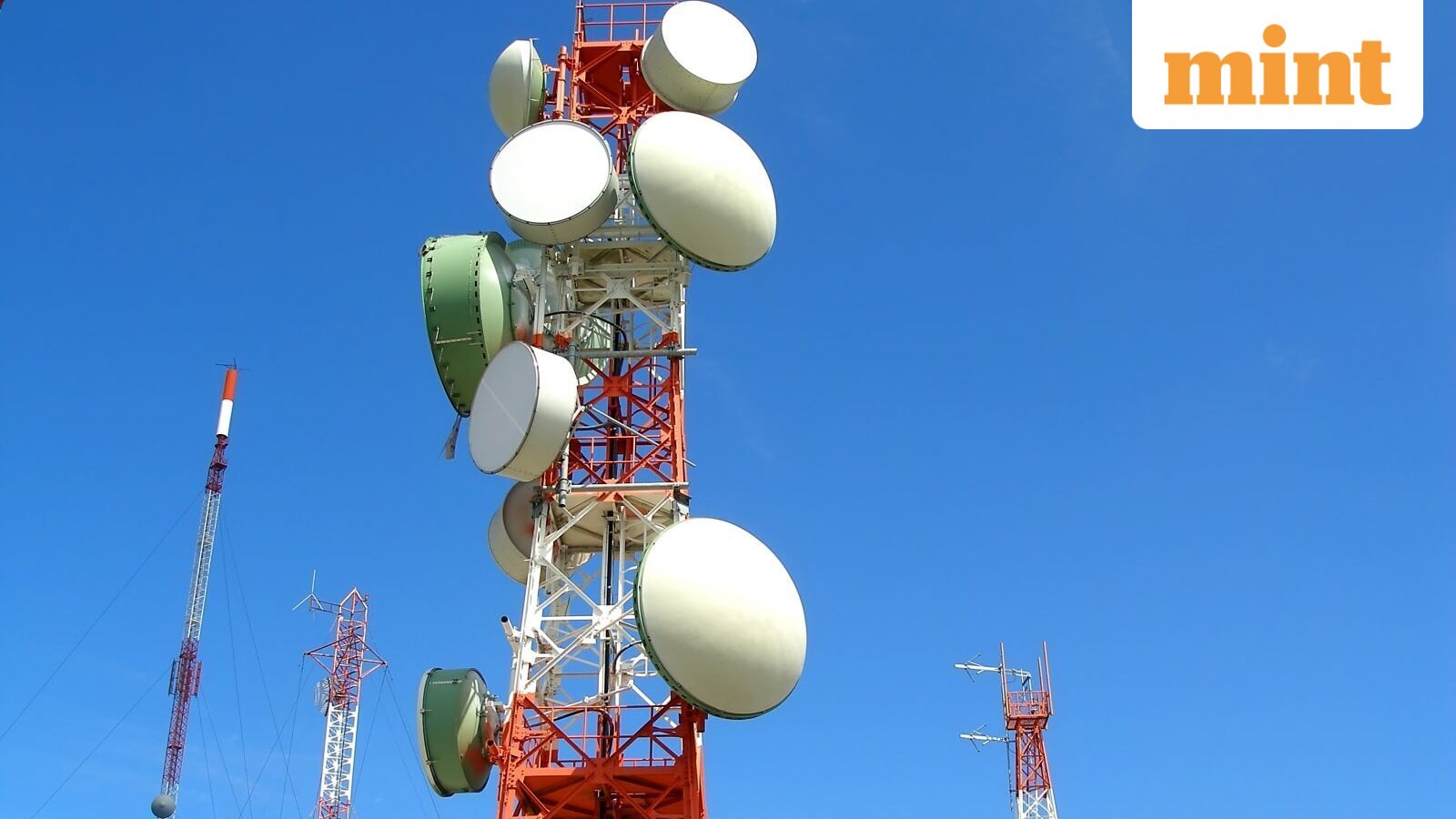
The year 2026 is also expected to mark the commercial rollout of satellite-based broadband services in India, introducing a new dimension to the connectivity landscape. Global player Starlink, along with Bharti-backed Eutelsat OneWeb and Jio Satellite, are awaiting necessary spectrum and security clearances. While terrestrial telecom operators express concerns about potential market share erosion, particularly in urban centers, most analysts view satellite internet as a market expander rather than a direct competitor. Its primary impact is anticipated in bridging the digital divide by serving geographically challenging, unconnected, or poorly served areas where traditional fiber or mobile networks are uneconomical to deploy.
However, the entry of satellite players is not without its complexities, particularly concerning pricing and regulatory clarity. Starlink’s brief listing of a monthly price of ₹8,600 with a ₹34,000 hardware cost, later retracted as a "technical glitch," highlighted the challenge of balancing high operational costs with India’s price-sensitive market. While such pricing may be prohibitive for most retail users, it could appeal to high-value enterprise clients, maritime and aviation sectors, or critical infrastructure requiring resilient backup connectivity. These segments, already served by fiber, will evaluate the value proposition of satellite internet against existing terrestrial options.
A significant regulatory hurdle is the ongoing disagreement between the Department of Telecommunications (DoT) and the Telecom Regulatory Authority of India (TRAI) regarding spectrum usage charges (SUC) for satellite internet companies. TRAI recommended a 4% AGR levy with an annual ₹500 per user charge for urban areas, while DoT proposed a 5% fee with a 1% discount for underserved regions. This lack of a unified, predictable SUC structure creates uncertainty, potentially deterring investment. As Vinish Bawa emphasizes, a "single, predictable spectrum usage charge (SUC) structure helps operators plan spectrum usage efficiently while allowing the government to maintain revenue transparency." Harmonized and long-term regulatory visibility is crucial for these capital-intensive ventures to thrive.
Evolving Regulatory Frameworks and Digital Security
Beyond market dynamics, regulatory changes are also set to shape user experiences and digital security. A notable development for 2026 is the government’s push for mandatory SIM binding for communication applications like WhatsApp, Signal, and Telegram. This directive, supported by telecom operators, aims to combat cyber fraud by ensuring that these apps can only be used with an active SIM card linked to the phone. The move is intended to enhance Know Your Customer (KYC) compliance and traceability in the digital communication ecosystem.
However, this proposal has met with concerns from tech companies and privacy advocates. Issues such as potential impacts on user privacy, the feasibility for multi-device users, implications for international roaming, and the overall user experience have been flagged, prompting calls for extensive public consultations. The debate highlights a broader global challenge: balancing national security and fraud prevention with individual privacy rights and the open nature of digital communication platforms. India’s approach to this regulation will set a precedent for how a large, digitally active population interacts with its communication tools, influencing both cyber security measures and the evolution of digital freedom.
A Holistic Outlook for India’s Digital Future
The confluence of these factors—Vodafone Idea’s potential resurgence, the strategic recalibration of spectrum auctions, the entry of satellite broadband, and evolving regulatory mandates—will collectively define India’s digital trajectory in 2026 and beyond. A revitalized competitive landscape, driven by a healthier Vi, could spur greater innovation, keep tariffs in check, and expand network coverage, particularly crucial for the estimated 400 million Indians still without reliable internet access. Judicious spectrum policies, balancing government revenue with operator investment capacity, will be key to unlocking the full potential of 5G and future technologies. The strategic deployment of satellite broadband promises to accelerate digital inclusion in remote areas, transforming lives and livelihoods, while the resolution of regulatory disputes will attract further investment into this nascent but vital sector.
Ultimately, 2026 stands as a pivotal year for India to consolidate its position as a global digital powerhouse. The decisions made and the policies implemented will not only impact the financial health of its telecom operators and the quality of services for its citizens but will also significantly contribute to the nation’s overall economic growth and its vision of a truly connected society. The challenge lies in fostering a predictable, supportive regulatory environment that encourages innovation, investment, and sustainable growth across all facets of the digital ecosystem.