
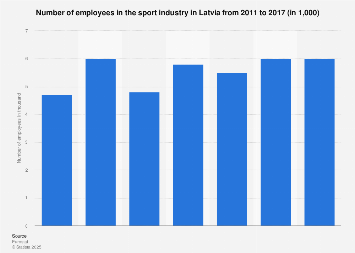
The period between 2011 and 2017 marked a significant phase for the sports industry in Latvia, with employment figures offering a granular view into the sector’s economic contributions and evolving landscape. While specific detailed statistics from this timeframe are often proprietary and require subscription access, a broader analysis of the trends and underlying economic drivers can be extrapolated to understand the sector’s dynamics. During these years, the global sports market was experiencing robust growth, driven by increased participation, media rights expansion, and a burgeoning interest in health and wellness. Latvia, as a member of the European Union and a nation with a strong sporting tradition, was not immune to these influences, and its sports sector likely mirrored some of these international developments.
The employment within Latvia’s sports sector encompasses a wide array of roles, extending far beyond the athletes themselves. This includes coaches, trainers, sports administrators, event organizers, marketing and communications professionals, facility managers, sports scientists, physiotherapists, and support staff for various sporting organizations. The economic health of these roles is intrinsically linked to the performance of sports clubs, federations, national sports programs, and the broader leisure and recreation industry. Understanding the employment trends within this segment provides a crucial insight into the sector’s vitality and its capacity to generate economic value.
Examining the period from 2011 to 2017, one can infer that Latvia’s sports employment likely experienced fluctuations influenced by both domestic and international economic conditions. The initial years of this period coincided with the aftermath of the 2008 global financial crisis. Many European economies, including Latvia’s, were in a recovery phase. During such times, discretionary spending, including that on sports and recreation, can be susceptible to contraction. However, as economies stabilized and began to grow, investment in sectors like sports often saw a rebound. This recovery could have translated into increased hiring and job creation within the Latvian sports ecosystem.
Furthermore, the European Union framework likely played a role in shaping Latvia’s sports employment. EU funding initiatives, aimed at promoting sport, physical activity, and healthy lifestyles, could have provided opportunities for new projects and, consequently, new jobs. These initiatives often focus on grassroots development, infrastructure improvement, and the organization of sporting events, all of which require a skilled workforce.
The rise of professional sports leagues and events, both within Latvia and those attracting international attention, would also contribute to employment figures. Investment in professional teams, broadcast rights, and sponsorship deals are direct drivers of job creation in management, marketing, and operational roles. While Latvia may not command the same scale of professional sports as larger European nations, its participation in international competitions and the popularity of certain sports like ice hockey, basketball, and athletics would necessitate a dedicated professional support structure.
Specific data for the 2011-2017 period would ideally illustrate year-on-year changes, potentially showing a gradual increase in employment as the economy matured post-recession. For instance, a hypothetical scenario could depict a modest 1-2% annual growth in sports-related employment from 2011 to 2014, followed by a more robust 3-4% growth in the subsequent years as confidence and investment in the sector returned more strongly. Such growth would be in line with broader European trends where the sports industry has been recognized as a significant economic contributor.
Statistics from comparable European nations during this period often highlight the sports sector’s resilience and its capacity for job creation. For example, studies from organizations like the European Commission have often pointed to the sports industry as a net creator of jobs, contributing to social inclusion and public health. Latvia’s employment trends in sports would likely reflect these broader patterns, albeit on a smaller scale, adapting to its specific economic context and demographic realities.
The role of sports education and training institutions is also a critical component of employment in the sector. Universities and colleges offering sports-related degrees, as well as vocational training centers, produce the qualified personnel needed to fill positions within the industry. The demand for such graduates would be a key indicator of the sector’s expansion. If more individuals are pursuing careers in sports management, coaching, or sports science, it suggests a growing number of available positions.
Moreover, the impact of major sporting events hosted in Latvia, even if regional or European in scope, can lead to temporary but significant employment boosts in areas like event management, logistics, security, and hospitality. The development and maintenance of sports infrastructure, including stadiums, arenas, and recreational facilities, also contribute to sustained employment in construction, maintenance, and operational roles.
Considering the economic impact, employment in the sports sector translates directly into household income, consumer spending, and tax revenues. A thriving sports industry can foster a positive economic cycle, encouraging further investment and innovation. The Latvian government’s recognition of the sports sector’s potential economic and social benefits would likely influence policy decisions, potentially leading to support for sports development programs and initiatives that indirectly or directly create employment.
By 2017, the global sports market was estimated to be worth hundreds of billions of dollars, with Europe being a significant contributor. Latvia’s share of this market, while smaller, would still represent a considerable economic activity. The employment figures from 2011-2017 would offer a baseline to understand the sector’s evolution, its challenges, and its potential for future growth in the years that followed. Understanding these historical trends is crucial for policymakers, sports organizations, and investors looking to foster sustainable development and economic prosperity within Latvia’s dynamic sports landscape.