


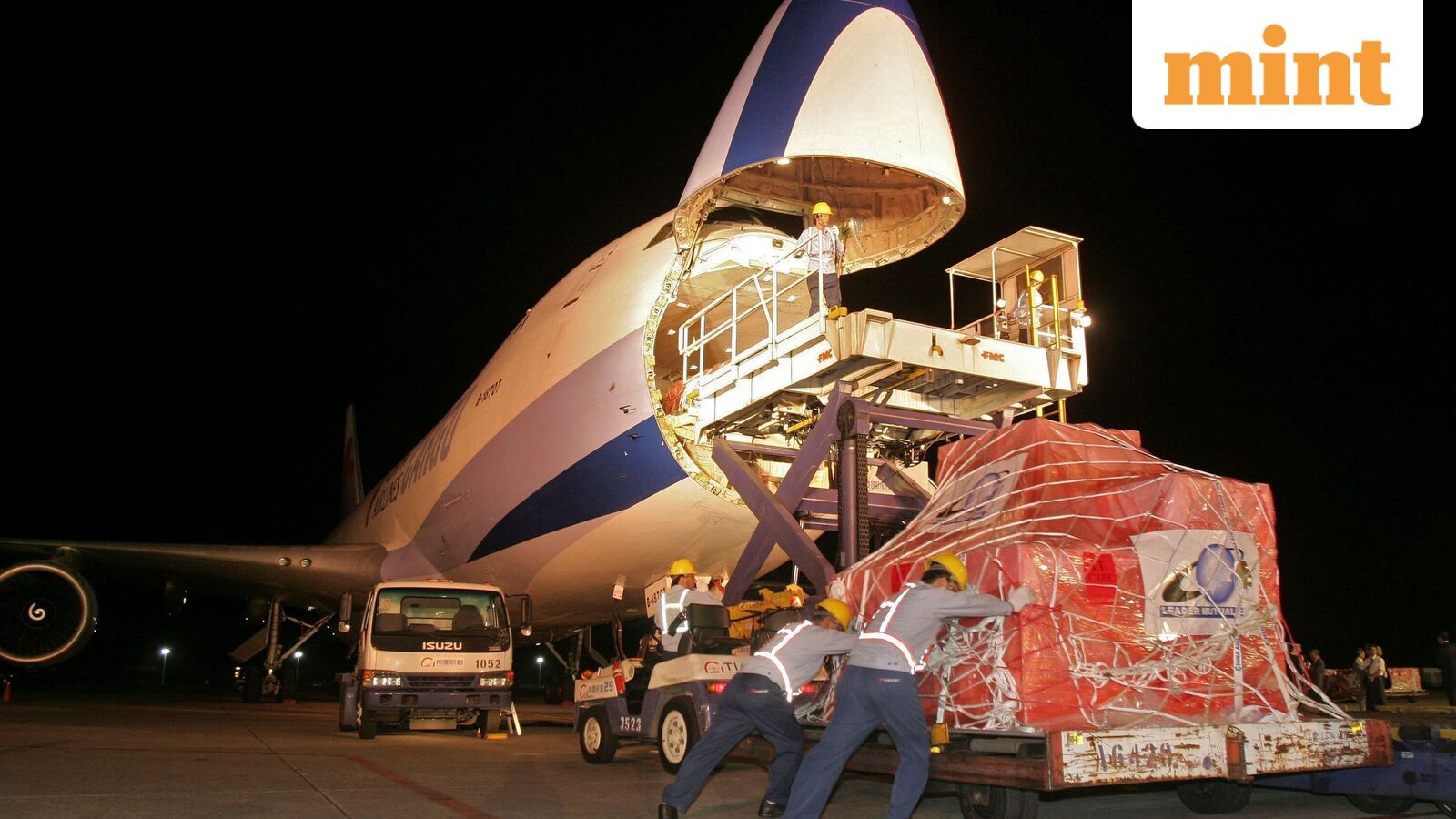
A proposed 10-month suspension of dedicated cargo freighter operations at Chhatrapati Shivaji Maharaj International Airport (CSMIA) in Mumbai is poised to trigger significant disruption across India’s export economy, compelling businesses to reroute vital air cargo through alternative hubs like Delhi or Bengaluru. This impending closure, slated from August 2026 to May 2027, stems from critical infrastructure upgrades required at Mumbai’s congested airport, specifically impacting Apron G, which is exclusively used by cargo aircraft. Industry stakeholders warn that the move could sharply escalate air freight costs, erode the competitiveness of Indian exports, and strain national logistics networks, particularly as the nascent Navi Mumbai International Airport (NMIA) is not yet equipped to absorb the scale of international cargo volumes.
The necessity for these extensive repairs underscores the severe land constraints and operational pressures faced by CSMIA, one of India’s busiest airports. Operating near full capacity for passenger traffic, the airport management, Mumbai International Airport Ltd (MIAL), has indicated that no alternative cargo space can be allocated during the reconstruction of critical runway, taxiway, and apron infrastructure. This strategic decision, while vital for the long-term operational integrity and future capacity of the airport, presents an immediate logistical conundrum for a region that serves as a pivotal gateway for high-value Indian exports.
For Maharashtra-based exporters, already navigating a complex global trade landscape marked by fluctuating demand and protectionist tariffs, the suspension portends a substantial increase in operational expenditures. Vikram Kumar, Vice President of the Air Cargo Agents Association of India (ACAAI), emphasized that such a move would translate into "a sharp and significant increase in operating expenses" for businesses. Many exporters, particularly those dealing in time-sensitive goods like pharmaceuticals, perishables, electronics, and high-fashion textiles, rely heavily on the speed and reliability of air freight. A sudden reduction in freighter capacity at a major hub like Mumbai, which handles approximately 1.45 million tonnes of cargo annually with a 62% utilization rate as per its September compliance report, will inevitably constrict supply and drive up freight rates across the board. Key international cargo partners such as Turkish Airlines, Qatar Airways, and Singapore Airlines, which frequently utilize Mumbai for their freight operations, will also need to adjust their networks, potentially leading to reduced service frequencies or increased costs.
The conundrum is further complicated by the limited readiness of the Navi Mumbai International Airport (NMIA) as a viable substitute. While NMIA commenced domestic operations in December and is cleared to handle wide-body aircraft, its capacity for international cargo is severely restricted. Crucially, the airport currently lacks international passenger flights, which are a significant source of "belly cargo" – the freight carried in the hold of passenger aircraft. Belly cargo offers a cost-effective and flexible option for shippers, complementing dedicated freighter services. Without this critical component, NMIA’s ability to offer competitive freight rates and sufficient capacity for international shipments is severely hampered. Furthermore, initial operational hours at NMIA are limited to 8 am to 8 pm, with international airlines awaiting permits for night operations, a prerequisite for efficient global air cargo logistics that often operates round-the-clock. This creates a significant bottleneck, as the absence of full-spectrum infrastructure, customs clearance facilities, and a mature ground handling ecosystem further diminishes its immediate appeal.

Consequently, exporters are likely to consider rerouting their shipments through well-established alternative gateways such as Delhi (Indira Gandhi International Airport, IGIA) or Bengaluru (Kempegowda International Airport, KIA). Delhi, in particular, benefits from an "open sky policy," allowing for a higher number of cargo flights and generally more stable freight rates due to increased competition and capacity. Exporters could transport goods domestically from Mumbai to Delhi or Bengaluru, a process that, while incurring additional transit time and domestic freight costs, might still prove more economical than shipping directly from a capacity-constrained Navi Mumbai with inflated international rates. However, this strategy is not without its challenges. Increased domestic transit adds layers of complexity, raises the risk of damage or delays, and contributes to a larger carbon footprint, potentially impacting sustainability commitments for businesses. Moreover, a significant diversion of Mumbai’s cargo volumes to Delhi and Bengaluru could strain infrastructure at these airports, potentially leading to congestion, increased turnaround times, and eventual upward pressure on freight rates there as well.
The proposed suspension highlights a broader challenge in India’s aspiration to become a global manufacturing and export powerhouse. Robust, efficient, and scalable logistics infrastructure is paramount to achieving these economic goals. While the investment in airport infrastructure upgrades is necessary for long-term growth, the short-to-medium term impact on supply chains requires meticulous planning and mitigation strategies. Other major global cargo hubs, such as Frankfurt, Heathrow, or JFK, have faced similar capacity constraints and upgrade requirements. Their experiences often point to the need for phased construction, temporary alternative facilities, or strong government-industry coordination to minimize disruption. Countries like China and the UAE have invested heavily in dedicated cargo airports and logistics parks, recognizing air freight as a strategic national asset.
The Air Cargo Agents Association of India (ACAAI) has formally appealed to MIAL for reconsideration, warning that a full closure without adequate alternatives could severely impede the "continual growth of Indian exports." The industry body’s concerns are magnified by the fact that the shutdown would occur over a significant period, making recovery difficult and potentially leading to a permanent shift of some businesses away from Mumbai. Given MIAL’s reported revenue of ₹4,571 crore and a net loss of ₹35 crore in FY25, according to a Crisil Ratings report, the financial implications of such a disruption, even if offset by long-term gains from enhanced infrastructure, cannot be overlooked.
Looking ahead, a collaborative approach involving airport operators, airlines, cargo agents, and government bodies is crucial. Exploring temporary solutions, such as optimizing existing cargo handling processes, utilizing military airfields for commercial cargo under specific conditions, or accelerating the full operational readiness of NMIA for international cargo, could help cushion the blow. Ultimately, the episode underscores the critical need for a national air cargo strategy that anticipates future demand, plans for redundant capacity, and ensures that infrastructure development aligns seamlessly with the growth trajectory of India’s dynamic export sector. Failure to adequately address this looming logistical challenge could risk undermining the nation’s ambitious trade objectives and the global competitiveness of its diverse range of industries.