

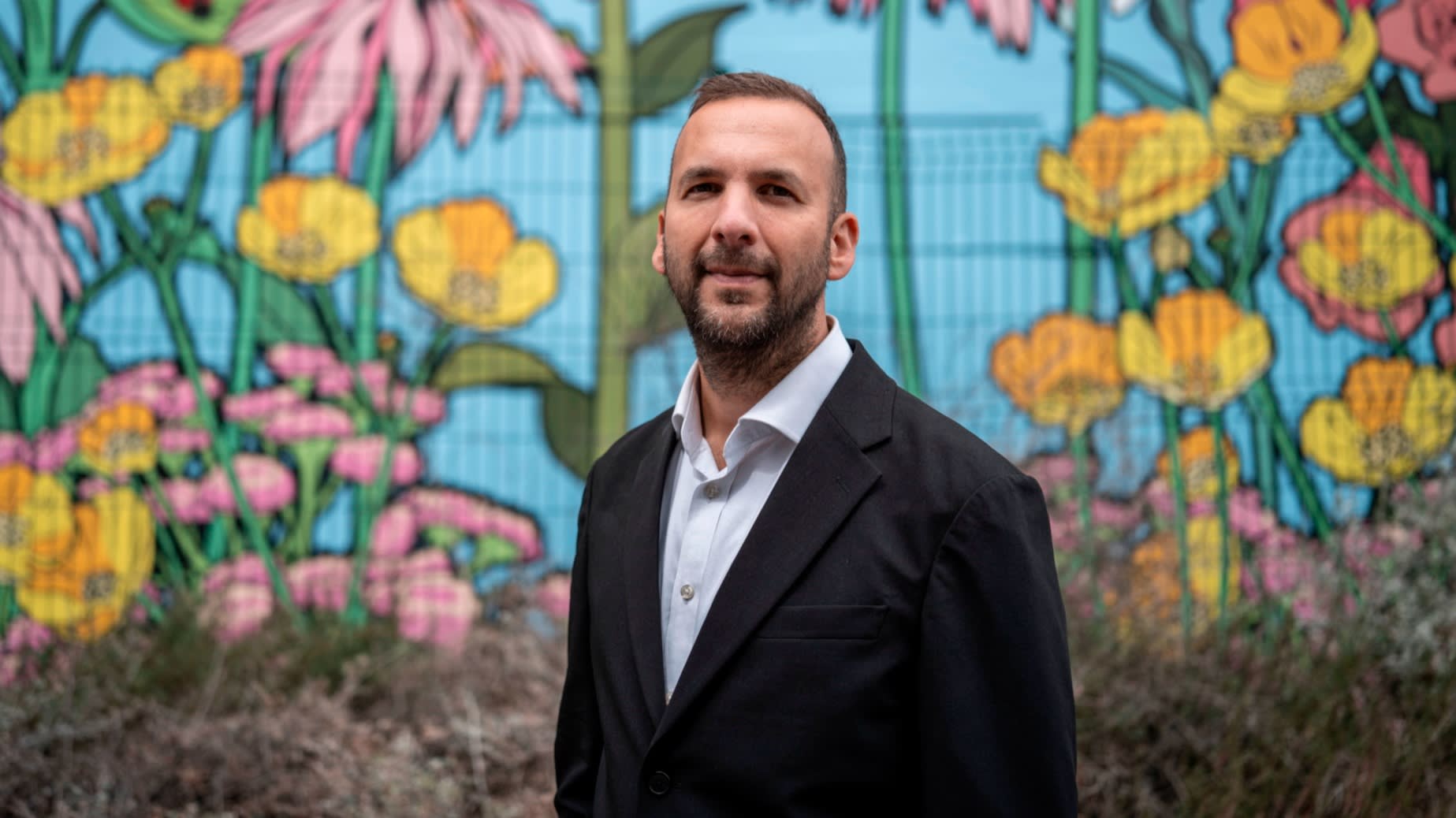
The landscape of British politics is currently undergoing a period of profound ideological recalibration, as the prospect of a change in government brings long-standing tensions between the center-left and the environmental movement to the forefront. In a significant intervention that has reverberated through Westminster, Zack Polanski, the Deputy Leader of the Green Party of England and Wales, has signaled a strategic openness to formal cooperation with the Labour Party, contingent upon a shift in its leadership. By specifically naming Andy Burnham, the Mayor of Greater Manchester, as a figure with whom the Greens could find common ground, Polanski has highlighted the growing friction between the current Labour leadership’s fiscal conservatism and the more radical economic and environmental demands of the progressive grassroots.
This overture comes at a time when the UK’s electoral map is increasingly fragmented. While the Labour Party maintains a commanding lead in national polling, its path to a sustained and transformative majority remains complicated by a disillusioned left wing and the rising localized strength of the Green Party. Polanski’s comments suggest that the "progressive alliance" model—a perennial topic of debate in British politics—remains a viable, if conditional, strategy for those who believe that Keir Starmer’s current "securonomics" framework does not go far enough in addressing the dual crises of climate change and wealth inequality.
The selection of Andy Burnham as a potential bridge-builder is not incidental. As the Mayor of Greater Manchester, Burnham has cultivated a political identity that is distinct from the national Labour apparatus. His "King of the North" persona, characterized by a focus on regional devolution, public control of transport, and an outspoken critique of the London-centric economic model, resonates with many of the Green Party’s core tenets. Burnham’s success in implementing the Bee Network—the first franchised bus system in the UK outside London in nearly four decades—serves as a tangible example of the "municipal socialism" that Green advocates often champion. For Polanski and his colleagues, Burnham represents a version of Labour that is more comfortable with state intervention and less beholden to the orthodoxies of the City of London.
From an economic perspective, the potential for a Green-Labour alignment under a more radical leadership would represent a seismic shift in UK fiscal policy. The Green Party’s platform is built upon a foundation of massive public investment in the transition to a low-carbon economy. Their proposals include a "Green New Deal" that would see upwards of £100 billion invested annually into renewable energy, home insulation, and green infrastructure. To fund this, the Greens advocate for a transformative tax regime, including a wealth tax on the top 1% of earners and an increase in corporation tax for the largest fossil fuel companies.
In contrast, the current Labour leadership under Keir Starmer and Shadow Chancellor Rachel Reeves has moved toward a "fiscal responsibility" narrative, famously scaling back their flagship £28 billion-a-year green investment pledge to ensure it fits within self-imposed debt-reduction rules. This retreat has created a vacuum on the left that Polanski is clearly seeking to exploit. By positioning the Greens as the "conscience" of the progressive movement, Polanski is signaling to voters—and to disgruntled Labour members—that a more ambitious economic path is possible, provided the right leadership is in place to navigate it.
The economic implications of such a partnership would be scrutinized heavily by global markets. Historically, investors have reacted with caution to coalitions involving Green parties, fearing that stringent environmental regulations and higher taxation could stifle industrial growth. However, recent international precedents suggest a more nuanced reality. In Germany, the "Traffic Light" coalition (comprised of the Social Democrats, the Greens, and the Free Democrats) has attempted to balance aggressive decarbonization with industrial competitiveness. While the coalition has faced internal strife over budget deficits, it has successfully accelerated Germany’s transition to renewables, proving that Green participation in government can provide the long-term regulatory certainty that the private sector often craves for capital-intensive energy projects.
Furthermore, the Green Party’s focus on regionalism aligns with a growing consensus among economists that the UK’s productivity puzzle cannot be solved without addressing regional inequality. The UK remains one of the most centralized economies in the OECD, with a disproportionate share of GDP concentrated in the South East. A Burnham-led Labour Party, supported by the Greens, would likely push for even greater devolution of fiscal powers to regional mayors. This could lead to a more decentralized economic model, where regions have the autonomy to invest in localized green industries, potentially boosting national GDP through the "leveling up" that has remained largely rhetorical under successive Conservative administrations.
However, the path to such a coalition is fraught with structural hurdles, most notably the UK’s First Past the Post (FPTP) electoral system. Unlike most of Europe, where proportional representation (PR) encourages multi-party cooperation, the UK system is designed to produce single-party majorities. For the Green Party, electoral reform is not just a policy preference but an existential necessity. Polanski has been clear that any long-term cooperation with Labour would likely require a commitment to changing the voting system. This remains a major sticking point, as the current Labour leadership has shown little appetite for a move toward PR, fearing it would permanently dilute their power and force them into perpetual compromise.
The "Burnham Factor" also introduces a complex internal dynamic within the Labour Party. While Burnham is popular among the membership and the public, he is currently outside of Parliament, and his return to Westminster would be a prerequisite for any leadership bid. His potential candidacy would represent a challenge to the "New Management" image that Starmer has spent years building. For Polanski to openly court Burnham is a tactical move designed to highlight these internal fissures, suggesting that the current iteration of Labour is not the only—or necessarily the best—option for progressive voters.
Expert analysis suggests that Polanski’s strategy is a response to the "Green surge" witnessed in recent local elections, where the party gained hundreds of seats across diverse geographies, from rural councils to urban centers like Bristol and Sheffield. This local success has given the Greens a newfound confidence. They are no longer content to be a party of protest; they are positioning themselves as a party of power. By setting conditions for cooperation, Polanski is attempting to move the Greens from the periphery of the political conversation to its center, forcing Labour to engage with their policy demands or risk a split in the progressive vote that could hand victory back to the Conservatives in marginal seats.
The global context also provides a backdrop for this shift. As climate change moves from a future threat to a present reality, the economic costs of inaction are becoming increasingly clear. The Office for Budget Responsibility (OBR) has previously warned that the costs of failing to reach net-zero would be far greater for the UK’s public finances than the costs of the transition itself. In this light, the Green Party’s calls for radical investment are increasingly framed not as radicalism, but as economic prudence. Polanski’s insistence on a leadership that understands this urgency reflects a broader international trend where "Green" and "Labour" interests are converging around the idea of a "Just Transition"—ensuring that the move away from fossil fuels does not leave industrial communities behind.
In the final analysis, Zack Polanski’s openness to working with a Burnham-led Labour Party is more than a simple comment on leadership preference; it is a manifesto for a different kind of British politics. It envisions a government that is more regionalized, more environmentally ambitious, and more willing to challenge the prevailing economic consensus. Whether such an alliance ever comes to fruition depends on the electoral math of the next general election and the internal evolution of the Labour Party. However, by sparking this conversation, Polanski has ensured that the debate over the future of the British left will not be confined to the corridors of Westminster, but will instead grapple with the fundamental questions of how to build a sustainable and equitable economy in a rapidly changing world. The tension between Starmer’s caution and the Green-Burnham vision of transformation is likely to define the next decade of UK political and economic discourse.