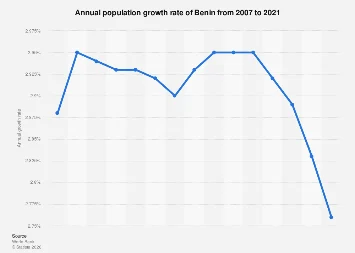
Benin, a West African nation situated along the Gulf of Guinea, has experienced a significant and sustained increase in its population between 2007 and 2021. This demographic evolution, characterized by a consistent upward trajectory, presents a complex interplay of opportunities and challenges for the country’s economic development, social infrastructure, and long-term planning. Understanding the nuances of this population growth is crucial for policymakers, investors, and international development partners seeking to foster sustainable progress in the region.
During the period under review, Benin’s population witnessed a steady expansion, a trend mirroring that of many developing economies in sub-Saharan Africa. While specific figures fluctuate based on the source and methodology, data indicates a robust growth rate that has reshaped the demographic landscape. For instance, by the end of 2021, Benin’s estimated population had significantly surpassed its 2007 figures, reflecting a consistent annual increase that has compounded over the years. This growth is primarily driven by a combination of high birth rates and declining mortality rates, a demographic transition common in countries undergoing development.
The sustained population increase has tangible implications for Benin’s economic fabric. A larger population often translates to a greater labor force, a critical component for economic expansion. This demographic dividend, if properly harnessed, can fuel productivity, boost consumption, and stimulate domestic demand for goods and services. Benin’s economy, which is heavily reliant on agriculture, trade, and a growing services sector, stands to benefit from a larger pool of workers and consumers. The expansion of the informal sector, a significant contributor to employment in Benin, is also likely to be influenced by this demographic trend, potentially absorbing a considerable portion of the growing workforce.
However, this demographic expansion also places considerable strain on existing infrastructure and public services. The demand for education, healthcare, housing, and sanitation services escalates with each new cohort entering the population. Benin, like many nations in its economic tier, faces the perennial challenge of matching infrastructure development with population growth. Investments in schools, hospitals, and public utilities must keep pace to ensure that the burgeoning population has access to essential services, preventing a decline in living standards and exacerbating social inequalities. The United Nations Population Fund (UNFPA) consistently highlights the need for increased investment in reproductive health services and family planning programs as a means to manage population growth sustainably and empower individuals to make informed choices.
Statistics from international organizations paint a broader picture of population dynamics in similar economies. For example, the average population growth rate in sub-Saharan Africa has remained among the highest globally, often exceeding 2.5% annually. This context underscores that Benin’s demographic trajectory is not an anomaly but part of a wider regional trend shaped by similar socio-economic and health factors. Countries like Niger, Uganda, and Angola have historically exhibited even higher growth rates, underscoring the diverse demographic landscapes within the continent. Benin’s growth, while substantial, falls within this broader spectrum, presenting both shared challenges and opportunities with its neighbors.
The implications extend to the labor market. While a larger workforce can be an engine for growth, it also necessitates the creation of sufficient quality employment opportunities. Without adequate job creation, a growing population can lead to increased unemployment and underemployment, particularly among the youth. Benin’s government has been implementing various economic diversification strategies, aiming to move beyond traditional sectors and foster growth in manufacturing, technology, and other value-added industries. The success of these initiatives will be a critical determinant in how effectively Benin can capitalize on its demographic dividend and mitigate the risks associated with a rapidly expanding population.
Urbanization is another significant consequence of population growth. As populations swell, there is often a migration from rural to urban areas in search of better economic opportunities and services. Benin’s capital, Porto-Novo, and its economic hub, Cotonou, are likely experiencing increased pressure on their infrastructure and resources. Managing urban growth effectively requires robust urban planning, investments in public transportation, and the provision of adequate housing and social amenities to prevent the proliferation of informal settlements and ensure a decent quality of life for all residents.
Furthermore, the environmental impact of a growing population cannot be overlooked. Increased consumption of resources, greater demand for energy, and expanded agricultural land use can lead to deforestation, land degradation, and increased pollution. Sustainable resource management and environmental protection policies are therefore paramount to ensure that Benin’s development trajectory is environmentally sound and resilient to the pressures of a growing populace. International frameworks on sustainable development goals (SDGs) offer a blueprint for such integrated approaches, emphasizing the interconnectedness of economic, social, and environmental progress.
Looking ahead, Benin’s demographic trajectory suggests a continued expansion of its population in the coming years. Projections from institutions like the World Bank and the United Nations indicate that the country’s population will continue to grow, albeit potentially at a moderating rate as development indicators improve and access to family planning services expands. This sustained growth necessitates proactive and strategic planning across all sectors of the economy and society. Investing in human capital through education and healthcare, fostering an environment conducive to job creation, and implementing sound environmental and urban planning policies will be critical for Benin to transform its demographic surge into a catalyst for inclusive and sustainable development. The coming decade will be pivotal in shaping how Benin navigates these demographic shifts and secures a prosperous future for its citizens.