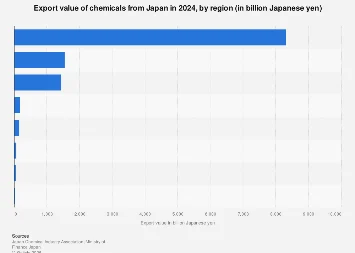
In the year 2024, Japan’s chemical industry demonstrated a robust engagement with international markets, with a significant portion of its export value directed towards other Asian nations. This strategic focus underscores the intricate supply chains and manufacturing interdependencies that characterize the region. While precise figures for the total export value remain proprietary, available data indicates that the cumulative value of Japanese chemical exports to Asia is measured in the trillions of Japanese yen, highlighting the substantial economic contribution of this sector.
The dominance of Asian markets as recipients of Japanese chemical products is a consistent trend, reflecting geographical proximity, established trade relationships, and the burgeoning industrial demand across the continent. This strong regional preference is not arbitrary but is driven by several key factors. Asia, as a manufacturing powerhouse, relies heavily on a steady supply of intermediate and finished chemical products for its diverse industries, ranging from automotive and electronics to textiles and pharmaceuticals. Japan, with its advanced chemical manufacturing capabilities and high-quality output, is ideally positioned to meet this demand.
Among the myriad of chemical categories, plastic materials and organic chemicals emerged as the leading contributors to Japan’s export value in 2024. This is consistent with global trends where these segments form the backbone of many industrial processes. Plastic materials, essential for a vast array of consumer and industrial goods, continue to see high demand. Similarly, organic chemicals serve as fundamental building blocks for a multitude of products, including pharmaceuticals, agrochemicals, dyes, and synthetic materials. The strong performance of these categories suggests that Japanese manufacturers are effectively leveraging their technological prowess and product specialization to cater to specific market needs within Asia.
The economic implications of these export figures extend beyond the immediate trade balance. For Japan, the chemical sector represents a vital component of its export-driven economy, contributing to its gross domestic product (GDP) and supporting a skilled workforce. The consistent demand from Asian markets provides a stable revenue stream for Japanese chemical companies, enabling them to invest in research and development, upgrade production facilities, and maintain their competitive edge on the global stage.
Furthermore, the strong export performance of Japanese chemicals to Asia plays a crucial role in fostering regional economic integration. The flow of essential chemical inputs from Japan facilitates manufacturing activities in recipient countries, contributing to their industrial growth and job creation. This symbiotic relationship helps to weave a more interconnected and resilient regional economic fabric.
Analyzing the global context, Japan’s chemical export strategy to Asia can be viewed as a testament to its ability to adapt to evolving market dynamics. While North America and Europe remain significant trading partners for many industrialized nations, the sheer scale and growth trajectory of Asian economies present unparalleled opportunities. The concentration of export value within Asia suggests a deliberate strategy by Japanese companies to capitalize on these proximate and high-growth markets, potentially offering more competitive pricing and shorter lead times compared to distant markets.
The dominance of plastic materials and organic chemicals in Japan’s export portfolio also points to specific strengths within its chemical industry. These sectors often require sophisticated manufacturing processes, stringent quality control, and substantial investment in research and innovation. Japan’s success in these areas indicates a high level of technological maturity and a commitment to producing value-added products. This focus on specialized and advanced chemical products differentiates Japanese exports from more commoditized offerings, allowing them to command premium prices and secure long-term customer relationships.
However, the reliance on specific product categories and regional markets also presents potential vulnerabilities. Fluctuations in Asian economic growth, shifts in regional trade policies, or the emergence of strong domestic competitors in recipient countries could impact Japan’s export performance. Geopolitical stability within the region and global supply chain disruptions, as evidenced in recent years, also pose significant risks that Japanese chemical exporters must continuously monitor and mitigate.
Looking ahead, the outlook for Japanese chemical exports to Asia in 2024 and beyond will likely be shaped by several overarching trends. The increasing emphasis on sustainability and green chemistry globally will necessitate a continued focus on developing and exporting environmentally friendly chemical products and processes. As Asian nations increasingly prioritize environmental regulations and sustainable development, Japanese companies that can offer innovative eco-conscious solutions will likely gain a competitive advantage.
Technological advancements, particularly in areas like digitalization and automation within the chemical manufacturing process, will also play a crucial role. Japanese firms that embrace Industry 4.0 principles can enhance their efficiency, reduce costs, and improve the quality and consistency of their exports, further solidifying their position in the competitive Asian market.
Moreover, the ongoing diversification of Asian economies, with a growing middle class and increasing demand for sophisticated consumer goods and healthcare products, will create new opportunities for specialized Japanese chemicals. This includes high-performance materials for advanced electronics, specialty chemicals for the pharmaceutical and biotechnology sectors, and innovative ingredients for personal care products.
In conclusion, Japan’s chemical export landscape in 2024 is characterized by a strong and sustained focus on Asian markets, with plastic materials and organic chemicals leading the charge. This strategic orientation not only bolsters Japan’s economic standing but also underpins the intricate web of industrial collaboration that defines the East Asian economic sphere. As global economic dynamics continue to evolve, the adaptability, innovation, and strategic positioning of Japan’s chemical industry will be paramount in navigating future challenges and capitalizing on emerging opportunities within this vital region. The success of these exports is a clear indicator of Japan’s enduring strength in high-value manufacturing and its integral role in the global chemical supply chain.