In the wake of the most significant domestic challenge to its authority since the 1979 Revolution, the Islamic Republic of Iran has executed a multifaceted strategy to reclaim the streets and fortify its grip on power. What began in late 2022 as a localized protest over the death of Mahsa Amini rapidly evolved into a nationwide movement under the banner of "Woman, Life, Freedom," threatening the very foundations of the theocratic establishment. However, through a combination of brutal kinetic force, sophisticated digital surveillance, strategic economic maneuvers, and a calculated geopolitical pivot toward the East, the regime has successfully suppressed the overt manifestations of dissent, transitioning from a state of crisis management to one of consolidated, albeit fragile, control.
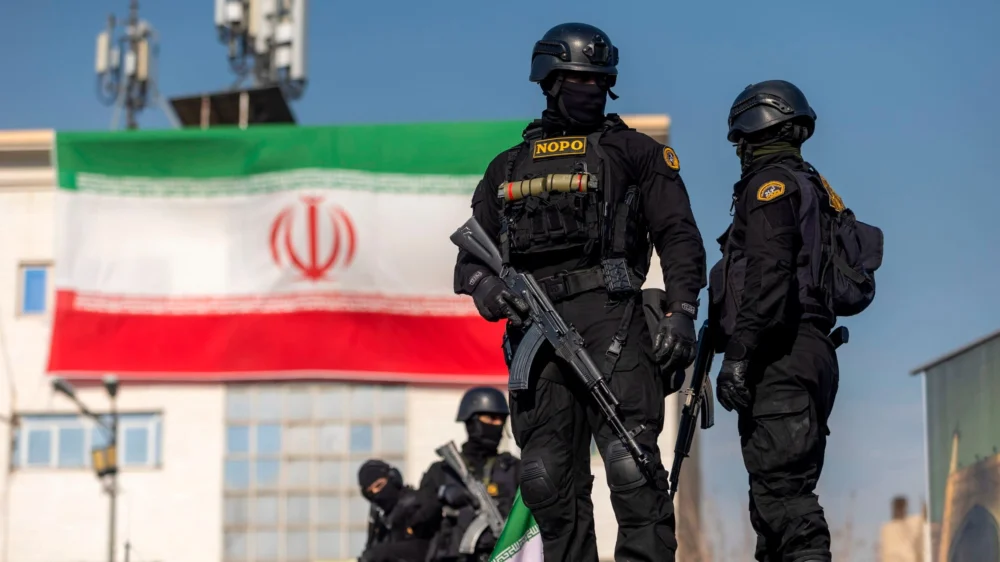
The restoration of order was not merely a matter of police presence but involved the deployment of a comprehensive security-industrial complex. The Islamic Revolutionary Guard Corps (IRGC) and its paramilitary wing, the Basij, utilized a "layered defense" strategy to dismantle protest hubs. According to human rights monitors, this crackdown resulted in the deaths of over 500 protesters and the detention of more than 22,000 individuals. By employing a high-visibility presence in urban centers and utilizing lethal force in marginalized border regions such as Sistan-Baluchestan and Kurdistan, the state signaled its willingness to incur significant international condemnation in exchange for domestic survival. This willingness to escalate violence served as a primary deterrent, eventually exhausting the physical momentum of the leaderless protest movement.
Beyond the physical skirmishes on the streets, the Iranian state leveraged advanced technology to implement a "digital panopticon." Utilizing AI-enhanced facial recognition software—much of it reportedly sourced through partnerships with Chinese technology firms—authorities were able to identify and track individuals participating in demonstrations without immediate on-site arrests. This "delayed enforcement" tactic created a pervasive sense of paranoia among activists, as arrests often occurred weeks after a protest event, typically in the dead of night at the victims’ residences. Furthermore, the systematic implementation of the "National Information Network"—a domestic internet infrastructure—allowed the government to throttle bandwidth and implement localized blackouts, effectively severing the communication lines essential for organizing large-scale gatherings.
The legal and social dimensions of the regime’s reclamation are perhaps most evident in the legislative push to codify social restrictions that were challenged during the height of the unrest. The introduction of the "Hijab and Chastity Bill" represents a formal counter-offensive against the cultural liberalization sought by the youth. This legislation does not rely solely on the much-maligned morality police; instead, it utilizes economic coercion. Businesses, malls, and restaurants found hosting women without the mandatory headscarf face heavy fines or permanent closure, effectively outsourcing the state’s enforcement duties to the private sector. By turning the merchant class into unwilling agents of the state, the regime has created a self-regulating environment of compliance driven by economic survival.
The economic resilience of the regime remains a critical pillar of its survival strategy. Despite the "maximum pressure" campaign of international sanctions, Tehran has managed to stabilize its fiscal position through the expansion of a "shadow economy." Central to this is the clandestine export of crude oil, primarily to independent refineries in China. Analysts estimate that Iranian oil exports reached a five-year high in 2024, exceeding 1.5 million barrels per day. This influx of hard currency has provided the state with the necessary liquidity to fund its vast security apparatus and maintain a baseline of subsidies for its core constituency—the urban poor and the traditional religious classes who view the regime as a bulwark against Western cultural encroachment.
While headline inflation in Iran continues to hover between 40% and 50%, the government has successfully prevented a total systemic collapse. The transition from the administration of the late Ebrahim Raisi to the current presidency of Masoud Pezeshkian reflects a strategic recalibration. While Pezeshkian is often labeled a "reformist" or "moderate" within the narrow spectrum of Iranian politics, his role serves a specific functional purpose: to act as a diplomatic bridge-builder who might secure marginal sanctions relief while maintaining the supreme authority of the Velayat-e Faqih (Guardianship of the Jurist). This political "safety valve" allows the regime to project an image of internal pluralism to the international community without ceding actual power.
Geopolitically, the Iranian regime has sought to offset Western isolation by deepening its integration into the Eurasian security and economic orbit. Membership in the Shanghai Cooperation Organisation (SCO) and the BRICS bloc has provided Tehran with a sense of diplomatic legitimacy and alternative avenues for trade and investment. The deepening "no-limits" partnership with Russia—manifested in the supply of Shahed drones and other military hardware for the conflict in Ukraine—has transformed Iran from a regional pariah into a critical strategic partner for Moscow. This alignment provides a diplomatic shield at the United Nations Security Council, where Russia and China frequently veto or soften resolutions aimed at penalizing Tehran for its domestic human rights record or nuclear ambitions.
The regional landscape has also been manipulated to serve domestic stability. By engaging in a Chinese-brokered rapprochement with Saudi Arabia, Iran has lowered the temperature of its long-standing sectarian and geopolitical rivalry in the Persian Gulf. This de-escalation reduces the risk of external actors funding domestic insurgencies or opposition groups, allowing the IRGC to focus its resources inward. Simultaneously, the regime continues to project power through its "Axis of Resistance" in Lebanon, Yemen, Iraq, and Syria. These external engagements serve as a nationalist rallying cry, framing the regime’s struggles as part of a broader anti-imperialist narrative that resonates with a segment of the population, despite the economic costs.
However, the regime’s "victory" in retaking the streets may be pyrrhic. The underlying grievances that fueled the 2022 protests—systemic corruption, economic mismanagement, and a profound generational gap—remain unaddressed. Demographically, Iran is a young country; over 60% of its population is under the age of 30. This cohort is increasingly secular, globally connected via VPNs, and disillusioned with a revolutionary ideology that they feel offers no viable future. The state’s reliance on coercion rather than consensus has created a "silent majority" characterized by deep-seated resentment. While the streets are currently quiet, the social contract is fundamentally broken, leading many sociologists to describe the current state of Iran as a "powder keg" where a single localized incident could reignite national unrest.
The economic impact of this ongoing tension is profound. Capital flight from Iran has accelerated, with billions of dollars leaving the country annually as the professional middle class seeks stability in the UAE, Turkey, or the West. The "brain drain" of scientists, engineers, and tech entrepreneurs has hollowed out the country’s long-term growth potential. For international investors, Iran remains a high-risk environment, not just because of sanctions, but because of the inherent instability of a system that must devote such a significant portion of its GDP to internal security and surveillance.
In conclusion, the Iranian regime has demonstrated an extraordinary capacity for survival, defying the predictions of those who saw the 2022 protests as the beginning of the end. By mastering the tools of modern authoritarianism—combining old-school brutality with new-age technology and "gray market" economics—Tehran has successfully re-established a veneer of order. Yet, this stability is maintained at a staggering cost. The regime has retaken the streets, but it has lost the hearts and minds of a significant portion of its citizenry. As the leadership prepares for an eventual succession following the 85-year-old Supreme Leader Ali Khamenei, the durability of this architecture of suppression will face its ultimate test. For now, the silence on the streets of Tehran is not the silence of peace, but the heavy, expectant silence of a nation waiting for the next inevitable crack in the façade.