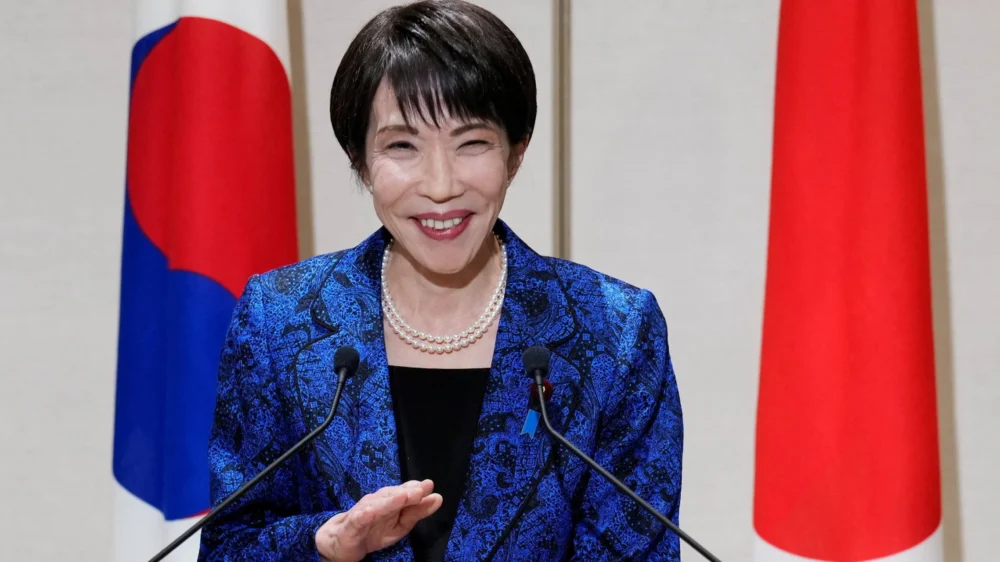
The landscape of Japanese politics is bracing for a significant shift as Sanae Takaichi, a leading contender for the presidency of the Liberal Democratic Party (LDP), has indicated her intention to dissolve the House of Representatives for a snap election should she ascend to the premiership. This strategic maneuver, designed to capitalize on the traditional "honeymoon period" afforded to a new administration, seeks to provide Takaichi with a direct public mandate to implement a robust platform of economic expansionism and a hardline approach to national security. As the LDP prepares to choose a successor to Fumio Kishida, Takaichi’s pledge underscores a pivot toward the conservative "Abenomics" legacy that defined Japanese policy for much of the last decade, while signaling a potential collision course with the Bank of Japan’s recent efforts to normalize interest rates.
Takaichi’s proposal for an early election is rooted in the pragmatic necessity of stabilizing a party currently reeling from a series of high-profile financial scandals. The LDP has faced intense public scrutiny over "slush fund" allegations involving various party factions, which has eroded the administration’s approval ratings and led to Kishida’s eventual decision to step down. By calling a snap election, Takaichi hopes to outpace the opposition and consolidate the LDP’s grip on power before the current momentum of the leadership transition fades. Historically, Japanese prime ministers have used this tactic to catch opposition parties off guard and to legitimize their policy agendas through the ballot box. For Takaichi, a victory at the polls would be interpreted as a validation of her specific brand of "Sanaenomics"—a policy suite that prioritizes growth through aggressive fiscal spending and a resistance to premature monetary tightening.
The economic implications of a Takaichi premiership are profound, particularly regarding the delicate balance of Japan’s monetary policy. Unlike several of her rivals who have expressed cautious support for the Bank of Japan’s (BoJ) recent shift away from negative interest rates, Takaichi has been vocal in her opposition to rapid rate hikes. She argues that the Japanese economy is not yet resilient enough to withstand higher borrowing costs and that the priority must remain on achieving stable, demand-driven inflation. This stance has created a palpable tension in financial markets. Analysts suggest that a Takaichi victory could lead to a temporary weakening of the yen as investors price in a continued period of ultra-loose monetary policy, potentially diverging from the hawkish trends seen in other G7 economies.
The "Sanaenomics" framework relies heavily on "crisis management" investment, focusing on strengthening Japan’s supply chains, energy security, and technological sovereignty. Takaichi has proposed substantial government spending to revitalize the domestic semiconductor industry and to accelerate the development of next-generation nuclear energy. This interventionist approach aims to insulate Japan from global volatility, particularly the rising tensions between the United States and China. By positioning economic policy as a pillar of national security, Takaichi seeks to appeal to a broader base of conservative voters who view Japan’s economic stagnation as a direct threat to its geopolitical standing.
Beyond economics, Takaichi’s platform is defined by a staunchly conservative social and foreign policy agenda. As a protégé of the late Shinzo Abe, she has consistently advocated for a revision of Japan’s pacifist constitution, specifically Article 9, to clarify the legal status of the Self-Defense Forces. Her rhetoric regarding regional security is markedly more assertive than that of her predecessors. She has emphasized the need for Japan to develop counter-strike capabilities and has maintained a firm stance on territorial disputes in the East China Sea. Her potential visits to the Yasukuni Shrine—a site that honors Japan’s war dead but remains a point of intense diplomatic friction with South Korea and China—suggest that her leadership could lead to a cooling of relations with Japan’s immediate neighbors, even as it strengthens the security alliance with the United States.
The internal dynamics of the LDP leadership race are equally complex. Takaichi faces stiff competition from other party heavyweights, including former Defense Minister Shigeru Ishiba and the younger, media-savvy Shinjiro Koizumi. While Ishiba enjoys significant popularity among the party’s rank-and-file and favors regional revitalization, and Koizumi represents a generational shift toward social reform, Takaichi has successfully cultivated a loyal following among the party’s right-wing base. Her ability to secure the support of former faction members, despite the formal dissolution of many LDP groups, will be the deciding factor in whether she can overcome the "glass ceiling" of Japanese politics to become the nation’s first female prime minister.
Market data reflects the uncertainty surrounding this political transition. The Nikkei 225 has experienced bouts of volatility as traders weigh the likelihood of different leadership outcomes. A Takaichi win is generally viewed as "pro-growth" in the short term, likely boosting export-oriented sectors if the yen remains weak. However, long-term concerns persist regarding Japan’s ballooning sovereign debt, which currently stands at over 250% of its GDP. Critics of Takaichi’s fiscal expansionism warn that without a clear path to fiscal consolidation, the Japanese bond market could face increased pressure, especially if global interest rates remain elevated.
Global comparisons further contextualize the stakes of this election. Japan is currently navigating a demographic crisis characterized by a shrinking workforce and an aging population, a challenge shared by many developed nations but felt most acutely in Tokyo. Takaichi’s focus on automation and technological investment is a direct response to these pressures. Furthermore, as the world moves toward more protectionist trade policies, Japan’s role as a champion of the "free and open Indo-Pacific" remains vital. International partners are watching closely to see if Takaichi will maintain the multilateral approach favored by Kishida or if she will pivot toward a more Japan-centric "strategic autonomy."
The proposed snap election would also serve as a critical test for Japan’s opposition parties, primarily the Constitutional Democratic Party of Japan (CDP). The opposition has struggled to present a unified front against the LDP’s long-standing dominance. If Takaichi moves quickly to dissolve the Diet, the opposition will have a very narrow window to mobilize and capitalize on public dissatisfaction with the LDP’s recent scandals. The outcome of such an election would not only determine the next prime minister but would also reshape the parliamentary landscape for the remainder of the decade, either cementing the LDP’s conservative trajectory or forcing the party into a more precarious coalition arrangement.
For the international business community, a Takaichi administration would signal a return to "strong Japan" rhetoric. Foreign direct investment (FDI) has been a priority for recent Japanese governments, and Takaichi is expected to continue efforts to make Japan an attractive hub for high-tech manufacturing. However, her potential friction with the central bank remains a wildcard. If the BoJ continues its path toward normalization against the wishes of the Prime Minister’s Office, it could lead to a period of institutional instability that might unnerve foreign investors accustomed to the relative harmony between the government and the central bank during the Abe and Kishida eras.
The timing of the leadership vote and the subsequent potential general election coincides with a period of heightened geopolitical sensitivity. With the upcoming U.S. presidential election, the security environment in the Taiwan Strait, and the ongoing conflict in Ukraine, Japan’s leadership transition carries weight far beyond its borders. Takaichi’s readiness to call an early election is a bold gambit to ensure that she enters this volatile period with a fresh mandate and a unified government. By bypassing the traditional waiting period, she intends to preempt internal party dissent and present a decisive face to the world.
As the LDP campaign enters its final stages, the narrative is increasingly dominated by this tension between stability and transformation. Takaichi’s willingness to go to the people so early in her potential tenure reflects a belief that the current political moment requires a radical departure from the status quo. Whether she can convince the Japanese electorate that her vision of a re-armed, fiscally expansive, and socially conservative nation is the correct path forward remains to be seen. What is certain is that the decision to call a snap election would set the stage for one of the most consequential periods in Japanese political history, with the potential to redefine the nation’s economic and security architecture for a generation.