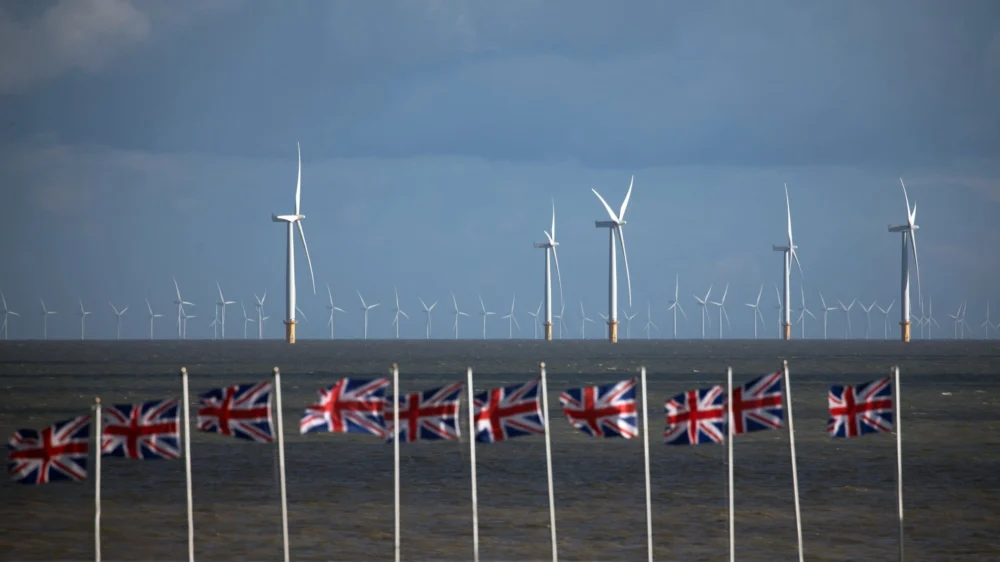
The United Kingdom has decisively reclaimed its position as a global leader in the offshore wind sector following the resounding success of its latest renewable energy auction, a development that provides a much-needed catalyst for the government’s ambitious goal to decarbonize the national power grid by 2030. This recent allocation round, known as Allocation Round 6 (AR6), marks a pivotal reversal of fortune for the British energy market after the previous year’s procurement exercise failed to attract a single bid from offshore wind developers. By securing nearly 10 gigawatts of total renewable capacity—including more than 5 gigawatts of offshore wind—the auction results signal a renewed confidence among international investors and energy titans in the UK’s regulatory framework and its commitment to a green industrial transition.
The significance of this auction extends far beyond simple capacity figures; it represents a fundamental recalibration of the UK’s energy strategy in the face of post-pandemic inflationary pressures and global supply chain disruptions. In 2023, the predecessor auction (AR5) was widely criticized as a "policy catastrophe" when the government set price caps too low to account for the skyrocketing costs of steel, labor, and financing. This year, the Department for Energy Security and Net Zero responded by significantly raising the "strike price"—the guaranteed price for electricity—to reflect the new economic reality. The move proved successful, drawing in major industry players such as Ørsted, Iberdrola’s ScottishPower, and Vattenfall, who are now moving forward with some of the world’s largest offshore wind projects, including the massive Hornsea 3 and 4 developments.
To understand the economic gravity of these results, one must look at the Contracts for Difference (CfD) mechanism that underpins the UK’s renewable strategy. Under this system, developers are guaranteed a fixed price for the electricity they generate; if market prices are higher, the developers pay the surplus back to the government, and if they are lower, the government subsidizes the difference. This provides the long-term revenue certainty required to de-risk multi-billion-pound capital investments. The success of AR6 demonstrates that while the cost of offshore wind has risen from its historic lows of 2020, it remains significantly cheaper than the volatile wholesale prices of natural gas, which have plagued European economies since the onset of the conflict in Ukraine.
However, the path to a fully decarbonized grid by 2030 remains an uphill climb that requires more than just successful auctions. The UK government’s "Clean Power 2030" mission, led by the newly formed Mission Control and spearheaded by former Climate Change Committee chief Chris Stark, demands a quadrupling of offshore wind capacity in less than a decade. Currently, the UK has approximately 15 gigawatts of offshore wind in operation. To reach the targets necessary for a net-zero grid, the country must bridge a gap of nearly 40 gigawatts of additional capacity. This necessitates not only the construction of turbines but a total overhaul of the nation’s aging transmission infrastructure.
The "grid bottleneck" is perhaps the most significant non-market barrier to the UK’s energy transition. Currently, dozens of renewable projects are languishing in a connection queue that can span over a decade. The National Grid’s Electricity System Operator (ESO) has warned that the physical architecture of the UK’s power lines—originally designed for a centralized system of coal and gas plants in the Midlands—is ill-equipped to handle the massive influx of power from the North Sea. Resolving this requires a politically sensitive expansion of pylons, substations, and undersea cables, often facing stiff local opposition. The government’s ability to streamline the planning process and accelerate grid upgrades will be the true litmus test for the success of the 2030 mandate.
From a global perspective, the UK’s auction success is being watched closely by international markets as a bellwether for the "green arms race." With the United States offering massive subsidies through the Inflation Reduction Act (IRA) and the European Union pushing its own Green Deal Industrial Plan, the UK is in a fierce competition for capital and talent. The offshore wind supply chain is currently a seller’s market; specialized installation vessels, turbine blades, and high-voltage cables are in short supply globally. By securing these latest bids, the UK has sent a signal to the global supply chain that it remains a primary destination for investment, potentially anchoring new manufacturing hubs in coastal communities that have historically suffered from industrial decline.
The economic impact on local regions is a cornerstone of the broader "levelling up" agenda. Ports in the North of England and Scotland, such as Hull, Teesside, and Aberdeen, are transforming into specialized hubs for wind turbine assembly and maintenance. The AR6 results are expected to support tens of thousands of high-skilled jobs, fostering a domestic industry that can eventually export its expertise to emerging wind markets in Asia and South America. Furthermore, the expansion of the sector includes a burgeoning interest in floating offshore wind technology. While still in its infancy compared to fixed-bottom turbines, floating wind allows for deployment in deeper waters where winds are stronger and more consistent. The inclusion of floating wind projects in the latest auction, albeit at a smaller scale, positions the UK at the vanguard of this next-generation technology.
Expert analysis suggests that while the auction results are a triumph, the government cannot afford complacency. Economic modeling indicates that to stay on track for 2030, every subsequent annual auction must deliver capacity levels equal to or greater than those seen in AR6. There is also the matter of "system costs"—the expenses associated with managing an intermittent energy source like wind. As the percentage of renewables on the grid grows, the need for long-duration energy storage, such as green hydrogen or advanced battery systems, becomes critical. The government must balance the push for wind with investments in flexible technologies that can provide "firm" power when the wind does not blow.
Investor sentiment, while improved, remains sensitive to the broader macroeconomic environment. High interest rates have increased the cost of capital for renewable projects, which are notoriously front-loaded in terms of expenditure. While the UK has successfully adjusted its strike prices to accommodate these costs, the global competition for components means that developers are still operating on thin margins. Continued stability in energy policy and a clear, multi-year roadmap for future auctions will be essential to maintaining the "investor appetite" seen in this round.
The geopolitical dimension of this energy shift is equally profound. By reducing its reliance on imported liquefied natural gas (LNG), the UK is insulating its economy from the price shocks of the global energy market. Energy security is now viewed through the lens of domestic generation, and offshore wind is the centerpiece of this "fortress energy" strategy. The success of the recent auction reinforces the narrative that the transition to renewables is not merely an environmental imperative but a fundamental pillar of national economic security.
In conclusion, the latest offshore wind auction serves as a powerful validation of the UK’s renewable energy ambitions and a vital step toward a zero-carbon future. It has restored the momentum lost during the previous year’s setbacks and demonstrated that with the right fiscal incentives, the private sector is ready to commit the capital necessary for a large-scale energy transition. Yet, the journey to 2030 remains fraught with logistical, regulatory, and technical challenges. The success of AR6 is not the finish line, but rather the starting gun for an unprecedented decade of industrial mobilization. If the UK can match its auction successes with equally bold reforms in grid infrastructure and planning, it may well provide the global blueprint for a modern, sustainable, and secure energy economy.