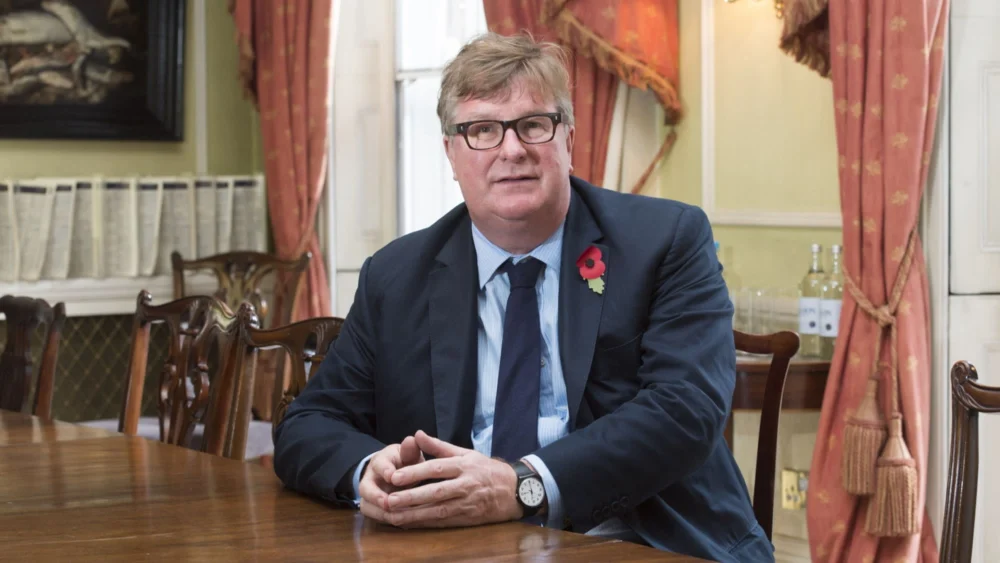
The long-anticipated dissolution of one of London’s most storied and controversial investment houses has reached its final chapter, as Crispin Odey prepares to move his namesake hedge fund into a state of dormancy. This strategic retreat marks the definitive end of an era for Odey Asset Management (OAM), a firm that for three decades stood as a pillar of Mayfair’s financial landscape, driven by the idiosyncratic and often polarizing brilliance of its founder. The transition to a dormant status follows a tumultuous period of institutional collapse, triggered not by market volatility or investment failure, but by a series of grave personal allegations that shattered the firm’s operational foundations and alienated its most critical global partners.
For over thirty years, Crispin Odey was the quintessential "star manager," a figure whose contrarian bets and outspoken political views—most notably his staunch support for Brexit—made him a household name in the City of London. Founded in 1991 with backing from legendary investor George Soros, OAM specialized in high-conviction, macro-thematic investing. At its zenith, the firm managed billions of dollars for institutional clients and high-net-worth individuals, earning a reputation for delivering outsized returns during periods of market stress, such as the 2008 global financial crisis. However, the architecture of the firm was inextricably linked to the persona of its founder, a "key man" dependency that would ultimately prove to be its undoing.
The precipitous decline of the firm began in June 2023, following an investigative report that detailed numerous allegations of sexual harassment and assault against Mr. Odey spanning several decades. While Mr. Odey has consistently denied the allegations, the institutional response was immediate and devastating. In the world of high finance, where reputation is the primary currency, the "S" in ESG—Social—became a tangible liability that triggered a rapid-fire sequence of disengagements. Major Wall Street institutions, including JPMorgan Chase, Goldman Sachs, and Morgan Stanley, moved with clinical speed to sever their prime brokerage ties with OAM. Without the essential clearing, lending, and custodial services provided by these banks, a hedge fund cannot function, effectively paralyzing OAM’s ability to trade.
The decision to render the fund dormant, rather than pursuing an immediate and total liquidation of the corporate entity, reflects the complex legal and regulatory environment currently surrounding the firm. Dormancy typically implies that a company has ceased active trading and no longer generates significant income, yet it remains on the official register. This status can be a precursor to a formal winding-up or a strategic move to ring-fence remaining assets and liabilities as the firm navigates the tail-end of its regulatory obligations. For OAM, the move signals that the process of hiving off its various investment strategies to other managers is largely complete.
Throughout the latter half of 2023 and the beginning of 2024, the dismantling of OAM was characterized by a frantic effort to protect investor capital and preserve the careers of the firm’s other portfolio managers. Several of OAM’s flagship funds and their respective teams were migrated to rival firms. Lancaster Investment Management and SW Mitchell Capital were among the beneficiaries of this migration, absorbing funds and staff in an attempt to provide continuity for investors who remained confident in the underlying investment strategies, if not the firm’s leadership. This "managed decline" prevented a fire sale of assets, which could have further damaged returns for the remaining clients.
The collapse of Odey Asset Management serves as a watershed moment for the hedge fund industry, highlighting a fundamental shift in how institutional investors and regulators view non-financial misconduct. Historically, the "star manager" model allowed for significant behavioral leeway so long as the returns remained robust. However, the OAM saga demonstrates that the modern financial ecosystem has a zero-tolerance policy for reputational contagion. The Financial Conduct Authority (FCA) in the United Kingdom has increasingly emphasized that culture and personal conduct are "threshold conditions" for being considered fit and proper to operate in the financial markets. The investigation into Mr. Odey and the firm’s handling of previous complaints has become a test case for the FCA’s ability to police the "S" in corporate governance.
From an economic perspective, the disappearance of OAM removes a significant source of liquidity and contrarian thought from the European markets. Mr. Odey was known for taking massive, often lonely positions against government bonds or in favor of neglected commodities. While his performance was frequently volatile—experiencing double-digit losses in some years followed by triple-digit gains in others—his firm represented a specific type of intellectual diversity in a market increasingly dominated by passive index tracking and algorithmic trading. The vacancy left by OAM is unlikely to be filled by a similar entity, as the current capital-raising environment favors large, multi-strategy platforms over the boutique, personality-driven shops that defined the 1990s.
The broader implications for the London wealth management sector are also significant. The OAM crisis forced a reckoning among wealth managers and family offices regarding their due diligence processes. It is no longer sufficient to analyze a fund’s Sharpe ratio or its alpha-generating capabilities; operational due diligence must now include deep dives into firm culture, whistleblowing protections, and the robustness of internal governance structures. The speed with which $4 billion in assets can evaporate when institutional trust is broken has served as a sobering lesson for the industry at large.
As the firm moves into dormancy, the focus shifts to the ongoing legal and regulatory proceedings. The FCA’s investigation remains a critical variable, as it seeks to determine whether OAM’s board failed in its duty to oversee its founder and whether the firm’s disclosures to the regulator were accurate and timely. For the former employees and partners who have transitioned to new firms, the shadow of OAM remains a complicated legacy. Many of these professionals have had to navigate the professional trauma of seeing a prestigious career path derailed by events entirely outside their control, further emphasizing the risks inherent in the "key man" boutique model.
In the final analysis, the dormancy of Odey Asset Management is more than just the closing of a business; it is a signal of the changing tides in global finance. The era of the untouchable hedge fund titan is being superseded by an age of institutional accountability and radical transparency. While the markets will continue to fluctuate and new stars will undoubtedly rise, the fall of the house of Odey stands as a permanent reminder that in the modern world, the integrity of the individual is inseparable from the viability of the institution. The once-bustling offices in Mayfair, which once served as a nerve center for high-stakes financial gambling and political maneuvering, now stand as a quiet testament to the fragility of reputation in an interconnected and increasingly principled global economy.
The transition to dormancy effectively puts the legal entity into a state of suspended animation. While it may still hold certain residual assets or be required to satisfy remaining contractual obligations, its life as an active participant in the global markets has ceased. For the investors who once looked to Crispin Odey as a maverick capable of outsmarting the consensus, the dormant status of his fund is a quiet, administrative conclusion to a story that was, for three decades, anything but quiet. The financial world moves on, but the lessons of OAM’s collapse will be analyzed in business schools and boardrooms for years to come, marking the point where the culture of the City of London was forced to catch up with the expectations of the 21st century.