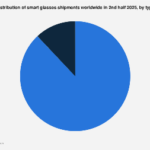
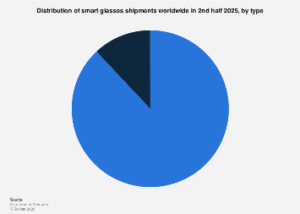

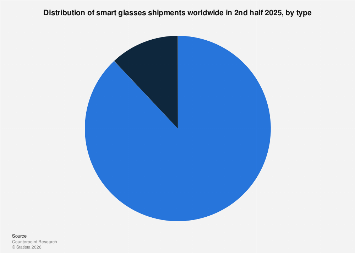
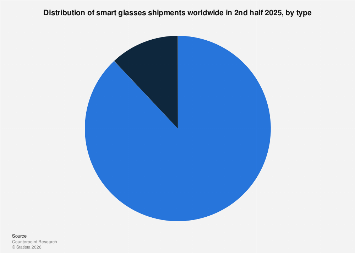
The global smart glasses market is experiencing a seismic shift, with artificial intelligence (AI) powered devices commanding an overwhelming 88% share of all shipments in the latter half of 2025. This unprecedented dominance signals a pivotal moment in the evolution of wearable technology, moving beyond basic functionalities to embrace sophisticated AI capabilities that are resonating strongly with consumers and enterprise users alike. The surge in AI smart glasses signifies not just a product trend but a fundamental redefinition of what these devices can achieve, integrating advanced processing power and intelligent features into an increasingly ubiquitous form factor.
This dramatic market penetration underscores a strategic pivot by manufacturers and a growing consumer appetite for more intelligent, interactive, and context-aware wearable solutions. While basic smart glasses, predominantly encompassing smart audio devices and simpler notification displays, managed to capture only a modest 12% of the market share, the trajectory clearly points towards AI as the primary driver of innovation and demand. The release of new AI-enhanced models, coupled with increasing awareness of their potential applications across diverse sectors, has fueled this rapid ascent.
The implications of this AI-centric market are far-reaching. For consumers, AI smart glasses promise enhanced personal assistants, seamless integration with digital ecosystems, and novel ways to interact with information and the physical world. Imagine real-time language translation overlaid onto conversations, instant identification of objects and landmarks, or personalized fitness coaching delivered through an intuitive visual interface. These are no longer futuristic concepts but emerging realities being integrated into the latest generation of smart eyewear.
In the enterprise realm, the impact is even more profound. Industries such as manufacturing, logistics, healthcare, and field services are poised to benefit immensely from AI-powered smart glasses. For instance, assembly line workers can receive real-time instructions, quality control checks, and access to digital manuals directly in their field of vision, significantly reducing errors and increasing efficiency. Surgeons can benefit from augmented reality overlays displaying patient data or guiding them through complex procedures, while technicians can receive remote expert assistance and diagnostic information on-site. The ability of AI smart glasses to process complex data, provide contextual information, and facilitate hands-free operation makes them ideal tools for boosting productivity, improving safety, and enhancing decision-making in demanding professional environments.
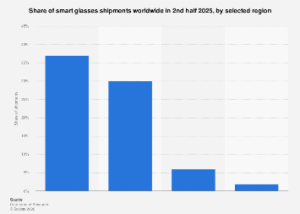
The global smart glasses market, projected to reach significant valuations in the coming years, is being reshaped by this AI revolution. Analysts predict a compound annual growth rate (CAGR) that will be largely propelled by the adoption of AI-enabled devices. This growth is not confined to a single region; while North America and Europe have historically led in early adoption of advanced technologies, Asia-Pacific is rapidly emerging as a key market, driven by its vast consumer base and significant investments in AI research and development. Emerging markets are also showing promising signs of growth as the cost of AI-powered devices becomes more accessible and their practical benefits become more apparent.

Several factors contribute to the ascendancy of AI smart glasses. Firstly, advancements in miniaturized AI processors and efficient battery technology have made it feasible to integrate powerful computing capabilities into lightweight, wearable devices. Secondly, the development of sophisticated algorithms for computer vision, natural language processing, and machine learning allows these glasses to understand and respond to their environment and user intent in increasingly nuanced ways. Finally, the growing ecosystem of developers creating applications and services tailored for smart glasses is expanding their utility and appeal across a wider spectrum of use cases.
However, challenges remain. The development of intuitive user interfaces that minimize distraction and cognitive load is crucial for widespread adoption. Privacy concerns, data security, and the ethical implications of ubiquitous AI surveillance also need to be addressed through robust regulations and industry best practices. Furthermore, ensuring interoperability between different devices and platforms will be key to fostering a seamless user experience and preventing market fragmentation.
Despite these hurdles, the current market trajectory is undeniable. The 88% share held by AI smart glasses in late 2025 is a powerful testament to their transformative potential. As AI technology continues to mature and become more integrated into our daily lives, smart glasses are poised to become a primary interface for interacting with the digital and physical worlds. This shift signifies more than just a technological upgrade; it represents a fundamental evolution in human-computer interaction, paving the way for a future where intelligent, context-aware eyewear is an indispensable part of our personal and professional lives. The era of truly intelligent wearables has arrived, and AI smart glasses are leading the charge.