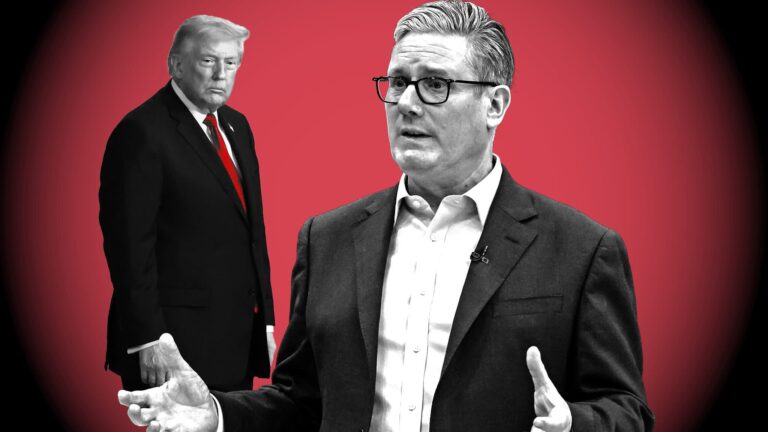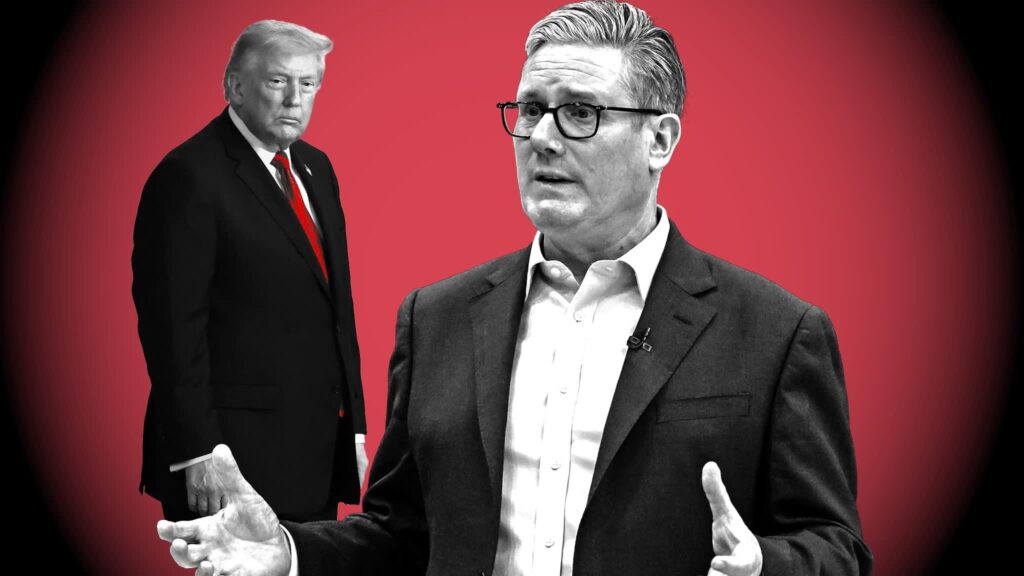


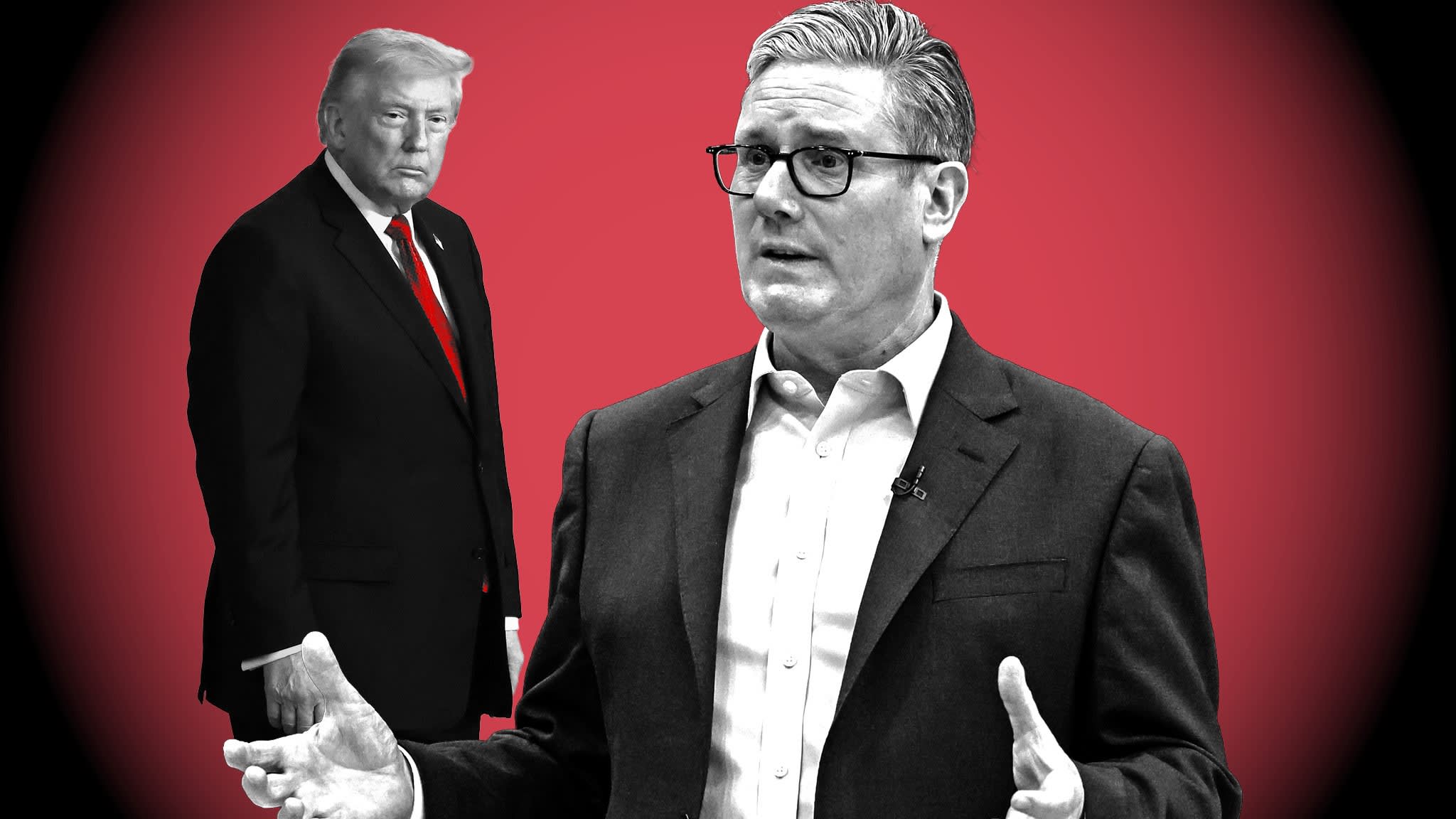
The diplomatic architecture of the "Special Relationship" is undergoing its most rigorous stress test in decades as Prime Minister Keir Starmer attempts to reconcile the United Kingdom’s economic dependencies with a burgeoning need for geopolitical assertiveness. In a move that has drawn inevitable comparisons to the cinematic defiance of a fictional British leader standing up to a domineering American president, Starmer is signaling that while the UK remains a committed ally, it will not be a silent partner in the face of protectionist shifts and radical foreign policy departures. This recalibration comes at a critical juncture for the British economy, which is currently grappling with sluggish growth and the looming specter of a global trade war initiated by the incoming Trump administration’s "America First" agenda.
At the heart of this friction is a fundamental divergence in economic philosophy. While Starmer’s Labour government has staked its reputation on "securonomics"—a strategy emphasizing domestic resilience, green energy investment, and strengthened ties with European neighbors—the President-elect has proposed a radical overhaul of the global trading system. The threat of a universal 10% to 20% tariff on all imports into the United States represents a clear and present danger to the UK’s export-led recovery. For a nation that counts the United States as its single largest trading partner, with total trade in goods and services reaching approximately £190 billion annually, the stakes could not be higher. Economic analysts suggest that such tariffs could shave up to 0.7% off the UK’s GDP, potentially forcing the Bank of England to rethink its interest rate trajectory as inflationary pressures from imported goods mount.
Starmer’s recent rhetoric suggests a departure from the cautious pragmatism that defined his initial outreach to the Trump camp during the late summer. The Prime Minister’s "Love Actually" moment—a reference to the 2003 film where a British leader publicly rebukes an overbearing US President—is not merely about theatricality; it is a calculated response to a series of provocations. These include legal complaints from the Trump campaign regarding Labour Party volunteers campaigning for the Democrats, as well as sharp disagreements over the conflict in Ukraine. By positioning himself as a defender of British values and economic sovereignty, Starmer is attempting to satisfy a domestic audience that remains deeply skeptical of the Trumpian worldview, while simultaneously signaling to Washington that the UK’s cooperation is not unconditional.
The security dimension of this relationship is perhaps the most volatile. Since the beginning of the conflict in Ukraine, the UK has been one of Kyiv’s most stalwart supporters, providing billions in military aid and long-range weaponry. Starmer has repeatedly stated that British support is "ironclad" and "for as long as it takes." This stands in stark contrast to the President-elect’s assertions that he could end the war in 24 hours—a statement many European diplomats interpret as a precursor to forcing a settlement that could involve significant territorial concessions by Ukraine. If the United States withdraws or reduces its support for NATO, the UK faces a harrowing choice: lead a European coalition to fill the vacuum at a massive fiscal cost, or follow the US lead and risk the destabilization of the European security order.
Market volatility has already begun to reflect these anxieties. The British pound has shown sensitivity to the shifting political winds in Washington, fluctuating as traders weigh the possibility of a trade-war-induced recession against the potential for a UK-EU "reset" that could mitigate some of the damage. Starmer’s government has been working behind the scenes to deepen security and trade ties with Brussels, a strategy that now looks less like a post-Brexit cleanup and more like a vital economic hedge. If the US turns inward, the UK’s pivot back toward the European Single Market—at least in terms of regulatory alignment and reduced friction—may transition from a political preference to an existential necessity.
Furthermore, the divergence on climate policy presents a significant hurdle for bilateral cooperation. The Starmer administration has placed the "Green Energy Superpower" mission at the center of its industrial strategy, aiming to decarbonize the UK power grid by 2030. In contrast, the incoming US administration has signaled a renewed commitment to fossil fuel expansion and a likely second withdrawal from the Paris Agreement. This creates a diplomatic chasm that complicates everything from carbon border adjustment mechanisms to international finance. The UK’s leadership in the green tech sector, particularly in offshore wind and carbon capture, could find itself at odds with a US administration that views such initiatives as impediments to traditional industrial growth.
Despite these tensions, the Starmer government is acutely aware of the need to maintain a functional working relationship with the White House. The UK’s intelligence-sharing through the Five Eyes alliance and the AUKUS submarine pact are pillars of national security that transcend individual administrations. However, the "specialness" of the relationship is increasingly being viewed through a transactional lens. British officials are reportedly preparing "contingency dossiers" that outline areas where the UK can offer value to the Trump administration—such as increased defense spending toward the 2.5% of GDP target—in exchange for exemptions from the most punitive trade measures.
The political risk for Starmer is twofold. Domestically, he must avoid appearing as a "poodle" to an unpopular American president, a perception that severely damaged the legacy of Tony Blair. Conversely, he cannot afford to alienate a leader who holds the keys to the UK’s most important export market. This balancing act is made more difficult by the presence of figures like Nigel Farage, who maintains a close personal rapport with Trump and seeks to position himself as the "bridge" between London and Washington, potentially undermining the official diplomatic channels of the Foreign Office.
Economic impact analysis reveals that certain sectors of the British economy are particularly vulnerable to a Transatlantic rift. The automotive industry, which has seen a resurgence through electric vehicle manufacturing, and the Scotch whisky industry, which suffered significantly during the tariff disputes of the first Trump term, are on high alert. Pharmaceuticals and professional services—the backbone of the UK’s modern economy—also rely on a stable regulatory environment and the free flow of data across the Atlantic. Any disruption to these flows would require the UK to accelerate its trade negotiations with the Comprehensive and Progressive Agreement for Trans-Pacific Partnership (CPTPP) nations and other emerging markets, though few can match the sheer scale of the American consumer base.
Global comparisons illustrate that Starmer is not alone in this predicament. Leaders across the G7 are grappling with the reality of a more isolationist America. French President Emmanuel Macron has doubled down on the concept of "European sovereignty," urging the continent to reduce its reliance on US security and technology. Meanwhile, the German government, already reeling from an industrial slowdown, is desperately seeking ways to protect its car manufacturers from US tariffs. Starmer’s approach appears to be a middle path: asserting British independence and values while keeping the door open for high-level engagement.
As the new administration takes shape in Washington, the world is watching to see if Starmer’s "Love Actually" moment evolves into a sustained strategy of principled engagement or if it remains a fleeting gesture of defiance. The economic reality is that the UK needs the US, but the political reality is that Keir Starmer cannot afford to let the UK be subsumed by an "America First" tide. The coming months will determine whether the Special Relationship can survive as a partnership of equals or if it will fragment under the pressure of competing nationalisms. In this high-stakes game of diplomatic chess, the Prime Minister has made his opening move; the response from across the Atlantic will define the economic and security landscape of the UK for the next decade.