
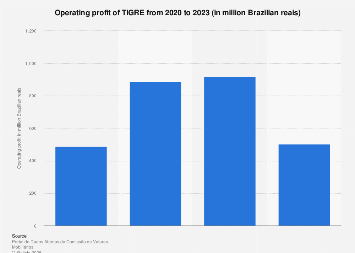
The Brazilian industrial conglomerate TIGRE has announced a strong operational performance for the fiscal year 2023, signaling resilience and strategic adeptness in navigating a complex global economic landscape. While specific profit figures for the period are part of proprietary data accessible through specialized business intelligence platforms, the company’s sustained operational health underscores its position as a significant player in key manufacturing sectors, particularly in construction materials and fluid management systems. This performance is occurring against a backdrop of varied economic trends, including fluctuating inflation rates, shifting consumer demand, and geopolitical uncertainties that have impacted industrial output and profitability worldwide.
TIGRE’s operating profit, a key indicator of a company’s core business profitability before interest and taxes, reflects its ability to generate earnings from its primary revenue-generating activities. For 2023, the company’s results suggest a successful management of operational costs, effective pricing strategies, and sustained demand for its product portfolio. This is particularly noteworthy given the prevailing global economic conditions. Many industrial sectors have grappled with elevated input costs, supply chain disruptions, and a deceleration in global growth, making robust operating profit a significant achievement.
The company’s primary markets, including Brazil and other Latin American nations, have experienced a mixed economic environment. Brazil, TIGRE’s home market, has seen efforts to control inflation and stimulate economic activity. However, persistent global inflationary pressures and the lagged effects of monetary policy tightening have presented challenges. TIGRE’s ability to maintain and potentially grow its operating profit in this environment points to several key strengths. These likely include a diversified product range catering to essential infrastructure and housing needs, a strong brand reputation built over decades, and efficient production and distribution networks that mitigate the impact of external shocks.
Globally, the manufacturing sector has been a focal point of economic analysis throughout 2023. The Purchasing Managers’ Index (PMI) for manufacturing, a widely watched indicator of economic health, has shown divergent trends across regions. While some Asian economies have demonstrated robust recovery, European and North American manufacturing sectors have faced headwinds from high energy costs, labor shortages, and weaker consumer spending. TIGRE’s performance can be benchmarked against these global trends. If TIGRE’s operating profit growth outpaces that of its international peers in similar sectors, it suggests superior operational efficiency and market penetration. Conversely, if it aligns with or slightly lags global averages, it would still indicate a solid performance in a challenging climate.
The construction materials sector, a core segment for TIGRE, is inherently cyclical and closely tied to broader economic growth and investment in infrastructure and housing. In 2023, the global construction industry faced a slowdown in some developed markets due to rising interest rates and tighter credit conditions, which can dampen new project starts and home sales. However, emerging markets, particularly in Latin America, often exhibit different dynamics, with ongoing demand for housing and infrastructure development driven by population growth and urbanization. TIGRE’s diversified presence across these markets likely provides a buffer against localized downturns. Furthermore, the company’s focus on essential products, such as pipes and fittings for water and sanitation, ensures a baseline level of demand, as these are critical for public health and development regardless of the broader economic climate.
The fluid management solutions segment, another significant area for TIGRE, also benefits from consistent demand. Water scarcity, aging infrastructure, and the need for efficient irrigation systems in agriculture all contribute to ongoing demand for TIGRE’s products. This segment’s performance is often less sensitive to short-term economic fluctuations compared to discretionary consumer goods, offering a degree of stability to the company’s overall operating profit.
Analyzing TIGRE’s operating profit in 2023 requires considering key economic factors that influence its cost structure and revenue generation. Raw material costs, particularly for plastics and metals, are significant inputs for TIGRE’s products. Global commodity prices experienced volatility in 2023, influenced by geopolitical events and supply-demand dynamics. Effective procurement strategies, long-term supplier contracts, and the ability to pass on some cost increases through pricing adjustments are crucial for maintaining operating profit margins.
Labor costs and energy prices are also critical components of manufacturing overhead. In many regions, including Brazil, labor markets have shown signs of tightening, and energy prices have remained a concern due to global supply dynamics. TIGRE’s ability to implement efficiency improvements in its manufacturing processes, invest in automation, and manage its energy consumption effectively would have been instrumental in counteracting these cost pressures and preserving its operating profit.
From a revenue perspective, TIGRE’s market share and competitive positioning are paramount. The company operates in markets that, while growing, are often characterized by intense competition. Its ability to maintain or expand market share in its core segments is a testament to its product quality, innovation, distribution reach, and customer relationships. The company’s strategic investments in product development and brand building likely play a vital role in sustaining demand and pricing power.
Furthermore, TIGRE’s international operations and export markets contribute to its overall financial health and can offer diversification benefits. Exposure to different economic cycles in various countries can help to smooth out the impact of any single market’s downturn. The company’s strategic decisions regarding market entry, expansion, and product localization in different regions would have a direct bearing on its consolidated operating profit.
The broader economic implications of TIGRE’s strong performance are also significant. As a major industrial employer, its sustained profitability supports job creation, contributes to tax revenues, and stimulates economic activity within its supply chain. Companies like TIGRE are often bellwethers for the health of the industrial and construction sectors, and their robust performance can signal confidence in future economic prospects. In Brazil, a strong showing from a national industrial champion like TIGRE can boost domestic investor sentiment and encourage further investment in the sector.
Looking ahead, the economic outlook for 2024 suggests a continuation of some of the trends observed in 2023. While inflation may moderate in some economies, interest rates are expected to remain elevated for a period, potentially impacting construction and investment. Geopolitical risks and the ongoing energy transition will continue to shape commodity prices and supply chains. TIGRE’s strategic priorities, including its focus on innovation, operational efficiency, and market diversification, will be key to its ability to sustain its strong operating profit trajectory in the coming years. The company’s track record suggests a proactive approach to risk management and a commitment to long-term value creation, positioning it to navigate the evolving global economic landscape effectively. The detailed financial reporting for TIGRE will provide further insights into the specific drivers of its 2023 operating profit, allowing for a more granular understanding of its strategic execution and market positioning.